-
Technology
-
Industry
-
Solutions
-
- ASSET MANAGEMENT
- CUSTOMER EXPERIENCE MANAGEMENT
- CYBER SECURITY
- DATA CENTER
- DOCUMENT MANAGEMENT
- ELECTRONIC DATA INTERCHANGE
- ENTERPRISE DATA MANAGEMENT
- ENTERPRISE RESOURCE PLANNING
- ENTERPRISE RISK MANAGEMENT
- ENTERPRISE-GRADE WEB DATA SOLUTIONS
- FACILITY MANAGEMENT
- FIELD SERVICE
- IDENTITY AND ACCESS MANAGEMENT
- INFRASTRUCTURE
- IT SERVICE MANAGEMENT
- MANAGED IT SERVICES
- PAYMENT AND CARD
- PROJECT MANAGEMENT
- SOFTWARE TESTING
- STORAGE
- VIDEO SOLUTIONS
- WORKFLOW
-
-
Platforms
-
Functions
- Leadership Perspectives
- Innovation Insights
- Research
- Magazines
- News
- CXO Awards



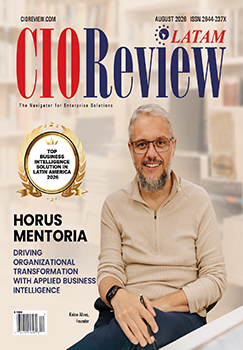
 Keine Alves, Founder
Horus Mentoria recognizes that the missing link is not more information, but a deeper understanding of what the information means for stakeholders and how it can enhance an organization’s performance.
Horus Mentoria is not a consultancy. It is an applied business intelligence company, founded on the belief that BI should not be defined by the quality of the information produced, but by the decisions made with it. Horus’ bespoke solutions are aimed at bringing lasting organizational transformation.
Its distinct applied intelligence model turns BI into better decisions and stronger execution for sustained organizational improvement. Horus’ specialist positioning is grounded in a proprietary methodology that unifies diverse areas of knowledge, bringing together philosophy, behavioral science, education, governance, organizational diagnostics and artificial intelligence to help organizations collectively understand what their data reveals. This fosters organization-wide alignment as leaders become better equipped to translate BI insights into decisions, resulting in long-term performance improvements.
“Traditional BI consulting delivers information. We develop the capacity of leaders to use the information with integrity, consistency and strategic clarity,” says Keine Alves, founder.
Identifying Hidden Dynamics That Impact Performance
The philosophy behind Horus emerged from a recurring pattern Alves observed while working with organizations across industries. Companies were investing in sophisticated technologies, structured consulting engagements and highly detailed performance indicators. They could measure performance with precision, but struggled to explain the factors that stalled performance or knowing how to address them.
Horus chose a different direction. Instead of delivering dashboards, reports or standardized strategies, it first examines the culture, values, leadership behaviors and decision-making patterns of an organization. Then it uses governance frameworks and artificial intelligence to uncover the root causes of performance issues.
It sought to understand the realities that shape how people interpret and act on data across an organization, using its proprietary Gestão e Desempenho (Management and Performance) diagnostic process. The process is built on Applied Maieutics, the Socratic method of questioning to discover internal truths, deconstruct assumptions and construct new knowledge.
The process comprises structured questioning, reflective dialogue and interdisciplinary analysis to uncover the dynamics operating beneath an organization’s visible structures. The objective is to reveal the assumptions, behaviors and systemic tensions that influence daily decision-making.
Organizations are evaluated through three interconnected dimensions—operational, strategic and cultural.
Operational analysis examines processes and execution. Strategic analysis focuses on direction, governance and decision architecture, while cultural analysis explores values, leadership conduct, relationships and organizational behavior. The assessment identifies whether organizations are simply executing tasks or creating value through their efforts, which is crucial to addressing the root causes of performance issues.
“Traditional BI Consulting Delivers Information. We Develop The Capacity of Leaders To Use The Information With Integrity, Consistency and Strategic Clarity.”
Once the diagnostic phase is complete, Horus designs bespoke interventions that may include governance frameworks, strategic planning, leadership development, organizational education and process redesign. Vision and key results (VKR) methodology, AI-enabled decision support and long-term advisory services are also options. Each solution is built around the client's own reality, allowing them to strengthen capabilities that remain in place well into the future.
The technology ecosystem reinforces the philosophy behind its applied intelligence model. Its Saber Gestão platform, developed in partnership with the business process software provider ForLogic, translates Horus’ management principles into a structured digital environment. This enables leaders to monitor performance, manage governance and strengthen decision-making over time. The platform is integrated with AI-enabled analysis and complementary management technologies that enhance decision-making.
Organizational Transformation That Delivers Results
Organizations in the technology and automotive segments rely on Horus’ applied intelligence model to transform fragmented decision-making into sustained business performance.
The adoption of the model by a network of Mercedes-Benz dealerships in Brazil is a compelling example of that impact.
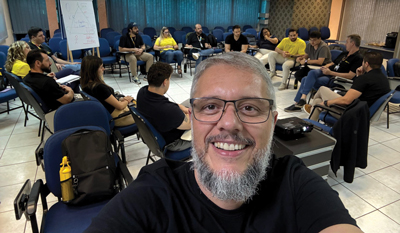 The dealership network followed a method to communicate and establish its business objectives. Its leadership team would first define the processes and goals, and then inform the workforce the direction the organization would take going forward. Despite having clearly documented processes and defined objectives, it struggled to achieve its business goals, with considerable loss in market share. A leading consultancy was approached to determine the cause, but the traditional model was inadequate.
Horus performed an in-depth assessment involving employees and customers and identified that the issue was not the processes or objectives but a lack of shared understanding about them. Employees were not following the manual because they found it of little use.
Based on these findings, Horus introduced a structured program that used data, AI-driven insights and in-depth conversations to educate teams on the purpose behind key processes.
The program fostered a shared understanding among employees about organizational goals. It helped them continuously recognize and evaluate how their actions contributed to the company's broader business objectives. This created a stronger organizational alignment and improved decision-making and execution, leading to higher performance and a regain of market share.
Building Leaders Who Educate to Transform
Behind these results is a leadership philosophy that Horus believes is essential for turning strategy into sustained execution.
Building a shared understanding of organizational goals takes time. Even before new processes are designed, leaders need to engage the workforce so they understand the purpose behind the changes and their role in carrying them out. Many leaders tend to build strategies in isolation, only to discover that execution falters because the people responsible for delivering results were never truly engaged.
To bridge this gap, Horus champions the defining concept of the “leader educator”—a leader who transforms planning into a collaborative learning process.
These leaders cultivate a shared understanding by working closely with teams and customers. Planning transforms into a collaborative learning process, enabling organizations to adapt more effectively in uncertain environments. They foster dialogue, review outcomes, and help teams understand not just what they are doing, but why it matters.
Horus strongly believes that data has value only when leaders possess the context, critical thinking and organizational understanding needed to act on it responsibly. Supported by its structured, 9-step methodology and AI-enabled insights, leaders can strengthen communication and align people around shared objectives. The result is an organization that learns, adapts and makes better decisions with every experience.
“Lasting organizational transformation happens when leaders create meaning, engage their teams, and develop the capacity to understand what their organizations are truly experiencing,” says Alves.
Creating a Culture That Sustains Change
Consulting engagements often deliver impressive short-term gains, only for those improvements to fade once external support ends. Horus structures its methodology to ensure new processes are embedded firmly into an organization’s culture, leaving in place a sustainable transformation.
The impact of making planning and decision-making a sustainable, embedded exercise is reflected in its client engagements.
A group of companies serving major automotive manufacturers and fintech firms, with a combined client base of 20 million users, was facing investor pressure and declining satisfaction among operational partners.

Organizations will continue to evolve through technology. But they will only endure if they continue developing the human capacity to think, learn and make better decisions together.

Initially, its leadership believed operational inefficiencies and technology gaps were responsible for declining performance. But Horus' diagnostic process revealed a more fundamental issue. Different parts of the group lacked a shared understanding of the business purpose and held entirely different definitions of who the customer actually is.
Horus designed a new process to reshape how decisions were made throughout the organization. It rebuilt a shared perspective and created stronger dialogue across leadership teams. Processes were restructured, priorities were aligned and unnecessary expenditures were reduced, which led to improved performance.
These performance enhancements were the result of aligning leaders on a common framework for understanding the business itself, before making key decisions. The process shift brought those sustainable changes to the organization’s ways of working.
“Organizations will continue to evolve through technology. But they will only endure if they continue developing the human capacity to think, learn and make better decisions together,” says Alves.
Building Organizations That Continue Learning
Horus’ emphasis on fostering capability building for continuous performance improvements has allowed it to work indirectly with more than 800 organizations across Brazil, the U.S., Germany, Israel, Paraguay and Uruguay. It has collaborated with executives in industries ranging from healthcare and financial technology to agribusiness, logistics and automotive distribution. Today, its work is concentrated in the technology and automotive segments.
Regardless of the sector, it ensures organizations continuously learn from their own reality to sustain long-term success instead of depending on external benchmarks.
Horus Mentoria believes the defining competitive advantage will not come from adopting the newest technologies and standardized frameworks, but from cultivating stronger judgment, deeper collaboration and more thoughtful leadership. In a world increasingly driven by algorithms, it will continue to drive sustainable transformation with its applied intelligence model that makes organizations smarter at analyzing and acting upon their BI data.
When Intelligence Must Change Decisions
For executives buying business intelligence in consulting environments, the common failure is not a missing chart. It is the reporting backlog that produces agreement in the meeting and little change after it. Numbers arrive cleanly, but decision rights remain vague. Managers protect legacy assumptions. Planning cycles absorb new data without changing resource allocation. A useful business intelligence engagement has to confront that gap between seeing a pattern and changing the management behavior around it.
Dashboard depth still matters, but it should not dominate the purchase. A system that only improves presentation can leave leadership teams better informed and still slow. The sharper test is whether information reaches the people who can act on it in a form tied to process ownership, budget choices, risk exposure and execution rhythm. Reporting should narrow debate, not multiply versions of the same meeting. When business intelligence becomes a display layer, executives inherit a polished version of the same uncertainty.
Decision support also depends on the condition of the management system underlying the data. Undefined processes distort indicators. Informal approvals hide delays. Compliance routines can become paperwork rather than evidence of control. In that setting, a BI provider must be able to read the organization before it reads the dashboard. The work should expose where measurement is being used to defend habits and where it can clarify accountability. Good analysis is not louder reporting; it is a cleaner line between facts and responsibility.
"That combination suits executives who need intelligence tied to leadership conduct, process structure, governance routines and sustained decision practice, not only clearer reporting."
Another pressure sits inside the planning calendar. Many companies collect more indicators than their leaders can interpret, then compress strategy into annual workshops. The better model connects recurring evidence to management conversations throughout the year. That means data has to support choices about priorities, handoffs, client promises and internal capacity. It also means leadership development cannot be treated as a separate training track. If managers lack a shared vocabulary for performance, BI becomes a technical asset with limited managerial reach.
Executives should look for a provider that can combine diagnostic rigor with practical adoption. The engagement should begin by finding how decisions are actually made, not by assuming the chart of accounts or reporting hierarchy tells the full story. It should make room for culture without turning culture into a vague explanation for everything. Technology should help structure evidence, surface patterns, flag drift and track progress, while human judgment remains accountable for interpretation. The right purchase should leave a management team more capable of using its own evidence after the engagement matures.
Horus Mentoria merits consideration for buyers who view business intelligence as a management discipline rather than a dashboard purchase. Its model begins with Gestão e Desempenho, a diagnostic process supported by Applied Maieutics, then connects findings to structured learning, planning work, governance design and VKR-based execution.
Its Saber Gestão platform, developed with Forlogic, gives the advisory work a digital environment for performance tracking, while Qualiex supports process documentation and quality management. That combination suits executives who need intelligence tied to leadership conduct, process structure, governance routines and sustained decision practice, not only clearer reporting....Read more
Business Intelligence Solutions in Latin America Info
Q1
What Are Business Intelligence Solutions and What Do They Help Businesses Achieve?
Business Intelligence Solutions turn business data into information that supports clearer decisions. They can bring data from different sources together, organize it into useful views and help leaders track performance through reports, dashboards and analysis. BI solutions are most useful when they connect data with a practical business question, such as where performance is changing, which processes need attention or where future risks may emerge.
Q2
How Do Business Intelligence Solutions Improve Decision-Making?
BI solutions give decision-makers a more consistent view of operational and financial information. Instead of relying on disconnected spreadsheets or delayed reports, organizations can use dashboards and automated reporting to see relevant indicators more clearly. The value depends on data quality, integration and how well the information reflects the company’s actual processes. When these elements work together, Business Intelligence Solutions can support faster analysis and more informed planning.
Q3
How Does Horus Mentoria Apply Business Intelligence Solutions?
Horus Mentoria approaches Business Intelligence Solutions as part of a wider business intelligence methodology built around data, analysis and an understanding of internal processes. The company describes its work as an external perspective that helps organizations identify opportunities and challenges that may be missed internally. This perspective can add context when internal teams have access to data but limited time to examine it. Its services include strategic planning, corporate governance, compliance, customer experience, innovation and research and development, allowing business intelligence to inform broader business decisions.
Q4
What Capabilities Should Businesses Look For in Business Intelligence Solutions?
Useful BI solutions should match the organization’s information needs rather than impose a fixed structure. Important capabilities can include data integration, executive dashboards, automated reporting and analytical tools that make information easier to interpret. Horus Mentoria also highlights tailored solutions based on each client’s needs and challenges. This approach matters because the same metrics or reporting structure may not suit every organization, even within the same sector.
Q5
How Can Business Intelligence Solutions Support Long-Term Business Growth?
BI solutions can support growth by helping organizations understand performance over time and identify areas that require action. Their role extends beyond collecting data. When information is connected to internal processes, it can help organizations reassess strategies, improve planning and recognize opportunities for innovation. Horus Mentoria has worked with large corporations since its creation in 2015 and expanded its operations in 2020, with its business projects later placing greater focus on corporate governance, compliance and innovation.
Q6
Why Does a Tailored Approach Matter When Choosing Business Intelligence Solutions?
BI solutions that reflect the organization’s objectives, processes and challenges can be more useful than a standard approach. Horus Mentoria develops customized projects and combines research with continuous adaptation rather than treating business intelligence as a standard package. Its approach also emphasizes using an external view to examine internal performance. This can help organizations connect data with strategic questions and use business intelligence as part of a broader effort to improve decision-making and sustainable growth. It also keeps analytical work tied to practical business priorities rather than treating reporting as an isolated activity.
Company
Horus Mentoria
Management
Keine Alves, Founder
Description
Horus Mentoria is an applied business intelligence company that helps organizations in the technology and automotive segments strengthen leadership, governance, strategic decision-making and operational performance. It relies on a proprietary methodology that unifies organizational diagnostics, behavioral science, philosophy, ethics, education and artificial intelligence to address the underlying causes of organizational underperformance rather than simply reporting outcomes.