-
Technology
-
Industry
-
Solutions
-
- ASSET MANAGEMENT
- CUSTOMER EXPERIENCE MANAGEMENT
- CYBER SECURITY
- DATA CENTER
- DOCUMENT MANAGEMENT
- ELECTRONIC DATA INTERCHANGE
- ENTERPRISE DATA MANAGEMENT
- ENTERPRISE RESOURCE PLANNING
- ENTERPRISE RISK MANAGEMENT
- ENTERPRISE-GRADE WEB DATA SOLUTIONS
- FACILITY MANAGEMENT
- FIELD SERVICE
- IDENTITY AND ACCESS MANAGEMENT
- INFRASTRUCTURE
- IT SERVICE MANAGEMENT
- MANAGED IT SERVICES
- PAYMENT AND CARD
- PROJECT MANAGEMENT
- SOFTWARE TESTING
- STORAGE
- VIDEO SOLUTIONS
- WORKFLOW
-
-
Platforms
-
Functions
- Leadership Perspectives
- Innovation Insights
- Research
- Magazines
- News
- CXO Awards


CIO Review >>
Vendor Profiles >>
Terri Rini Barber
"As technology changes quickly, take a step back and evaluate your IT organizational structure every few years."
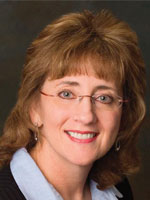 TERRI RINI BARBER
CIO & VP of Support Services Southwest General Hospital Terri Rini Barber has been the Vice President of Support Services and Chief Information Officer for Southwest General Hospital since 2008. Prior to that, she was the Regional Director of Information Technology Operations for the eastern Cleveland Clinic community hospitals and held various management positions at both Hillcrest and Huron hospitals.
Terri was an Adjunct Professor at Baldwin Wallace College from 2004-2009, and currently teaches at Ursuline College. She is a member of the IT Advisory Committee at Cuyahoga Community College and was on the board of Northern Ohio Health Information and Management Systems Society, where she served as president in 2008-2009.
Ms. Barber received a Bachelor’s degree in Education from Bowling Green State University, and a Master’s degree from Cleveland State University. She holds professional certifications as a Project Management Professional (PMP), and has a Certified Professional in Health Information and Management Systems (CPHIMS).
Challenges in technology to meet enterprise needs in 2013 & expectations.
Interoperability between various healthcare IT vendors is a big challenge. It is better now than ever as health IT vendors are required to have their systems certified to meet some basic interoperability standards. But the technology still has a long way to go in order to allow providers to efficiently exchange patient information. True interoperability would give healthcare providers like doctors, hospitals, nursing homes and pharmacies, the ability to securely share important health information quickly and eliminate the cost of duplicate testing.
The areas in a business environment where solutions do not yet exist or not up to the mark, and which if existed, would've made job easier.
I am concerned about the volume and frequency of regulatory requirements. The requirements are complex and require IT intervention. The software vendors developing solutions to facilitate compliance are in the same boat. So instead of spending time, money, and human resources on technology that will enhance patient safety or make my medical staff more efficient, I have to react to all of the regulatory requirements in order to meet governmental deadlines.
Technology Trends Impacting Enterprise Business Environment
Patient Portal technology- Portals have become very sophisticated and will not only allow patients to access their medical records and take a more active role in their health care, but will help hospitals with marketing, bill payment, appointment scheduling, and patient education. With the advent of electronic medical records, another trend is the use of mobile devices to remotely access patient information, order tests, and securely communicate with their patients. The challenge for healthcare CIO’s is to offer these solutions, but to also ensure that the patient information is secure.
My roles and responsibilities as a CIO
Over the past few years, my organization’s thirst for technology has increased. I now spend a significant amount of time with other executives prioritizing IT projects. There are multiple factors to consider as healthcare organizations have a finite amount of money to spend on new technology and a specific number of IT resources available to implement and support new systems. Return on investment, regulatory requirements, patient safety benefits are all key considerations. Also, in the past few years I have taken on executive oversight over other non-IT areas, as organizations attempt to control labor costs and get the most out of their leaders by increasing their span of control.
Lessons learned as a CIO that can help you
Actively participating in my organization’s strategic planning efforts has helped me better align new technology and information systems with organizational goals. Seize the opportunity to participate. As technology changes so quickly, and implementation of new systems increase, I have found that it helps to take a step back and evaluate your IT organizational structure every few years. Don’t hesitate to shake things up from time to time. An IT management model that was put into place 3 years ago may not support optimal operational efficiencies today.