-
Technology
-
Industry
-
Solutions
-
- ASSET MANAGEMENT
- CUSTOMER EXPERIENCE MANAGEMENT
- CYBER SECURITY
- DATA CENTER
- DOCUMENT MANAGEMENT
- ELECTRONIC DATA INTERCHANGE
- ENTERPRISE DATA MANAGEMENT
- ENTERPRISE RESOURCE PLANNING
- ENTERPRISE RISK MANAGEMENT
- ENTERPRISE-GRADE WEB DATA SOLUTIONS
- FACILITY MANAGEMENT
- FIELD SERVICE
- IDENTITY AND ACCESS MANAGEMENT
- INFRASTRUCTURE
- IT SERVICE MANAGEMENT
- MANAGED IT SERVICES
- PAYMENT AND CARD
- PROJECT MANAGEMENT
- SOFTWARE TESTING
- STORAGE
- VIDEO SOLUTIONS
- WORKFLOW
-
-
Platforms
-
Functions
- Leadership Perspectives
- Innovation Insights
- Research
- Magazines
- News
- CXO Awards


 Rob Skillington, CTO and Martin Mao, CEO
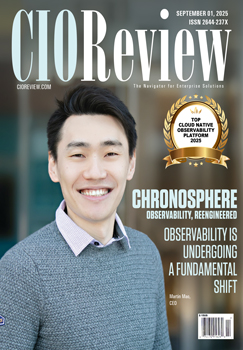
Chronosphere, a fast-growing cloud-native observability platform co-founded by CEO Martin Mao and CTO Rob Skillington, directly addresses this problem. Purpose-built for the modern era, Chronosphere enables companies to scale observability on their terms. It delivers control over data volumes, granularity, and cost without sacrificing performance or insight.
The company’s approach to observability reflects not just technical innovation. It also represents a broader philosophical shift in how businesses view the role and economics of their monitoring stacks. While most existing solutions operate on the premise that more data leads to better visibility, Chronosphere turns that assumption on its head. It argues, persuasively, that the key to better visibility is focusing on the right data. Most companies, it says, are collecting far more telemetry than they need, at great cost and with diminishing returns.
From Uber to Everywhere: The Birth of Chronosphere
Chronosphere wasn’t born in a vacuum. Its roots lie in the real-world pain points encountered by Mao and Skillington at Uber, where they were tasked with building and scaling the internal observability platform to support the company’s hypergrowth.

We can either replace their existing observability or augment it for their containerized environments, ultimately helping companies make better decisions with their data

At its peak, Uber was generating billions of data points per second, far more than existing tools could handle in a cost-effective or performant way.
“We realized that the tools on the market just weren’t keeping up,” says Mao. “They weren’t built for the scale, speed, or complexity of modern systems.”
The duo built an observability metrics engine at Uber called M3 (now an open-source project), which became the foundation of Uber’s home-grown observability stack. This work would later evolve into Chronosphere. When they left Uber to found the company in 2019, their mission was clear: give every company, not just hyperscalers like Uber, the ability to monitor and understand their systems in a cloud-native world.
Unlike traditional monitoring solutions that struggle to handle the complexity and scale of modern microservices environments, Chronosphere was purpose-built to provide high-cardinality observability at scale.
It offers a level of speed, efficiency, and control that legacy tools, often repurposed from monolithic architectures, simply cannot match. By decoupling observability from the limitations of older paradigms, Chronosphere empowers engineering teams to maintain reliability and performance without being overwhelmed by data or cost.
And companies have taken notice. Since its founding, Chronosphere has raised over $300 million from leading investors such as Greylock, Lux Capital, Google Ventures, and General Atlantic, achieving unicorn status in the process. But it’s not just the funding that makes Chronosphere notable. Some of the world’s most innovative digital businesses such as DoorDash, Robinhood, Yahoo, Zillow, and Affirm use Chronosphere to power their observability stacks.
A New Paradigm for Observability
Chronosphere’s platform is based on three core principles: control the data, understand the cost, and drive action. These principles guide how the platform ingests, processes, and presents telemetry data across metrics, traces, and logs.
 The first step, controlling the data, is perhaps the most disruptive to the status quo. Chronosphere allows organizations to manipulate and refine observability data before it gets stored. This reduces data volumes by an average of 84 percent without losing meaningful insights.
“In most observability platforms, data is treated like a firehose,” explains Mao. “The more data you collect, the more you pay, whether or not that data is useful.”
This pricing model has become increasingly unsustainable as companies adopt microservices architectures and cloud-native infrastructure, which generate enormous volumes of telemetry. Chronosphere breaks the cycle by introducing what it calls the Control Plane. This engine enables real-time filtering, aggregation, and enrichment of observability data before it’s persisted. As a result, customers pay less and also reduce noise and complexity, making their teams more efficient and effective.
The next step is understanding the data and associated costs. Unlike most observability solutions, Chronosphere provides granular visibility into how observability spending is distributed across teams, services, and features. This empowers engineering leaders to make informed trade-offs and optimize their telemetry budgets.
“We know it’s a journey. But the results speak for themselves. If your current tools are costing you more and giving you less, then you owe it to your team to explore alternatives”
Finally comes action. Observability is not just about knowing that something is wrong. It is about knowing why and what to do about it. Chronosphere enhances root cause analysis by constructing dynamic service graphs, automatically detecting anomalies, and correlating symptoms with probable causes. The result is that teams resolve incidents faster and with greater confidence, often before end users even notice.
Observability in the Age of Microservices
 The transition from monolithic applications to microservices has brought both benefits and challenges. On the one hand, development velocity increases and teams gain autonomy. On the other hand, systems become more fragmented, making it harder to understand how everything fits together.
As Mao puts it, “You don’t have a single engineer who understands the entire stack anymore. Everyone owns a piece, but no one sees the whole.”
Chronosphere addresses this fragmentation directly. It unifies telemetry across the stack, including metrics, logs, and traces, into a coherent, normalized data model. This model allows for intelligent correlations, historical context, and adaptive alerting, reducing alert fatigue and making observability a first-class citizen in the development lifecycle.
The platform’s flexibility also enables teams to create personalized views of the data they care about while still anchoring those views in a shared source of truth. This helps developers debug their own services while understanding their role in the broader system. For organizations with hundreds or thousands of services, this can mean the difference between hours and minutes during an outage.
Battle-Tested Performance in the Field
Chronosphere’s impact is best understood through the lens of its customers.
Take Affirm, for example. As a fintech company, Affirm must ensure high reliability and responsiveness for every user transaction. By using Chronosphere, Affirm was able to tie observability cost directly to business metrics like transactions per second. This allowed them to adjust data collection in real time to meet performance goals without overspending.
Another example is DoorDash, which has thousands of microservices supporting its logistics, delivery, and consumer-facing apps. With Chronosphere, DoorDash has improved its incident resolution times, reduced the number of high-severity incidents, and regained control over exploding observability costs. Engineers now spend less time firefighting and more time building.
Building for the Enterprise
Chronosphere is acutely aware that large enterprises face unique challenges when it comes to observability. These organizations often have entrenched tools, complex regulatory requirements, and a wide array of stakeholders. To meet these needs, Chronosphere offers robust enterprise features such as service tokens, data segmentation and access controls, audit logging, compliance support, and integration with popular DevOps toolchains.
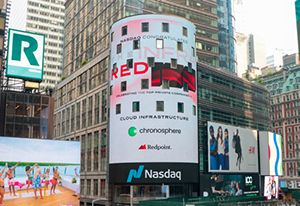 Chronosphere is also interoperable with existing open-source standards like OpenTelemetry, Prometheus, and Grafana. This gives customers the flexibility to migrate at their own pace without getting locked into proprietary data formats or workflows.
“We want to help customers move to open standards as they progress on their cloud-native journey,” says Mao. “We can either replace their existing observability or augment it for their containerized environments. Ultimately, we help companies make better decisions with their data.”
The Economics of Observability
At a time when CFOs are scrutinizing every line item in the tech budget, observability often flies under the radar until it balloons into one of the largest infrastructure expenses. Chronosphere’s value proposition is refreshingly pragmatic: do more with less. In nearly every engagement, the company helps customers free up budget from underperforming observability tools and redeploy those funds to innovation.
This isn’t just a theoretical claim. Chronosphere tracks key success metrics with every deployment, including:
1. Data volume reduction (average of 84 percent)
2. Mean time to resolution (MTTR) improvement (up to 8x)
3. Incident frequency reduction (up to 75 percent)
4. Annual cost savings ranging from hundreds of thousands to millions
The company also works closely with customers to ensure successful implementation, offering professional services, training, and ongoing support.
Why Change Now?
Chronosphere’s ambitions don’t stop at solving today’s observability problems. The company envisions a future where observability is not a reactive function but a proactive enabler of business agility. In this future, observability is as much about understanding trends and preventing outages as it is about resolving them. It becomes a strategic asset that drives product velocity, customer satisfaction, and operational excellence.
To get there, Mao and his team are continuing to invest in machine learning, automation, and usability. The goal is to make observability accessible to every developer, not just platform engineers or SREs.
For organizations already using legacy observability tools, the idea of switching can be daunting. Chronosphere doesn’t shy away from this reality. Instead, it embraces it by helping customers migrate gradually and with confidence.
“We know it’s a journey,” says Mao. “But the results speak for themselves. If your current tools are costing you more and giving you less, then you owe it to your team to explore alternatives.”

Company
Chronosphere
Management
Martin Mao, CTO and Rob Skillington, CEO
Description
Chronosphere is the world’s most reliable observability platform for microservices and containers. By using the platform, clients can find and fix customer-impacting issues faster, and stop paying for data they don’t use. The company’s approach to observability does not just reflect technical innovation—it represents a broader philosophical shift in how businesses view the role and economics of their monitoring stacks.