-
Technology
-
Industry
-
Solutions
-
- ASSET MANAGEMENT
- CUSTOMER EXPERIENCE MANAGEMENT
- CYBER SECURITY
- DATA CENTER
- DOCUMENT MANAGEMENT
- ELECTRONIC DATA INTERCHANGE
- ENTERPRISE DATA MANAGEMENT
- ENTERPRISE RESOURCE PLANNING
- ENTERPRISE RISK MANAGEMENT
- ENTERPRISE-GRADE WEB DATA SOLUTIONS
- FACILITY MANAGEMENT
- FIELD SERVICE
- IDENTITY AND ACCESS MANAGEMENT
- INFRASTRUCTURE
- IT SERVICE MANAGEMENT
- MANAGED IT SERVICES
- PAYMENT AND CARD
- PROJECT MANAGEMENT
- SOFTWARE TESTING
- STORAGE
- VIDEO SOLUTIONS
- WORKFLOW
-
-
Platforms
-
Functions
- Leadership Perspectives
- Innovation Insights
- Research
- Magazines
- News
- CXO Awards











Monika Bose-Samanta
VP, Head of HR Business Units
Aligning People Strategy with Business Priorities
Monika Bose-Samanta, VP, Head of HR Business Units, ACI Worldwide
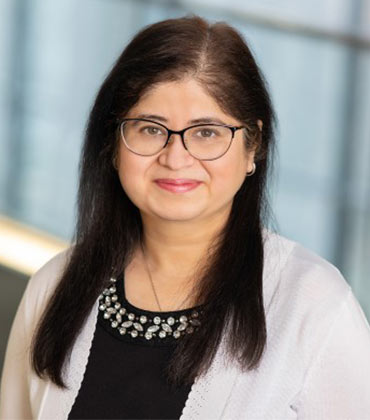
Monika Bose-Samanta believes people strategy delivers the greatest value when it is directly aligned with business strategy. By connecting workforce decisions to organizational priorities, she helps ensure the business has the leadership, skills and culture needed to execute its goals. Her remit spans workforce planning, organizational design and effectiveness, talent management, employee engagement, leadership advisory and change, all focused on preparing the organization for long-term success. Her approach reflects a clear view of modern HR: people strategy is not a support function, but a business lever that determines how effectively an organization can grow, transform and compete.
Replacing Perception with Evidence
Successful transformation depends on having the right people, leadership and culture to turn strategy into execution. That belief shapes Bose-Samanta's approach, balancing business objectives with employee wellness at the center of every people decision.
Every engagement begins with a simple question—what is the problem we are trying to solve and what ultimately is the business goal? This discipline ensures HR does not begin with programs or processes, but with the business outcome leaders are trying to achieve. From there, she identifies the skills, workforce and organizational structures needed to deliver those priorities. Data then provides the evidence to assess existing strengths, uncover development needs and guide decisions based on facts rather than assumptions.
One recent sales competency initiative demonstrates this philosophy in practice. In partnership with business leaders, Bose-Samanta and her team developed a competency framework, created assessment tools and trained people leaders to apply the framework consistently across their teams.
The work created a common language for performance, capability and development, enabling leaders to make more consistent talent decisions across the organization grounded in real and objective data.
Preparing the Workforce for the Future
AI is changing both the skills organizations need and the way work is performed. While it creates opportunities to improve efficiency and productivity, it also demands people who can learn continuously, embrace new technologies and adapt to constant change. For Bose-Samanta, the opportunity extends beyond using AI to complete existing tasks faster. It lies in rethinking how work is done and creating new sources of value.
Helping organizations navigate that shift is where HR becomes a strategic business partner. By understanding future capability requirements, identifying skill gaps and determining whether those needs should be built, bought, borrowed or automated, HR ensures talent strategy evolves alongside business strategy. Alongside workforce planning, it also means evaluating organizational structures and operating models to ensure they remain agile enough to support evolving business priorities.
According to her, transformations rarely fail because of the technology alone; they fail when organizations underestimate the human adoption, leadership alignment and change discipline required to make that technology matter. More often, organizations underestimate the people, change management and adoption required to make transformation successful. Building trust through clear communication helps employees understand why change is happening, how their work contributes to business outcomes and what success looks like as the organization evolves. Combined with opportunities for learning and growth, that clarity creates an environment where employees remain engaged while adapting to change.
 Data should be the foundation of decision-making, helping leaders make informed decisions based on reality rather than assumptions.
Performance and reward systems should also evolve alongside those expectations, reinforcing innovation, collaboration, continuous learning and new ways of working.
Building Leadership Pipelines with Greater Clarity
The same evidence-based thinking shapes Bose-Samanta's approach to succession planning. Rather than relying on perceptions of potential successors, she begins by defining the business outcomes a role must deliver before identifying the experience and expertise required to achieve them. Potential successors are then assessed against those objective criteria, creating a clearer view of succession strength, development priorities and areas where external talent may be needed.
The same principle guides her perspective on DEI. Rather than treating it as a standalone initiative, she believes it should be embedded throughout the talent lifecycle, from hiring and development to advancement. Ultimately, Bose-Samanta believes HR creates the greatest impact when it connects business strategy, data and people. By helping leaders solve business challenges through workforce decisions, HR becomes a strategic partner that enables transformation, strengthens organizational capability and creates lasting business value.
It is this ability to connect enterprise priorities with human capability that defines her leadership and positions HR as a catalyst for sustainable transformation.
ACI Worldwide
VP, Head of HR Business Units
Monika Bose-Samanta believes people strategy delivers the greatest value when it is directly aligned with business strategy. By connecting workforce decisions to organizational priorities, she helps ensure the business has the leadership, skills and culture needed to execute its goals. Her remit spans workforce planning, organizational design and effectiveness, talent management, employee engagement, leadership advisory and change, all focused on preparing the organization for long-term success.

