-
Technology
-
Industry
-
Solutions
-
- ASSET MANAGEMENT
- CUSTOMER EXPERIENCE MANAGEMENT
- CYBER SECURITY
- DATA CENTER
- DOCUMENT MANAGEMENT
- ELECTRONIC DATA INTERCHANGE
- ENTERPRISE DATA MANAGEMENT
- ENTERPRISE RESOURCE PLANNING
- ENTERPRISE RISK MANAGEMENT
- ENTERPRISE-GRADE WEB DATA SOLUTIONS
- FACILITY MANAGEMENT
- FIELD SERVICE
- IDENTITY AND ACCESS MANAGEMENT
- INFRASTRUCTURE
- IT SERVICE MANAGEMENT
- MANAGED IT SERVICES
- PAYMENT AND CARD
- PROJECT MANAGEMENT
- SOFTWARE TESTING
- STORAGE
- VIDEO SOLUTIONS
- WORKFLOW
-
-
Platforms
-
Functions
- Leadership Perspectives
- Innovation Insights
- Research
- Magazines
- News
- CXO Awards


Aligning Technology with Business Impact
Leonardo Aguilera Torres, Chief Information Officer / Head of IT, AGRU America
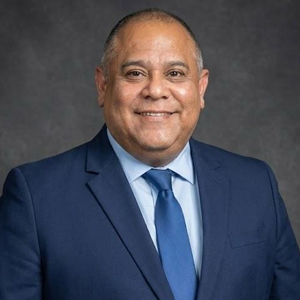
Leonardo Aguilera Torres is a Nicaraguan-Salvadoran technology executive with over 25 years of ICT experience. An electrical engineer with advanced qualifications in cybersecurity, software architecture and data science, he is also an active ISACA and IEEE volunteer, speaker and advocate for applied cybersecurity.
Building Technology That Serves the Business
My role as Chief Information Officer at AGRU America is centered on one core idea that technology must directly serve the business. That perspective comes from years spent working across industrial systems and manufacturing environments, where technology decisions directly shape operations. Over time, I have come to see the CIO role as far more than managing systems. It is about enabling growth, improving efficiency and delivering measurable business value.
On any given day, I balance multiple priorities, from aligning technology with business needs to driving modernization, ensuring infrastructure stability and strengthening cybersecurity governance. Each of these areas is interconnected, and success depends on how effectively they are integrated into the organization’s overall direction.
Part of my focus includes aligning technology investments and roadmaps with long-term business goals, while identifying where technology can improve efficiency, stability and return on investment.
Driving Transformation from the Ground Up
In a specialized manufacturing environment, technology cannot be designed in isolation. The margin for error is minimal, and even small disruptions can impact production, customer commitments and revenue. This reality has shaped my approach to IT strategy, which starts with understanding the business deeply.
This level of involvement allows us to move beyond generic solutions and design systems that create practical operational improvement.
When I joined AGRU America, the priority was to strengthen the foundation. This meant modernizing infrastructure, protecting critical environments, upgrading data processing capacity and improving connectivity between locations through secure communication channels. We also established a stronger disaster recovery capability to ensure continuity if operations were ever disrupted. Together, these changes created a stable environment where innovation could be introduced without compromising resilience.
 After more than two decades in the IT industry, one insight stands out clearly that technology alone does not drive success. Trust does.
A major part of our modernization journey has been breaking silos across departments. At the center of that effort is our ERP, which serves as the operational data core for the business. By building real-time dashboards and integrated systems around it, we made critical information more visible and easier to act on across functions.
Our approach to modernization is incremental and outcome-focused. Instead of pursuing large-scale changes without clarity, we prioritize projects that address specific bottlenecks. Each improvement contributes to a larger transformation, creating sustained progress over time. That transformation depends not only on systems, but on building the internal capability to sustain and extend them.
Operational insight is what turns technology from infrastructure into an advantage. The strongest systems are co-developed with operations led by our COO and informed by the realities of the manufacturing floor.
Building Independent and Intelligent Systems
Equally important is the development of internal capabilities. Building an IT team that understands both technology and operational context ensures that strategies are executed with ownership, speed and accountability.
One of the key philosophies guiding our work at AGRU America is building in-house independence. Rather than relying heavily on outside vendors, we develop solutions internally to gain speed, control and lower cost while retaining strategic knowledge. This has strengthened our internal IT team and created a foundation for innovation that is easier to evolve.
That independence has enabled a hands-on innovation model where we build and deploy machine learning, deep learning and computer vision solutions ourselves, integrating intelligence directly into operations rather than layering on external tools. By combining production data, raw material analysis and computer vision, we can anticipate quality outcomes before final testing, improving consistency while reinforcing a highly practical, factory-floor approach to innovation.
The Principles behind Sustainable Change
Over the years, a few core principles have shaped the way I make decisions. The first is standardization, supported by reliability, resilience and cybersecurity governance, because consistency across systems reduces complexity while protecting continuity. The second is simplicity. Technology should make work easier, not harder, so systems must be designed with the user in mind and enable employees to do their jobs more effectively.
But even the best-designed systems lose value if change creates disruption. That is why continuity remains central to every initiative. Whether implementing new platforms or introducing advanced technologies, resilience must be built into the process so the business can keep moving forward without interruption. Ultimately, transformation is sustained not by systems alone but by people through training, internal champions and shared ownership.
As organizations work to sustain transformation internally, broader industry shifts are reshaping what comes next. Artificial intelligence is becoming central to operations, improving predictive insights and decision-making. At the same time, growing connectivity is making cybersecurity more critical as resilience, risk governance and operational continuity become more tightly linked. Business intelligence is also becoming central to turning operational data into clearer, faster decisions.
Trust as the Foundation for What Comes Next
After more than two decades in the IT industry, one insight stands out clearly that technology alone does not drive success. Trust does.
For any change initiative to succeed, confidence must exist between IT and business teams, within leadership and across operational units. Without that confidence, even the most advanced systems will struggle to deliver value.
Continuous learning is equally important. My early exploration of AI, including coursework through MIT, reinforced the importance of understanding emerging technologies early and shaping their application around the specific needs of the business.
I also believe in constantly challenging existing processes. Whether through automation, scripting or innovative thinking, there is always an opportunity to improve. Small improvements, when applied consistently, can lead to significant outcomes.
But ultimately, scaling an organization begins with trust. Once that foundation is in place, technology becomes a powerful enabler of growth and long-term progress.
AGRU America
Leonardo Aguilera Torres is a Nicaraguan-Salvadoran technology executive with over 25 years of ICT experience. An electrical engineer with advanced qualifications in cybersecurity, software architecture and data science, he is also an active ISACA and IEEE volunteer, speaker and advocate for applied cybersecurity.

