-
Technology
-
Industry
-
Solutions
-
- ASSET MANAGEMENT
- CUSTOMER EXPERIENCE MANAGEMENT
- CYBER SECURITY
- DATA CENTER
- DOCUMENT MANAGEMENT
- ELECTRONIC DATA INTERCHANGE
- ENTERPRISE DATA MANAGEMENT
- ENTERPRISE RESOURCE PLANNING
- ENTERPRISE RISK MANAGEMENT
- ENTERPRISE-GRADE WEB DATA SOLUTIONS
- FACILITY MANAGEMENT
- FIELD SERVICE
- IDENTITY AND ACCESS MANAGEMENT
- INFRASTRUCTURE
- IT SERVICE MANAGEMENT
- MANAGED IT SERVICES
- PAYMENT AND CARD
- PROJECT MANAGEMENT
- SOFTWARE TESTING
- STORAGE
- VIDEO SOLUTIONS
- WORKFLOW
-
-
Platforms
-
Functions
- Leadership Perspectives
- Innovation Insights
- Research
- Magazines
- News
- CXO Awards


From Conception to Critical Infrastructure
Rodrigo Takao, IT Director, Gokei Tecnologia
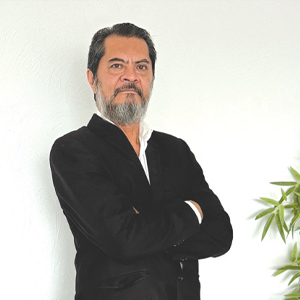
Rodrigo TAKAO is IT Director at Gokei Tecnologia, with more than 35 years of experience in financial institutions and critical infrastructure. Specialist in regulated architecture, cybersecurity and technological governance, he led the design and implementation of the structure that connects Gokei to SPI/PIX and SPB/STR, under the supervision of the Central Bank of Brazil. It operates at the intersection between institutional strategy, operational resilience and regulatory compliance as pillars of competitive advantage.
In 2023, PIX surpassed 150 million registered users and started processing billions of monthly transactions in Brazil. Each of these transactions depends on infrastructure that needs to function with absolute precision.
In regulated financial markets, the true competitive advantage is not in the product. It’s in the infrastructure that supports its replacement.
Over the last five years, I led the construction of the technological architecture that allowed Gokei Tecnologia to operate within the most critical systems in the country—the SPI/PIX and the SPB/STR, under the supervision of the Central Bank of Brazil.
But this journey was never just about technology. It was about institutional power.
The Cost of Fragility
International reports indicate that critical interruptions in the financial sector can generate millions of dollars in losses per hour—without considering reputational damage.
In the context of SPI/PIX, unavailability is not just an operational failure. It is systemic risk.
Therefore, we defined three non-negotiable pillars:
Resilience. Security. High Availability.
They were not chosen for conformity. They were chosen for strategic survival.
Architecture as Positioning
The architecture was not designed to meet the regulatory checklist. It was designed to sustain pressure.
 In regulated markets, whoever dominates the infrastructure doesn’t just operate—it defines who is legitimate.
Negotiating resilient Data Center, implementing HSM for sovereign protection of cryptographic keys and structuring Cloud with strict segregation of environments were strategic decisions.
Each contract signed was, in practice, a declaration of institutional maturity.
We weren't building the infrastructure to work. We were building infrastructure to resist.
When Regulation Becomes a Real Test
Over the past six months, Central Bank requirements related to cybersecurity, business continuity and risk governance have intensified.
Requests for additional evidence.
Practical validation of controls.
In-depth examination of regulatory adherence.
It was a real test.
And real tests reveal the difference between organizations that meet the requirement and organizations that sustain legitimacy.
Gokei's infrastructure was not adjusted under pressure. It remained stable.
And stability, in a regulated environment, is reputational capital.
Security as a Market Strategy
The financial sector is one of the most targeted globally by cyber threats.
In regulated environments, technical vulnerability quickly converts into institutional vulnerability.
Security was treated as a strategic asset:
• Robust encryption with HSM
• Continuous monitoring
• Formal risk management
• Segregation of environments
• Structured governance Compliance is no longer a cost. It became an instrument of competitive positioning.
High Availability Is Systemic Reliability
High availability is not just uptime. It’s a commitment to the ecosystem.
In instant settlement and payment systems, local failures can generate amplified impacts.
True redundancy, automatic failover, and formal continuity plans are not differentiators—they are moral obligations in regulated markets.
What Was Really Built
I didn't just build an infrastructure connected to SPI/PIX and SPB/STR.
We build:
• Ability to operate under continuous supervision
• Maturity to respond to in-depth audits
• Governance capable of sustaining regulated growth
• Structure prepared for the inevitable increase in regulatory requirements
Infrastructure became institutional leverage.
Conclusion
The future of the financial sector will not be defined by digital innovation alone.
It will be defined by who can innovate under regulation without compromising stability.
Organizations that see infrastructure as a cost will continue to be reactive.
Organizations that see it as a strategy will build power.
In regulated environments, technology is not business support.
It is what determines whether the business is trustworthy.
True digital transformation is not in the interface.
It’s in the invisible architecture that sustains legitimacy.
And, in the end, it is not the volume of transactions that defines institutional relevance.
It's the ability to remain solid when the entire system is under scrutiny.
“In regulated markets, whoever dominates the infrastructure doesn’t just operate—it defines who is legitimate.”
Infrastructure Is Not Cost—It’s Institutional Power!!!