-
Technology
-
Industry
-
Solutions
-
- ASSET MANAGEMENT
- CUSTOMER EXPERIENCE MANAGEMENT
- CYBER SECURITY
- DATA CENTER
- DOCUMENT MANAGEMENT
- ELECTRONIC DATA INTERCHANGE
- ENTERPRISE DATA MANAGEMENT
- ENTERPRISE RESOURCE PLANNING
- ENTERPRISE RISK MANAGEMENT
- ENTERPRISE-GRADE WEB DATA SOLUTIONS
- FACILITY MANAGEMENT
- FIELD SERVICE
- IDENTITY AND ACCESS MANAGEMENT
- INFRASTRUCTURE
- IT SERVICE MANAGEMENT
- MANAGED IT SERVICES
- PAYMENT AND CARD
- PROJECT MANAGEMENT
- SOFTWARE TESTING
- STORAGE
- VIDEO SOLUTIONS
- WORKFLOW
-
-
Platforms
-
Functions
- Leadership Perspectives
- Innovation Insights
- Research
- Magazines
- News
- CXO Awards


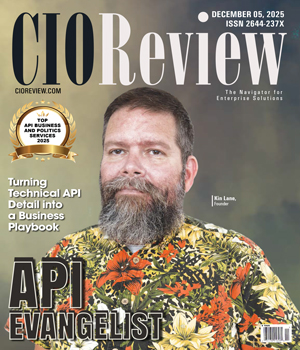
Enterprises today are both producers and consumers of application programming interfaces (API). A bank that opens its systems to fintech partners produces APIs, while simultaneously consuming them from cloud providers, identity services and payment networks. The pattern repeats across industries, creating digital supply chains. What appears to be technical plumbing is, in fact, the rulebook of the digital economy, defining how money moves, data is shared and trust between organizations is managed. Kin Lane, founder of API Evangelist, built his company into a reference point for understanding the language of APIs. The platform, which shares the company’s name, surveys and documents how APIs emerge, mature and succeed depending on the business choices behind them. With this knowledge, organizations are equipped with insights, case studies and reusable artifacts that help them tackle immediate problems while shaping their long-term strategy. “APIs live in the technical details, but their impact shows up in strategy. My job is to connect the two,” says Lane. For a developer, API Evangelist is a library of templates and specifications ready to be applied tomorrow. For an executive, it is a set of case studies and frameworks that reveal how those technical choices shape trust, cost and growth. Lane’s work bridges both. It reminds leaders that APIs are not just background code but business instruments that shape everything from product strategy to customer trust.
Digital Magazine
Top AI Powered Multi Agent Agentic Platform 2025
The true dividing line between software projects that fail and those that flourish lies not in technology, but in disciplined planning. Yet, this level of operational rigor in planning is precisely what most AI initiatives lack. A recent MIT study finds 95 percent of generative AI efforts falter with another independent research confirming the same trend. The reason alludes to lack of collaboration, complexity in AI, sprawling IT ecosystems, and unpredictable system interdependencies. As a result, businesses lose billions annually to failed initiatives, underscoring the demand for a better way forward. Force Equals is designed to bridge these gaps. Through an AI-driven, multi-agent platform, the company transforms the way enterprises plan, align and deliver complex initiatives. It combines AI agents and human collaboration to manage, plan, prioritize and execute initiatives efficiently, reducing cognitive load while cutting planning cycles from three to twelve months to just one to four weeks. The company embeds AI agents as co-pilots throughout the planning journey. Traditionally, teams would first identify the business problem, analyze system dependencies, research solutions, build a business case and run risk scenarios, all before navigating cross-departmental approvals. This is often followed by “collaboration chaos,” with endless meetings and misaligned stakeholders, leading to stretched timelines and compromised execution. Force Equals’ platform simplifies this by prompting teams to clarify problems, probe blind spots and push for greater specificity. It identifies and engages the right subject matter experts at the right time, mapping their inputs directly into the project plan. Rather than signing off on abstract documents, stakeholders now align on measurable goals, concrete requirements and defined outcomes. The platform even generates tailored communication assets to keep teams in sync, reducing reliance on sprawling video call meetings and bloated email threads.

Top Software Testing Company 2025

QA Mentor helps companies release top-tier software products faster, with greater reliability and the confidence that comes from knowing quality is built in at every step. The CMMI-appraised and ISO-certified software testing partner ensures an all-inclusive testing approach with its signature Human Intelligence Software Testing (HIST). It blends the best of human expertise and AI-powered acceleration. Instead of relying heavily on scripted automation, QA Mentor emphasizes human intelligence at every stage of testing to catch what automation alone might miss. It still harnesses AI to speed up test preparation, execution and script maintenance. “Our methodology combines critical thinking, risk analysis and AI-augmented automation so you get deep domain expertise and faster turnaround on test prep and execution,” says Ruslan Desyatnikov, founder and CEO. Client stories demonstrate the impact in action. A fast-growing fintech provider was releasing updates every two weeks. The rapid pace kept it competitive, but critical payment and reconciliation bugs were slipping into production, creating a defect-leakage rate of 12 percent. QA Mentor’s QA architect mapped the client’s existing regression suite, flagged high-risk payment flows and redesigned test coverage around how users actually interacted with the platform.
CXO INSIGHTS

Artificial Intelligence and Machine Learning Will Power the Digital Transformation of Real Estate
Jenny Arden, Chief Design Officer, Zillow

Why must Traditional Quality Assurance Teams Transform and How
Brett Scyrkels, SVP, Director, Software Quality Engineering, BOK Financial

The Cloud Obligation in Scaled Broadcast VR
Lewis Smithingham, Senior Vice President of Innovation, Media.Monks

Planning and Strategizing Disaster Management
Lynne Davis, CIO - Global Head of Wealth Management Information Technology, Jefferies

How AI Elevates Corporate Physical Security
William Davis, Sr. Director of Physical Security, Ally

Smarter, Faster, Better - The Rise of Codeless Test Automation
Greg Goldshteyn, Manager, Quality Assurance, Fox Networks Group

APIs - The Litmus Test for Evaluating Vendors
Eric Caron, Sr Director of Digital Experience, Caribou Coffee


IN FOCUS
Rise of AI-Powered Multi-Agent Agentic Platforms
AI-powered multi-agent platforms combine autonomous AI agents, orchestration layers, and human controls to solve complex, multi-step problems at scale. Organizations deploy these platforms to break monolithic workflows into collaborating specialist agents that plan, act, and verify outcomes across data sources, tools, and stakeholders. Unlike single-model assistants, agentic platforms distribute responsibilities, with retrieval agents fetching facts, reasoning agents evaluating options, execution agents calling APIs or systems, and oversight agents validating results. It enables enterprises to automate end-to-end processes while retaining auditability.
API Integration in Governance: Transforming Business Engagement
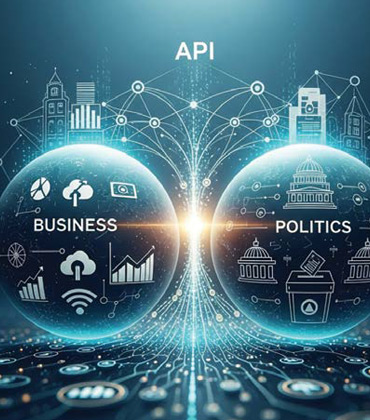
The rising generation presents an opportunity to receive real-time data and participate in social activity in real time, which is corroborated by the increasingly blurred lines between technology, private enterprises, and governance, leading to a high chance of innovation and efficiency in both public and private sectors. An integral part of this shift is APIs. They are tools that have steered digital services faster.
EDITORIAL
The Next Leap for Enterprise Intelligence
Technology today is more than a support function; it’s the core of modern enterprise strategy. Organizations must think, adapt and scale as intelligently as the world they operate in. With businesses navigating constant change, a new generation of solutions is emerging that integrates automation, intelligence and contextual awareness to transform how decisions are made and executed. These systems help businesses move from reaction to anticipation, creating a more resilient, insight-driven model for growth.
Continue ReadingAPI business and politics services are bringing clarity to a volatile global environment. They transform regulatory, policy and political data into structured intelligence, which allows organizations to foresee shifts in compliance or market dynamics. This intersection of data and governance allows leaders to act proactively, serving as a critical advantage for enterprises influenced by global policy and trade movements.
Once viewed as a back-office efficiency tool, automated testing has evolved into a strategic enabler of innovation. It uses AI to detect patterns, predict failures and self-heal scripts, ensuring reliability across complex digital ecosystems. For organizations, this means faster deployments and a reduced operational risk without compromising quality and trust.
The rise of AI-powered multi-agent agentic platforms marks a new chapter in enterprise intelligence. Built as interconnected networks of intelligent agents, these systems reason, collaborate and act with purpose. Unlike traditional automation, they operate across domains, learning from every interaction and optimizing outcomes in real time. This evolution represents a shift from systems that merely execute instructions to those that understand context and develop strategies accordingly.
In this edition of the CIOReview, we explore the evolution of intelligent enterprise systems and how they’re reshaping organizations and their workflows.
We hope this edition of the CIOReview helps you find the right partner for your business requirements.
