-
Technology
-
Industry
-
Solutions
-
- ASSET MANAGEMENT
- CUSTOMER EXPERIENCE MANAGEMENT
- CYBER SECURITY
- DATA CENTER
- DOCUMENT MANAGEMENT
- ELECTRONIC DATA INTERCHANGE
- ENTERPRISE DATA MANAGEMENT
- ENTERPRISE RESOURCE PLANNING
- ENTERPRISE RISK MANAGEMENT
- ENTERPRISE-GRADE WEB DATA SOLUTIONS
- FACILITY MANAGEMENT
- FIELD SERVICE
- IDENTITY AND ACCESS MANAGEMENT
- INFRASTRUCTURE
- IT SERVICE MANAGEMENT
- MANAGED IT SERVICES
- PAYMENT AND CARD
- PROJECT MANAGEMENT
- SOFTWARE TESTING
- STORAGE
- VIDEO SOLUTIONS
- WORKFLOW
-
-
Platforms
-
Functions
- Leadership Perspectives
- Innovation Insights
- Research
- Magazines
- News
- CXO Awards


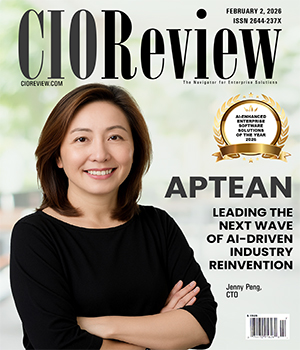
For many industries, the promise of AI is undeniable. It has the potential to transform operations, improve decision-making, and drive efficiency across the value chain. Yet for many organizations, turning that promise into measurable impact remains challenging. AI initiatives often stall when complexity outweighs clarity. As a result, leaders struggle to move from experimentation to practical application. "At Aptean, we see this challenge clearly—and we approach it differently. Rather than layering AI onto existing systems, we built AppCentral 2.0 as a vertical AI platform designed specifically for the realities of industries such as manufacturing, food and beverage, logistics, and distribution. The goal was not to add intelligence as an afterthought, but to embed it directly into the workflows where decisions are made every day." “We wanted to create an AI platform that delivers real impact—not hype,” says Jenny Peng, CTO of Aptean. “A tangible and practical solution that speaks the language of the shop floor, the warehouse, and the supply chain.” A Platform Built for Industry The evolution of AppCentral into version 2.0 reflects a deliberate shift away from generic AI solutions. Many platforms attempt to bolt AI onto legacy architectures, resulting in fragmented experiences and low adoption. AppCentral 2.0 was designed from the ground up with deep industry context embedded throughout—ensuring AI supports real operational needs rather than abstract use cases. The platform integrates intelligent automation and real-time insights directly into daily workflows, allowing organizations to make decisions faster, anticipate issues earlier, and act with greater confidence. By tailoring AI to industry-specific challenges, AppCentral 2.0 removes the need for specialized data science teams or complex dashboards to extract value. “Our goal is to help people do their jobs with greater efficiency and better insight,” Peng explains. “Whether you’re a CFO, a plant manager, or a warehouse operator, the platform is designed to surface the right information at the right time—so people can focus on decisions, not data.”
Digital Magazine
Digital Transformation Of The Year 2026
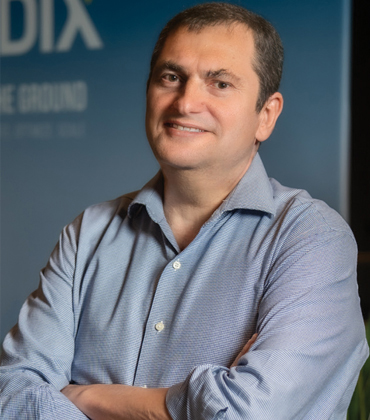
Across asset-intensive industries, the same systemic challenges continue to drag performance down. Data lives in silos across SCADA, MES, ERP, PLM, and IoT systems that refuse to communicate, forcing teams back to spreadsheets and guesswork. Critical expertise is scarce, while aging control systems and patchwork architectures make modernization feel like open-heart surgery. Safety and reliability risks lurk within inconsistent processes, and global operations struggle to replicate best practices at scale. At the same time, organizations face mounting pressure to improve asset performance, cut hidden losses, meet sustainability targets, and deliver ROI faster than ever. Artificial intelligence, digital twins, and cloud platforms promise transformation, but integrating them into something practical, scalable, and truly trusted remains a major hurdle, especially without strong data integrity or unified IT and OT foundations. The result is that ambitious digital initiatives stall, operational costs climb, and leaders are left navigating complexity that no longer matches the speed the industry demands. For many organizations, the path forward involves AI, digital twins, cloud platforms, and industrial connectivity that offer enormous potential. However, assembling these technologies into something practical, scalable, and high-impact often feels like an overwhelming task. This is where Radix enters and transforms complexity into clarity, helping customers turn vision into data-driven value. The company brings together deep engineering intelligence and powerful digital innovation. With a global team of more than 1,300 engineers, data scientists, and technologists who understand how industrial operations function, Radix builds unified data foundations, enhances control systems, integrates advanced automation, and unlocks real-time visibility so clients can operate smarter, safer, and more efficiently at scale. This rare blend of expertise allows Radix to go beyond project execution and solve the most complex challenges facing asset-intensive companies. “The defining strength of our approach is our ability to merge domain knowledge with digital innovation,” says João Carlos Chachamovitz, Radix Founder and Global CEO. The company employs specialists with hands-on experience in every major industrial sector, giving them insight into how data behaves, how equipment responds, and how decisions ripple across production environments. This grounding allows Radix to design solutions that are technologically advanced and operationally relevant, an essential factor for industries where downtime, variability, or safety risks can carry massive consequences. At the same time, Radix maintains strategic partnerships with leading technology providers, which allows the company to select the most suitable technology for each client rather than forcing a one-size-fits-all solution.
Sage Intacct ERP Consulting Services Of The Year 2026

ERP projects rarely fail because the software can’t handle the job; they fail because the people involved can’t get on the same page. Management asks for analytics IT can’t interpret; IT delivers solutions end users struggle to use; and integrations break simply because accountants, technologists, and operators speak different languages. Add complex data moving across multiple systems and vendors insisting certain reports “aren’t possible,” and organizations end up with workflows that don’t match how they actually operate. The challenge isn’t capability; it’s clarity, translation, and context. What companies need is a partner who understands the entire operation, translates across teams, gathers leadership requirements, observes end-user workflows, and provides direct, non-outsourced support, ensuring clarity, continuity, and accurate solutions before any technical work begins. That “someone” is Malissa Oberle, CEO and founder of Apex. An intentionally nimble and deeply personal consultancy, Apex is built around one-on-one representation and long-term partnership. Oberle learns each client’s business from the ground up and remains their primary point of contact, available at all times, never outsourcing support and ensuring continuity from design through implementation and ongoing optimization. This hands-on model is the reason Apex solves the very problems that derail most ERP projects. “By bridging the communication gaps between management, IT, and end users, and by overseeing every integration with full context, we deliver solutions that work seamlessly across the organization, reduce errors, accelerate processes like monthly close, and create long-standing client relationships with remarkably low attrition,” says Oberle. Why Apex Delivers What Others Say Isn’t Possible Specializing in platforms like Sage Intacct, Microsoft SQL Server, and leading integration tools, Apex is built to connect modern cloud systems with legacy, on-premise environments. By learning the full workflow of information across the business, the firm designs ERP and integration solutions that truly fit, solutions that deliver the right data as well as a better experience for the end users who rely on it. And because Apex offers more than integrations, including custom development, API and middleware design, dashboards and reporting, and environment and network support, clients gain a full-service technology partner, not just an implementer. This holistic understanding is Apex’s superpower, and that superpower exists because it reflects the expertise of the person behind the firm. Oberle is a Sage Intacct–certified consultant and has been for about eight years, but her edge comes from the broader technical foundation behind it. With past certifications in Dynamics SL, SQL, and Microsoft technologies, she understands how modern cloud systems connect with legacy, on-premise applications. That experience allows Oberle to integrate Sage Intacct with the rest of a company’s ecosystem, bring data in cleanly, and turn it into reporting and analytics that both management and end users can actually use. Her specialization isn’t just Sage Intacct; it’s making Intacct work seamlessly with everything else. Her services are rooted in the distinct foundation she has built over the years: a business degree, a computer science degree, and a minor in accounting. This combination allows her to speak fluently across worlds that rarely connect, including business, finance, and technology. Because she is also a developer, Oberle can design and build technical solutions and integrations herself, then translate that complexity into reporting and analytics that are genuinely usable for end users. Whether the need is software solutions, business analytics, finance support, or end-user assistance, clients benefit from someone who understands both the big picture and the technical details and can turn both into practical, working results.
Enterprise AI Orchestration Platform Of The Year 2026
AI orchestration represents one of the most important levers for enterprise optimization. Even as large language models reshape industries and automation becomes central to competitive strategy, most organizations remain in the earliest stages of truly operationalizing AI. They face sprawling experiments, fragile prototypes, shadow AI, and a constant struggle to secure what they cannot fully see. In a field moving faster than most CIOs can govern, the market is calling for solutions that are not only cutting edge but also dependable, durable, and architected for the realities of global enterprise environments. This is the gap Airia steps into, which is why its rise has been so immediate. Airia is an enterprise AI security, orchestration, and governance platform built to help organizations securely adopt, manage, and scale artificial intelligence across their entire technology ecosystem. The company emerged from stealth less than a year ago, and few in the enterprise technology world could have predicted the speed at which it has grown. The market was already in the throes of an AI awakening, with organizations racing to adopt generative capabilities, automate workflows, and defend themselves against new forms of digital risk. Yet in this crowded and often confusing landscape, Airia managed to distinguish itself almost immediately. Its ascent reflects a sharp understanding of the challenges enterprises face and the seasoned leadership behind the company, a team that has built, scaled, and sold some of the most successful enterprise platforms of the last decade. Where Veteran Builders Meet a New AI Opportunity Airia’s emergence is closely tied to its founding story. The company may be new, but the team steering it is not. Backed by the leadership team that built AirWatch and OneTrust, two of the fastest-growing enterprise software platforms in history, Airia brings rare credibility to a market that urgently needs trustworthy innovation. Its founders have already proven they can build global platforms that enterprises rely on every day, and now they are applying that same discipline to one of the most pressing technological challenges of this decade: enabling organizations to adopt AI securely, confidently, and at scale. The company already supports around 400 customers and employs roughly 180 people. It has also caught the attention of analysts at a pace that surprises even seasoned observers. Gartner has issued sixteen reference publications mentioning the company within a year, and other major analyst communities, including Forrester and IDC, have offered similar endorsements. For a company that was unknown twelve months ago, this level of momentum is unprecedented. Such traction reflects a growing urgency in the market as enterprises attempt to understand, adopt, and secure AI solutions that often outpace their internal capabilities. Airia positions itself squarely at the center of this problem. Its mission is to help organizations capitalize on AI’s potential without succumbing to the risks of hurried deployment. Kevin Kiley, CEO of Airia, describes today’s enterprise environment as one driven by both fear and FOMO. Airia exists to consolidate visibility, amplify control, and reduce the friction that slows enterprise AI adoption.

CXO INSIGHTS

The Digital Transformation of Service
Courtney Dornell, Vice President Global Marketing COE, Otis Elevator Co

How AI can Help Improve Live Broadcasts
Michael Davies, Executive Vice President, FOX Sports

Intelligent... Artificial Intelligence?
Argyro (Iro) Tasitsiomi, PhD, Head of AI, Investments Data Science & Research, T. Rowe Price

Driving Innovation and Preserving Tradition
Matt Everts, Chief Information Officer, Ruppert Landscape

Integrating Generative AI into the Enterprise
David Robertson, Director Enterprise Architecture - Software Engineering | Applications, Exeter Fina


IN FOCUS
Transformative Trends in AI and Enterprise Software Integration
In an era where digital transformation is reshaping business landscapes, AI-enhanced enterprise software solutions are emerging as powerful tools that can significantly increase organizational efficiency and competitiveness. The integration of artificial intelligence into enterprise resource planning (ERP), customer relationship management (CRM), and other software solutions is revolutionizing how companies operate, providing insights and automation that were previously unattainable.
Redefining Business Agility Through Digital Transformation
Digital transformation has evolved from a technology upgrade initiative into a fundamental business strategy. Organizations across industries now recognize that digital tools alone do not define transformation; instead, it is the strategic integration of digital technologies into processes, culture, and decision-making that creates lasting value. Market volatility, rising customer expectations, remote work models, and data-driven competition have all intensified the need for transformation.
EDITORIAL
Engineering AI for Measurable Outcomes
As enterprises accelerate toward AI-led transformation, the latest edition of CIOReview spotlights organizations that are translating advanced technology into measurable business outcomes across industries. This issue brings together leaders redefining enterprise software, AI orchestration, ERP consulting, and digital transformation with discipline, clarity, and execution focus.
Continue ReadingOur cover story features Aptean, recognized as the AI-Enhanced Enterprise Software Solutions of the Year 2026. Through AppCentral 2.0, Aptean is demonstrating how vertical AI can move beyond experimentation and into day-to-day operations across manufacturing, food and beverage, logistics, and distribution. By embedding intelligence directly into industry workflows, Aptean is helping enterprises demystify AI adoption and realize tangible value without disruption, setting a strong benchmark for practical, industry-aligned innovation.
This issue also recognizes Apex as The Sage Intacct ERP Consulting Services of the Year 2026. Apex stands out for its hands-on, deeply contextual approach to ERP integrations, delivering clarity and continuity where complexity often derails transformation efforts. Meanwhile, Airia, honored as Enterprise AI Orchestration Platform of the Year 2026, is addressing one of the most urgent challenges facing CIOs today by enabling secure, governed, and model-agnostic AI adoption at scale. Rounding out this section, Radix exemplifies excellence in Digital Transformation, helping asset-intensive enterprises unify data, modernize operations, and convert engineering intelligence into sustained operational value.
Complementing these organizational achievements, this edition features insights from distinguished industry leaders, including Cynthia M. Flanigan, Ph.D., Henry Ford Technical Fellow, Sustainability at Ford Motor Company, and Michael Davies, Executive Vice President at FOX Sports, offering perspectives on how technology leadership is shaping the future of mobility, media, and enterprise operations.
Together, these stories reflect a common theme: enterprise success today depends not on technology alone, but on thoughtful orchestration, domain expertise, and disciplined execution.
