-
Technology
-
Industry
-
Solutions
-
- ASSET MANAGEMENT
- CUSTOMER EXPERIENCE MANAGEMENT
- CYBER SECURITY
- DATA CENTER
- DOCUMENT MANAGEMENT
- ELECTRONIC DATA INTERCHANGE
- ENTERPRISE DATA MANAGEMENT
- ENTERPRISE RESOURCE PLANNING
- ENTERPRISE RISK MANAGEMENT
- ENTERPRISE-GRADE WEB DATA SOLUTIONS
- FACILITY MANAGEMENT
- FIELD SERVICE
- IDENTITY AND ACCESS MANAGEMENT
- INFRASTRUCTURE
- IT SERVICE MANAGEMENT
- MANAGED IT SERVICES
- PAYMENT AND CARD
- PROJECT MANAGEMENT
- SOFTWARE TESTING
- STORAGE
- VIDEO SOLUTIONS
- WORKFLOW
-
-
Platforms
-
Functions
- Leadership Perspectives
- Innovation Insights
- Research
- Magazines
- News
- CXO Awards


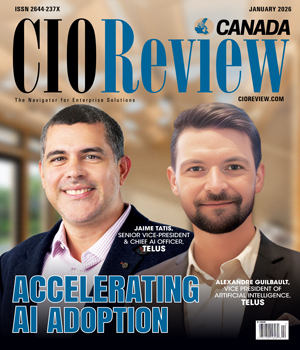
It's likely that we're witnessing one of the most prolific periods for AI with major releases of impressive text and image generators such as ChatGPT, Bard and Dall-E. These generative AI models have been making headlines— sometimes writing the news articles themselves—but they are only one piece of the pie. Behind the scenes, many other AI technologies have been transforming industries and making companies more customer-focused, efficient and competitive. Industries are looking to embrace new ways of working to benefit from these technologies especially due to aggressive competition along with an evolving regulatory landscape. The shift required to succeed in this environment is not only one that embraces new technology but also a profound change in the mindset of both leaders and employees. Enterprises that foster this cultural shift will be the ones to thrive, no matter where technology takes us. Embracing Digital Transformation to Improve Customer Experience Like any industrial revolution, an imminent transformation is ongoing, and although frightening to some, the benefits of responsibly operated AI systems are enormous. Not only is AI adoption accelerating businesses forward, but it is also helping to create smarter investments that will support customer experiences and reduce the strain on individual employees. For instance, by deploying conversational AI in our call centers at TELUS, we have provided agents with real-time and personalized data that enables them to support customers and provide faster response times to their inquiries, leading to improved experiences. Additionally, AI technologies offer industries the potential to leverage large amounts of data to optimize decision making, increase efficiency and productivity, and reduce repetitive tasks so that employees can support customers directly with more complex challenges. For example, by joining massive network performance KPIs, we have been adopting a proactive approach to network monitoring and issue resolution. We have been addressing network problems swiftly, sometimes even before they occur. This approach not only saves employees valuable time but also improves network reliability, leading to a better customer experience. Collaboration as a pillar for success A successful AI transformation needs proper alignment between the business teams and the data experts. The real tangible value cannot be generated without an interdisciplinary collaboration. One effective approach is to organize stakeholders from multiple teams in pods or squads with common goals. The data experts then need to adopt a strategic consulting approach to problem-solving, prioritizing the business outcomes of their work over their technology metrics. In today’s competitive and fast-moving environment, having even a partial understanding can lead to significantly greater benefits than waiting for a complete understanding and missing a timely opportunity. By collaborating closely and gaining a deeper understanding of every stakeholder’s needs, data experts can deliver a continuous stream of actionable insights that the pod can learn from and use to refine further development. Accepting a new mindset Although the benefits are high, the rapid pace of technological change has brought about significant challenges and risks for companies looking to embrace AI transformation. Implementing AI systems requires access to high-quality and relevant data, considerable computing power, and the ability to address factors outside of technology itself, such as security and privacy compliance, end-user engagement, and trust in the insights generated. Furthermore, a willingness to change and transform work is critical for success, and the failure to consider these factors can result in projects that do not produce meaningful financial outcomes.
Digital Magazine
Top Digital Banking Platform in Canada 2026
For years, financial institutions have invested steadily in new technology with the hope of becoming faster, smarter, and more streamlined. Yet many leaders find that efficiency has not improved as expected. Systems do not integrate well, teams are growing, and processes remain slow, manual, and opaque. While the push for automation and efficiency continues, the real focus is on unlocking more value from the technology already in place and turning those investments into measurable gains. LoanCirrus addresses this challenge by unifying lending, banking, and payments into a single, future-ready system. It brings together four platforms: the Digital Lending Platform (DLP), Reach for customer-facing and origination functions, BankCirrus for deposit management, and PayCirrus for real-time payment aggregation, into one cohesive solution. By eliminating silos across lending, deposits, customer experience, and collections, the company helps institutions unlock more value from existing technology and drive measurable improvements in efficiency. While many platforms allow users to bypass or override internal workflows, LoanCirrus embeds each institution’s process into the system at a granular, product-level flow. That means a mortgage product can follow an entirely different end-to-end flow than a consumer loan or a payday loan, complete with built-in policies, timing, ownership, and SLAs. “When software mirrors a business’s process, efficiency becomes achievable. LoanCirrus builds each client’s policies into the system so the technology works with them, not against them,” says Michael Claire, founder and CEO.

Cyber Security

Advisorsden is raising the bar in cybersecurity by reducing overall risk and driving a seamless customer experience that enhances engagement. Its specialists go beyond problem-solving—they empower clients with tailored solutions and the knowledge to manage their security measures effectively for the long term. “Our approach is rooted in the philosophy that securing the environment is only half the battle. To create lasting value, clients must be equipped to manage, adapt and evolve their security frameworks well into the future,” says Juri Biondic, vice president of business development. A cyber-engineering firm, Advisorsden combines deep technical expertise with a focus on long-term resilience, helping clients avoid unnecessary processes and governance. Empowering clients through skills development is central to the company’s methodology. In every engagement, it goes beyond the role of a consultant, helping partners build their capacity. Its skilled engineers work closely with clients during project delivery, customizing solutions to meet specific operational needs. This strategic approach reduces any ambiguity clients might feel throughout the project experience, promoting overall clarity and confidence in the solution. Advisorsden’s team ensures clients fully understand the technologies, strategies and protocols implemented, enabling them to manage and scale their defenses as threats evolve. Advisorsden’s core value is delivering on customer expectations within budget and on time, while aligning with clients’ business rhythms. This enables it to cater to a wide range of organizations navigating the complex cybersecurity landscape, from small and medium-sized businesses to large enterprises.
CXO INSIGHTS

Navigating the Wild West of Payments - From a Community Banking Perspective
Chris Slane, Vice President of Cards & Payment Services, Robins Financial Credit Union

Aligning Digital Transformation Strategies with Business Objectives
Laura Money, Executive Vice President & Chief Information and Technology Innovation Officer, Sun Lif

Innovation Through Scientific Experimentation
Omar Abduljalil, Director, Strategy and Digital Transformation, RBC Capital Markets

Driving Innovation And Operations Across Global Fintech
Chad Schmookler, Vice President, Special Projects, InComm

AI Strategy Blueprint: Turning Vision into Value
Alina Rivilis, CEO and Co-founder, AI Future Leaders

Transforming Financial Services Through AI Innovation
Stacey McLennan-Waldal, Director Generative AI, Agentic Technologies and Virtual Agents, ATB Financi

Technology Reshapes Digital Lending Space
Garnett Volk, Chief Risk and Compliance Officer, Conexus Credit Union


IN FOCUS

Digital Banking Platforms Reshaping Financial Horizons in Canada
Digital banking platforms in Canada have become the pulse of modern financial ecosystems, revolutionizing how consumers interact with money and how businesses navigate complex regulatory landscapes. As the Canadian financial services sector becomes increasingly digitized, these platforms are reshaping both the user experience and the underlying infrastructure that powers financial transactions. With a steady rise in adoption, digital banking is no longer just a trend; it's a transformation. But as this industry evolves, so too do the challenges it faces and the innovations it sparks.

The Digital Banking Shift: Key Technologies Empowering Canada's Financial Future
Digital banking platforms in Canada continue to evolve as consumer expectations, regulatory frameworks, and competitive pressures reshape the financial services landscape. Canadian banks and fintech providers invest heavily in digital infrastructure to deliver seamless, secure, and personalized banking experiences. Customers increasingly expect intuitive mobile interfaces, real-time access to financial data, and integrated services that extend beyond traditional banking. As a result, digital platforms now serve as central engagement hubs rather than simple transaction tools.
EDITORIAL
Embracing the Digital Revolution
In recent years, digital banking platforms have emerged as a game-changer in the financial industry. With the rise of mobile technology, these platforms offer customers unparalleled convenience, allowing them to access their accounts, make transactions, and manage their finances anytime, anywhere.
Continue ReadingOne of the key advantages of digital banking is its accessibility. Gone are the days of waiting in long queues at physical branches. Digital banking allows customers to carry out their banking activities from the comfort of their homes, reducing the time and effort required to manage finances.
Technological advancements play a central role in the success of digital banking platforms. Innovations like AI, blockchain, and machine learning enhance security, streamline operations, and provide customers with more tailored financial advice. Mobile applications further strengthen the customer experience by offering intuitive, user-friendly interfaces that make banking tasks more seamless than ever.
The customer experience is at the heart of these digital platforms. By integrating services like instant payments, real-time account updates, and easy money transfers, digital banking platforms have redefined convenience. Security features such as biometric authentication and multi-factor verification ensure that users feel confident about the safety of their transactions.
Looking ahead, the future of digital banking platforms appears promising. As technology continues to evolve, we can expect further innovations in areas like artificial intelligence, cybersecurity, and financial inclusion. Digital banking platforms will likely continue to grow, offering even more streamlined and secure services that meet the demands of the modern consumer. The digital banking revolution is just beginning, and it is set to redefine the way we think about money management in the years to come.
In this edition, we have featured insights from Jeff Martin, EVP Procurement, Data and Corporate Platfrom, TD, Laura Money, Executive Vice President & Chief Information and Technology Innovation Officer, Sun Life, and Alina Rivilis, MA, MBA, CEO and Co-founder, AI Future Leaders.
