-
Technology
-
Industry
-
Solutions
-
- ASSET MANAGEMENT
- CUSTOMER EXPERIENCE MANAGEMENT
- CYBER SECURITY
- DATA CENTER
- DOCUMENT MANAGEMENT
- ELECTRONIC DATA INTERCHANGE
- ENTERPRISE DATA MANAGEMENT
- ENTERPRISE RESOURCE PLANNING
- ENTERPRISE RISK MANAGEMENT
- ENTERPRISE-GRADE WEB DATA SOLUTIONS
- FACILITY MANAGEMENT
- FIELD SERVICE
- IDENTITY AND ACCESS MANAGEMENT
- INFRASTRUCTURE
- IT SERVICE MANAGEMENT
- MANAGED IT SERVICES
- PAYMENT AND CARD
- PROJECT MANAGEMENT
- SOFTWARE TESTING
- STORAGE
- VIDEO SOLUTIONS
- WORKFLOW
-
-
Platforms
-
Functions
- Leadership Perspectives
- Innovation Insights
- Research
- Magazines
- News
- CXO Awards


Aleph5
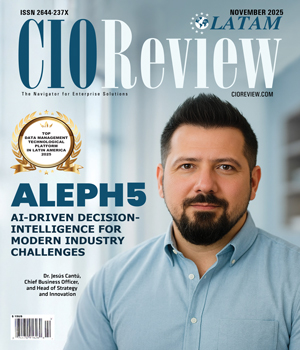
AI-Driven Decision-Intelligence for Modern Industry Challenges
In modern businesses, information is everywhere, but intelligence is rare. Companies are drowning in spreadsheets, dashboards, and forecasts, yet struggle to make decisions that move them forward. That is the gap Aleph5 has been closing since 2007 by transforming information overload into clarity, confidence, and measurable outcomes. Established in 2007 and headquartered in Monterrey, Mexico, with plans to relocate its global headquarters to the United States in 2026, Aleph5 has carved a unique position in the data management and decision intelligence landscape. The company’s proprietary platform, Ernest®, has become the backbone for decision-making across industries as diverse as manufacturing, logistics, energy, and transportation. From the outset, Aleph5 has been guided by a simple conviction: data alone does not drive transformation, but decision intelligence does. The company’s philosophy integrates mathematics, AI, and human judgment into unified, adaptive systems that evolve alongside clients’ businesses. This blend of science and pragmatism has become the foundation for a growing number of organizations seeking to make faster, smarter, and more reliable decisions in increasingly complex environments. Integrating Every Stage of the Decision Cycle At the heart of Aleph5’s approach lies a deep commitment to aligning with client realities. Rather than offering prepackaged dashboards or generic analytics tools, Aleph5 develops tailored decision intelligence systems that reflect each client’s operational structure, constraints, and strategic objectives. “Our mission has always been to translate operational complexity into decision clarity,” says Dr. Jesús Cantú, chief business officer, and head of strategy and innovation.
Digital Magazine
Enterprise Resource Planning
Zafirosoft
Designing ERP around Business, Not the Other Way Around
Arístides T. Palma, Founder and CEO
Across Latin America, enterprise resource planning (ERP) systems crowd the market with promises of efficiency and integration. Yet beneath their glossy interfaces, many require organizations to conform to rigid, predefined structures. This rigidity often creates more friction than flow for businesses that depend on adaptability. Zafirosoft, a Mexico-based technology company, is rewriting this narrative. Its mission is to create ERP systems that adapt to the business, not the other way around. In a region defined by rapid economic shifts, diverse regulations, and competitive industries, Zafirosoft has earned the trust of companies in retail, logistics, construction, and energy. Its reputation is built not on volume but on crafting ERP systems that reflect each client’s unique processes, ambitions, and challenges. “Our clients aren’t looking for digitalization as a buzzword. They come to us for true transformation, with streamlined processes, faster decisions, and a platform that scales with their ambition,” says Arístides T. Palma, Founder and CEO of Zafirosoft. That focus on transformation drives every aspect of the company’s approach. Many organizations across Latin America still struggle with disjointed systems: finance, sales, operations, and HR often operate in isolation, generating redundant data and leaving decision-makers blind to real-time insights. Zafirosoft eliminates this fragmentation by bringing everything together in a single, intelligent system.

Enterprise Data Management

Data Governance Paradox: Does More Data Management Mean More Bureaucracy?
Helio de Cillo, Strategy Data & Analytics Executive, Bimbo do Brasil (part of Bimbo Group)
SAP

BRF Bets on Digital Transformation to Become Simpler and More Efficient
Antonio Cesco, Global Director of Technology and Digital Transformation, BRF
Biotech

The Role of the CIO in Digital Transformation. Introducing Digital Product Management
Xavier Serres Escoda, CIO North Latam and Customer Experience Agile Product Group Leader Americas, D
Enterprise Data Management

Empowering Innovation with Data, Analytics, and AI
Wilmer Rodriguez Ruiz, Data, Analytics & AI Manager/CDAO, Grupo AJE
Enterprise Data Management

Engineering the Future of Payments
Fabian Gaban, CTO, Kushki

IN MY OPINION
Enterprise Data Management
Executing the Data Strategy in a Product-Oriented Organization
Laércio Queiroz, Global Data & Analytics Director, AB InBev

LAST WORD
Enterprise Data Management
Enterprise Architecture, Beyond the Design
Silvia Gallaga, Head of Enterprise Architecture, Banco de Crédito BCP
IN FOCUS
The Evolving Role of Data Management in Latin American Enterprises
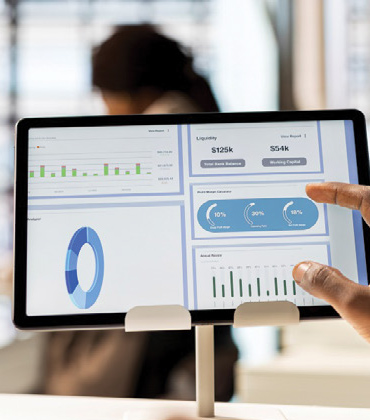
In the rapidly evolving business landscape of Latin America, the demand for effective data management solutions is growing at an unprecedented pace. As industries across the region undergo digital transformation, the need for robust, scalable, and secure platforms to manage vast amounts of data has become more critical than ever. From government institutions to private enterprises, businesses in Latin America are seeking innovative ways to harness the power of data while maintaining compliance with increasingly stringent regulations. This shift towards data-centric operations is not only a response to technological advancements but also a strategic move to ensure competitiveness in an increasingly globalized market.
Scalable ERP Solutions Enhancing Efficiency across Latin American Industries
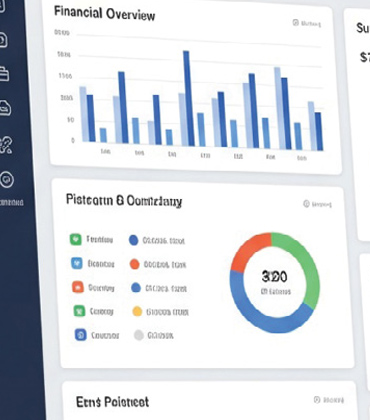
Enterprise resource planning (ERP) business software has evolved into a critical foundation for modern organizations, offering seamless integration of core processes and unifying diverse functions under a single system. ERP solutions provide a centralized framework that drives efficiency, transparency, and strategic growth by connecting finance, supply chain, operations, and workforce management.
EDITORIAL
When Data and ERP Speak the Same Language
Once built to record what happened yesterday, ERP systems today predict what will happen tomorrow. Across industries, they are evolving from rigid back-office tools into agile, cloud-native platforms that sense, learn and adapt. AI now drives forecasting, automates financial close and keeps supply chains ahead of disruption.
Continue ReadingWhat once required teams of analysts is now delivered through predictive dashboards that guide decisions in real time. ERP has evolved from a control mechanism to a collaboration engine, linking finance, operations and strategy in a single intelligent loop.
Beneath this evolution lies a parallel shift in data management. Enterprises are transitioning from fragmented data lakes to unified architectures, such as data fabrics and meshes, that enable secure information flow across functions and geographies. The focus is no longer on collecting ‘big data,’ but on cultivating the ‘right data,’ which is governed, contextual and actionable.
Together, ERP and data platforms are converging into a single digital nervous system, one that not only records what a business does but continuously learns how to do it better.
Driven by these trends, the global ERP software market is projected to reach $123.4 billion by 2030, growing at a CAGR of 11.7 percent. Similarly, the enterprise data management market is expected to reach $221.6 billion by 2030, expanding at a CAGR of 12.4 percent.
This magazine features a thought-provoking article by Helio de Cillo, strategy data & analytics executive at Bimbo do Brasil, who explains how traditional data governance breeds bureaucracy, while modern, agile governance simplifies complexity and strengthens decision-making. Also featured is an insightful piece by Xavier Serres Escoda, CIO North Latam and customer experience agile product group leader Americas at Danone, who shares that digital transformation is less about technology and more about how businesses evolve in response to social and market changes.
We also feature leading organizations redefining excellence in data management and enterprise technology. Among them, Aleph5 stands out as an AI-powered software company advancing supply chain optimization and decision-intelligence through integrated analytics, optimization and machine learning.
In this issue, we spotlight the innovations shaping the future of ERP, business software and data management, offering insights to help organizations enhance efficiency, strengthen resilience and accelerate digital maturity.
