-
Technology
-
Industry
-
Solutions
-
- ASSET MANAGEMENT
- CUSTOMER EXPERIENCE MANAGEMENT
- CYBER SECURITY
- DATA CENTER
- DOCUMENT MANAGEMENT
- ELECTRONIC DATA INTERCHANGE
- ENTERPRISE DATA MANAGEMENT
- ENTERPRISE RESOURCE PLANNING
- ENTERPRISE RISK MANAGEMENT
- ENTERPRISE-GRADE WEB DATA SOLUTIONS
- FACILITY MANAGEMENT
- FIELD SERVICE
- IDENTITY AND ACCESS MANAGEMENT
- INFRASTRUCTURE
- IT SERVICE MANAGEMENT
- MANAGED IT SERVICES
- PAYMENT AND CARD
- PROJECT MANAGEMENT
- SOFTWARE TESTING
- STORAGE
- VIDEO SOLUTIONS
- WORKFLOW
-
-
Platforms
-
Functions
- Leadership Perspectives
- Innovation Insights
- Research
- Magazines
- News
- CXO Awards



Few years ago I was invited to lecture a selective group of people in a vendor forum at the beautiful Bogota Colombia. The topic of my presentation was dedicated to Asset & Liability Management, but also the relevance, particularly for a bank stand point of view to model & hedge the intrinsic interest rate risk on the balance sheet. By remembering the before mentioned beautiful & grateful experience, the main pinpoint is to emphasize the fact that interest rate risk management represents an ancient & important topic for banks since a while, nonetheless, the failure in taking into account precisely the asset & liability practice, but more specifically the interest rate risk management, has been “THE DRIVER” associated with the SVB collapse. As this article expresses in the head line, managing the risks on the balance sheet is a complex task, and more than a hard science, it also has to be with the art of measuring, modelling & managing the risks associated with liquidity, capital, currency & interest rate, among others. To capture & describe, the complex art-science endeavor behind managing the above mentioned risks, it would take more than a few pages, so in the present dissertation, the focus is going to be interest rate risk, which in order to be properly hedged & managed require as a minimum, the following items: 1. Characterization of the bank’s balance sheet The first & most important task when assessing interest rate risk is a proper characterization of the balance sheet. In this regard, knowing for example that the balance sheet is mainly comprised of fixed assets (which are vulnerable against the increase in interest rates, but defensive against the decrease in rates), is irrelevant if one does not have the complete picture on which liabilities are funding those assets, so the first step for measuring interest rate risk is to have the big picture of assets, but also liabilities in the balance sheet of a bank. For example, in the case of SVB, the fact of the fixed rate asset side means nothing alone, the big problem arose when one take a look at the whole balance sheet, where fixed rate assets were mainly funded with floating rate liabilities .. in the words of a famous Colombian writer “A chronicle of a death foretold”. This might be used as a shield in both ways, to hedge against increases in interest rates in for example floating rate liabilities by paying the fixed rate for example in a swap and receiving the floating rate, which will be used to honor the floating liabilities In characterizing the balance sheet structure, there exist a wellknown tricky part, which has to be with modelling the expected behavior of attrition, and/or optionality in some products, such as demand deposits with no contractual maturity or mortgages with certain degree of prepayment intensity. By modelling the before mentioned characteristics, different conclusions from those of a simple view of the balance sheet may arise. For example the expected duration of a fixed rate asset, which may or may not have a natural hedge with liabilities, which in the simple mirror have no contractual maturity, but by modelling its behavior, its expected duration may match that of the before mentioned asset. Long story short, it is crucial to model & characterize the behavior of the balance sheet. Finally & only after a complete & robust characterization, it is possible to know which pieces of the Balance Sheet are at at risk, for example x% of fixed rate assets are unhedged with liabilities or derivatives against an increase in interest rates. Moreover, a complete assessment of the Balance Sheet may lead to conclusions on which pieces are structural & thus more complex to hedge or to change its underlying characteristics & the products that are much more dynamic, as tools to hedge or change the profile of the Balance Sheet. 2. Available & necessary tools to hedge interest rate risk There exist many tools to hedge against interest rate risk, nonetheless it is quite important to have a clear distinction between those structural & thus complex or dependent to different factors, but also those that are dynamic & represent a useful tool to change or hedge Balance Sheet characteristics/items. To discuss a few & in order to keep this dissertation as simple as possible, the asset side is quite relevant depending on the rates cycle, no matter, when assessing interest rate risk, the liability side is quite important as well, so taking into account the structural tools, which are less dynamic because depend directly on the credit/deposit cycle in the economy, but also to the competitive landscape. Considering the latter, & as said before, fixed rate assets are vulnerable against rate increases, nonetheless if fixed/stable portfolios of liabilities are well modeled & used to fund those assets, there exist a natural hedge & thus an important degree of interest rate risk mitigation. On the other side, floating rate assets are vulnerable against rate decreases, nonetheless if funded with variable liabilities, there exist also a natural hedge; however, in this last dissertation there might be controversy, because a bank would always prefer demand low cost deposits vs. floating rate deposits. So let’s say that the competitive landscape allows the bank to acquire an infinite amount of low cost fixed/stable demand deposits, there as floating rate assets are being funded with fixed rate liabilities, the interest rate risk, which “EXISTS”, shall be hedged with other set of non-structural tools, which are the well-known hoomies, better recognized as financial derivatives, which might be used as a shield in both ways, to hedge against increases in interest rates in for example floating rate liabilities by paying the fixed rate for example in a swap and receiving the floating rate, which will be used to honor the floating liabilities. The before mentioned allows to effectively change the behavior of some floating liabilities into fixed rate liabilities, hedging at the end against increases in the rates. Taking the other side of the coin, the very same derivatives might be useful to hedge against decreases in rates on the floating rate asset side by effectively setting a floor (i.e. by paying the float of the loans in the swap & receiving the fix). 3. Timing for active management & hedging of risks Last but not least, & especially when non-structural dynamic hedging tools are used, a clear, solid & proactive timing is crucial. Let’s take the final example on the previous section, & considering that after the recent volatility in markets, the decrease in rates, both in the US & Mexico is expected by the markets & traders this very same year; if floating rate loans are funded with fixed rate liabilities, there exist an evident interest rate risk on the balance sheet, so the financial derivatives might be used to effectively hedge the risk, by exchanging the float rate of the loan portfolio for a fixed rate in a swap.
Digital Magazine
Digital Transformation Services of the Year in Latin America 2025
Applaudo
Designing Transformation, Delivering Growth
José Giammattei, Co-Founder and CEO at Applaudo
The push for digital adoption is a global phenomenon, but genuine digital transformation entails much more than simply implementing the newest technologies. It represents a comprehensive overhaul of an organization’s operations and value delivery, a complex journey that most companies cannot undertake alone. This is why an increasing number of businesses are collaborating with nearshore software development firms such as Applaudo. By leveraging geographical proximity, cultural compatibility, and engineering expertise, a nearshore partner can help shape a business model into a coherent, long-term strategy that adapts to evolving requirements. This approach effectively turns digital aspirations into tangible, sustainable growth. Building on this foundation, Applaudo helps organizations transform ideas into digital solutions that drive lasting change. These solutions are developed with a clear vision of what the business should look like in five years. “We align technology with business outcomes, helping organizations achieve faster time to market, improved operational efficiency, and increased customer engagement,” says José Giammattei, co-founder and CEO. Engineering the Future Applaudo delivers end-to-end digital capabilities that span strategy, design, engineering, and infrastructure. The team collaborates with clients from early-stage ideation to enterprise-scale deployment. The company begins every engagement by helping clients shape ideas into digital solutions that will be fully implemented within five years. The process starts with a deep dive into each company’s business model and long-term goals. From there, Applaudo designs a digital strategy that details how each initiative will transform the organization and outlines a clear plan for development and implementation over the long term. For Applaudo, true transformation means building new capabilities rather than patching outdated systems. That belief drives every project and gives the firm the confidence to tackle complex challenges head-on. What began as a pure software development shop has evolved into a full-service digital transformation consultancy, with services that go beyond checking boxes. They are designed to build a scalable, adaptable foundation that empowers businesses to evolve confidently with emerging technologies and shifting market dynamics.

CXO INSIGHTS

Bradesco Lean Digital and Cultural Transformation – Transforming customers in fans
Cristina Pinna, IT Director, Banco Bradesco
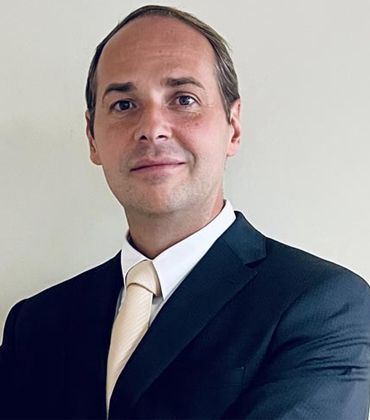
Data-Center Benefits to Be in the Cloud and Future
Tonon Leandro, Corporate Chief Information Officer, Pronaca

Journey to Becoming Data-Driven
Pablo A. Guzzi, Chief Data & Analytics Officer, Ualá
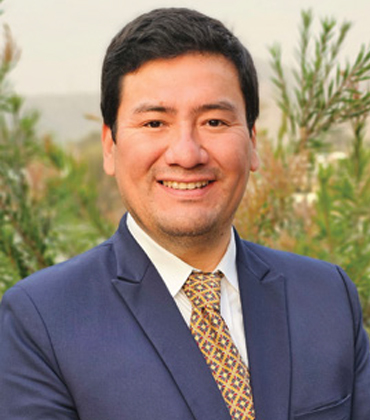
Driving Digital Transformation and Innovation with Data and Analytics
Wilmer Rodriguez Ruiz, Data, Analytics & AI Manager/CDAO, Grupo AJE
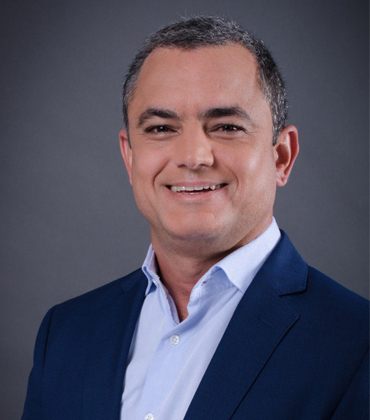
Driving Business Efficiency through Digital Transformation
Gustavo Vieira, Global Chief Information Officer, CMPC

Digital Transformation in Data: Focusing on Business Value
Andre Luiz Soares, Data and Analytics Manager, Lojas Torra

Driving Digital Transformation In Pharma: Innovation, Challenges And Future Trends
Brenda Finkelstein, Head of Data, Digital & Technology, México, Takeda

IN FOCUS

Emerging Technologies in Latin America: Driving Digital Transformation
Technological advances like cloud computing and artificial intelligence are transforming businesses by improving operations and enhancing customer understanding, leading to more efficient and customer-focused practices.

Rising Influence of Digital Transformation Services in Latin America
Digital transformation services are reshaping Latin America's business and public sectors by enhancing productivity, connectivity, and innovation while driving competitiveness, inclusion, and sustainable economic growth.
EDITORIAL
Powering a Digital Awakening
Latin America is stepping into a new era of digital growth, where cloud innovation, artificial intelligence, and modern infrastructure are reshaping the way organizations operate. Businesses are no longer asking whether to transform but how quickly they can adapt. That urgency is bringing data center management and migration services into sharp focus as the foundation for seamless and secure modernization.
Continue ReadingAs companies make the shift, the physical and digital landscapes of the region are evolving in tandem. New cloud regions and hyperscale campuses are rising in key markets, bringing with them managed services that not only handle complex migrations but also fine-tune performance and enable flexible hybrid environments. These developments are creating fresh possibilities for enterprises that once struggled with legacy systems.
Yet the race to modernize is no longer only about capacity and speed. Sustainability has become part of the business case. Operators are weaving renewable energy, innovative cooling methods, and water-saving designs into their strategies, showing that green infrastructure can power the region’s next wave of growth. Clean energy leaders are using their natural advantages to attract investment while setting new standards for environmental responsibility.
This push is strengthened by major connectivity projects that will tie Latin America more closely to global markets, reducing delays and unlocking new opportunities for cross-border collaboration. Challenges remain, from navigating regulations to ensuring that digital progress reaches every community. For CIOs, the moment calls for vision and commitment to building infrastructure that is modern, sustainable, and inclusive—ready to support the region’s future ambitions.
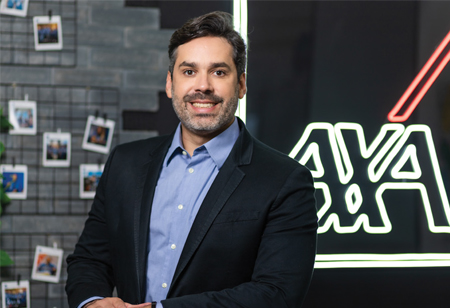
In this edition, we spotlight digital transformation across the region and share insights from Bruno Porte, VP of transformation, tech, data & operations at AXA no Brasil, and Pablo A. Guzzi, chief data & analytics officer at Ualá, as they discuss strategies for harnessing data, technology, and innovation to drive sustainable business growth.
