-
Technology
-
Industry
-
Solutions
-
- ASSET MANAGEMENT
- CUSTOMER EXPERIENCE MANAGEMENT
- CYBER SECURITY
- DATA CENTER
- DOCUMENT MANAGEMENT
- ELECTRONIC DATA INTERCHANGE
- ENTERPRISE DATA MANAGEMENT
- ENTERPRISE RESOURCE PLANNING
- ENTERPRISE RISK MANAGEMENT
- ENTERPRISE-GRADE WEB DATA SOLUTIONS
- FACILITY MANAGEMENT
- FIELD SERVICE
- IDENTITY AND ACCESS MANAGEMENT
- INFRASTRUCTURE
- IT SERVICE MANAGEMENT
- MANAGED IT SERVICES
- PAYMENT AND CARD
- PROJECT MANAGEMENT
- SOFTWARE TESTING
- STORAGE
- VIDEO SOLUTIONS
- WORKFLOW
-
-
Platforms
-
Functions
- Leadership Perspectives
- Innovation Insights
- Research
- Magazines
- News
- CXO Awards



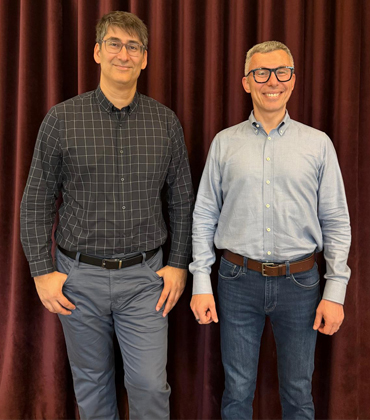 Baris Saydag, CEO and CTO; Hamza Ak, COO
Kinesis Network addresses that gap through a next generation compute grid that unifies fragmented GPU and CPU capacity across clouds, data centers and independent providers into one operating environment. Instead of treating each source as a separate infrastructure decision, Kinesis abstracts away the underlying complexity and gives enterprises a single way to see, govern and deploy across available compute.
Resources a customer owns, rents or can access operate within that grid. Kinesis can supplement that capacity on demand when usage spikes or a workload needs scarce high-performance GPUs, such as H-series and B-series nodes. Its control plane assigns work to suitable hardware based on availability, performance and cost, while handling failures and workload movement behind the scenes.
“We speak the language of a CFO instead of the language of an engineer. It changes the question from how much hardware must I buy to how much work I can get from the hardware I already have,” says Baris Saydag, CEO and CTO.
From Available Capacity to Running Applications
Making compute visible is only half the problem. Applications still need a straightforward way to reach it.
Traditional orchestration tools assume compute has already been consolidated. Kinesis operates a layer earlier, creating the networking and compute topology that allows fragmented resources to function as a single grid before placing applications across them.
Developers do not have to change how they work. Teams can connect a GitHub repository, reference an image in an existing registry, provide a Dockerfile or ZIP archive, or start from a template. Each route lands on the same runtime and placement layer. Networking, permissions, observability, recovery, certificates and scaling come preconfigured around the workload, reducing DevOps effort whenever an application moves across infrastructure.

We speak the language of a CFO instead of the language of an engineer. It changes the question from how much hardware must I buy to how much work I can get from the hardware I already have.

Kinesis describes the infrastructure beneath that experience in three parts: customer owned compute, Kinesis supplied compute and, over time, everyone’s compute.
The first helps organizations make fuller use of committed infrastructure. The second adds capacity without forcing applications onto a different platform or locking teams into one provider. “Our serverless model extends that flexibility through fractional dedicated compute, reducing machine setup and capacity guesswork while giving GPU and AI workloads isolated resources,” adds Dan Neault, CGO.
Administrators can set resource and budget limits, separate production from experimentation and reclaim underused capacity. Placement decisions remain traceable, giving operators visibility into where work ran and why.
Learning from How Compute Is Actually Used
One research group approached Kinesis asking for more GPUs. The issue turned out to be governance, not raw capacity. Idle sessions held memory while large jobs consumed shared resources. Better controls allowed the same hardware to support more users.
A biotech customer faced a different challenge: it needed scarce GPUs for protein research without committing to large blocks under multiyear agreements. Through Kinesis, it combined smaller pockets of capacity from multiple sources, including university resources and donated compute.
A Fortune 100 organization had the reverse problem: substantial internal infrastructure and hyperscaler accounts, but no simple way to operate them together
Kinesis is furthest along in unifying customer owned compute and supplementing it with its own capacity.
“Everyone’s compute is the longer-term extension, approved idle machines joining a broader network under owner-defined rules, turning underused infrastructure into productive capacity,” says Hamza Ak, COO.
The broader vision resembles a power grid. Different sources contribute compute while workloads draw what they need based on performance, availability, location and cost.
By turning fragmented capacity into production ready infrastructure and giving applications one operating layer across it, Kinesis shortens the path from available compute to deployed workloads. That is what makes it a deserving choice for CIOReview’s App Deployment Platform of the Year 2026.
App Deployment without Infrastructure Rework
A deployment platform earns its keep in the gap between working code and a dependable public endpoint. Cloud and AI teams can lose days to network policies, build pipelines, certificates and recovery logic after the application itself is ready. The problem compounds once workloads move between clouds or from owned hardware to rented GPU capacity. Each environment brings its own interfaces and assumptions, turning portability into recurring engineering work. An executive evaluating an app deployment platform should therefore look past a polished launch button. The better question is how much infrastructure work disappears when an application changes location, hardware class, traffic pattern or ownership model.
Workflow fit matters because standardization can become another migration project. Developer teams already have repositories, container images, build routines and release conventions. A credible platform should accept those habits without forcing every group into a proprietary path. It should also preserve one deployment surface when the underlying compute changes. That means a team should not have to rebuild networking or relearn deployment mechanics merely because a workload moves from one provider to another. For CIOs, this is less about developer convenience than about keeping scarce engineering time on the product while reducing the hidden labor attached to infrastructure handoffs.
Compute fragmentation makes that portability test more important for AI applications. GPU supply may sit across hyperscalers, specialist providers, internal fleets and colocation capacity. The platform has to treat that diversity as a placement problem rather than a reason to multiply deployment stacks. Policy controls matter here. A workload may need a certain hardware profile and availability rule; buyers also need a record of where it ran and why. That traceability becomes a useful proxy for control-plane maturity. Failure handling belongs in the same assessment. If a machine drops out, the platform should isolate the fault and re-place work without asking the application team to rebuild its environment.
“Kinesis Network’s common runtime lets teams deploy from existing workflows while the Kinesis Grid handles placement, scaling, health monitoring and recovery across connected compute.”
Cost control is tied to the same architecture. Teams often pay for idle resources because capacity has been reserved before demand is known, while internal compute can sit unused behind organizational or technical boundaries. An app deployment platform should make it possible to use existing capacity before adding more, then extend compute without changing the developer experience. Serverless models deserve scrutiny on actual isolation and billing behavior, especially for GPU work where noisy neighbors can distort performance. Executives should examine whether the platform can scale around demand while keeping deployment artifacts portable enough to leave. A low entry price means little if every move later creates another integration project.
Taken together, that buying logic makes Kinesis Network the premier choice for organizations that want app deployment decoupled from a single compute provider. Its Kinesis Grid brings customer-owned and rented capacity under one deployment surface, while the Kinesis Portal accepts existing paths like GitHub repositories or container images. Its common runtime lets teams deploy from existing workflows while the Kinesis Grid handles placement, scaling, health monitoring and recovery across connected compute. Built-in logs, autoscaling, SSL and secrets reduce the infrastructure work around production deployment. Kinesis also offers serverless compute and dedicated capacity under the same grid model, giving buyers a practical route to change compute sources without redesigning how applications are shipped....Read more
App Deployment Platforms Info
Q1
What Do App Deployment Platforms Need to Support Modern Application Delivery?
App Deployment Platforms help development teams move applications from code to running environments without repeatedly managing infrastructure by hand. They bring deployment workflows, runtime configuration, networking, monitoring and recovery into a more consistent process. For organizations using multiple clouds or a mix of owned and rented computing resources, App Deployment Platforms also need to make workloads portable across different environments. The goal is to reduce the work between a completed application and a dependable deployment while retaining control over performance, access and resource consumption.
Q2
How Does Kinesis Network Approach Application Deployment Across Different Infrastructure?
Kinesis Network addresses the challenge of fragmented computing capacity through its Kinesis Grid, which connects resources across cloud environments, data centers, colocation facilities and specialized computing providers. Its platform gives teams a common environment for deploying applications without treating every infrastructure source as a separate system. Kinesis Network, led by CEO and CTO Baris Saydag and COO Hamza Ak, supports deployment through existing GitHub repositories, container images, Dockerfiles, ZIP archives and templates. These entry points feed into a shared runtime and placement layer, helping teams maintain familiar development workflows as their underlying computing resources change.
Q3
Which Capabilities Matter When Evaluating App Deployment Platforms?
App Deployment Platforms should simplify deployment without creating new dependencies on proprietary workflows. Buyers should examine how a platform handles networking, permissions, certificates, observability, scaling and recovery. Support for existing repositories and container images can reduce migration effort, while clear resource controls help administrators manage production workloads separately from experiments. App Deployment Platforms that operate across different computing environments should also provide visibility into placement decisions, allowing teams to understand where applications run and how resources are allocated. These capabilities help organizations assess whether a platform can support routine releases and changing infrastructure demands.
Q4
How Can Deployment Tools Help Organizations Make Better Use of Existing Compute?
Underused servers and fragmented cloud resources can increase infrastructure costs even when sufficient capacity already exists. App Deployment Platforms that coordinate workloads across available resources can help organizations use existing hardware more effectively before adding capacity. This requires placement decisions that account for availability, performance and cost, along with controls that prevent competing workloads from consuming shared resources unpredictably. A useful platform should also accommodate additional computing capacity when demand rises, without requiring teams to rebuild their deployment process around each new provider or hardware configuration.
Q5
How Do App Deployment Platforms Support GPU and AI Workloads?
AI applications often depend on specialized GPUs whose availability and pricing vary across infrastructure providers. App Deployment Platforms can simplify this complexity by coordinating workload placement, scaling and recovery through a common operating layer. Kinesis Network combines customer-owned resources with capacity it supplies, allowing workloads to draw on different sources through the same grid. Its serverless model and fractional dedicated compute options provide additional ways to access computing resources. For organizations running demanding workloads, evaluation should include hardware availability, resource isolation, usage controls and the ability to recover when infrastructure becomes unavailable.
Q6
What Should Organizations Consider Before Choosing an App Deployment Platform?
Selecting App Deployment Platforms requires looking beyond initial setup time. Organizations should assess compatibility with current development practices, visibility into resource use, budget controls and the effort required to move applications between environments. They should also consider whether built-in monitoring, scaling, security configuration and failure recovery reduce ongoing maintenance work. A platform that separates application deployment from individual infrastructure providers can give teams more flexibility as requirements evolve. The best fit depends on workload characteristics, governance needs and the degree of control required over computing resources.
Company
Kinesis Network
Management
Baris Saydag, CEO and CTO; Hamza Ak, COO
Description
Kinesis Network is an application deployment platform that unifies on-premises, cloud, colocation and specialized compute resources through its Kinesis Grid, helping organizations deploy workloads across available infrastructure while reducing complexity and making existing compute more useful.
