-
Technology
-
Industry
-
Solutions
-
- ASSET MANAGEMENT
- CUSTOMER EXPERIENCE MANAGEMENT
- CYBER SECURITY
- DATA CENTER
- DOCUMENT MANAGEMENT
- ELECTRONIC DATA INTERCHANGE
- ENTERPRISE DATA MANAGEMENT
- ENTERPRISE RESOURCE PLANNING
- ENTERPRISE RISK MANAGEMENT
- ENTERPRISE-GRADE WEB DATA SOLUTIONS
- FACILITY MANAGEMENT
- FIELD SERVICE
- IDENTITY AND ACCESS MANAGEMENT
- INFRASTRUCTURE
- IT SERVICE MANAGEMENT
- MANAGED IT SERVICES
- PAYMENT AND CARD
- PROJECT MANAGEMENT
- SOFTWARE TESTING
- STORAGE
- VIDEO SOLUTIONS
- WORKFLOW
-
-
Platforms
-
Functions
- Leadership Perspectives
- Innovation Insights
- Research
- Magazines
- News
- CXO Awards


Contributory Virtus Investment Partners on the invitation from our Editorial

Dinant
Rigoberto Funes, CIOAI Adoption isn't a Technology Problem; It's a Change Management Problem
Rigoberto Funes, CIO
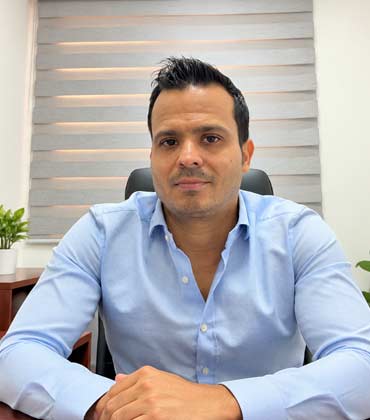
Rigoberto Funes
Rigoberto Funes has spent 14 years in the technology industry across three distinct sectors starting in cement manufacturing at Lafarge, moving into financial services at Citibank and now leading technology strategy in consumer-packaged goods. He currently serves as CIO at a major CPG and agribusiness company operating across Central America and the Dominican Republic, where he oversees IT, business intelligence and digital sales technology for a workforce of more than 8,000 employees spanning six countries.
Every CIO I have spoken to or read about in an article has heard some version of the same promise: build the model, and the value follows. I am a skeptic, and I'm about to test that belief directly. My team and I recently finished building a prototype of a machine learning system to generate both client segmentation and suggested orders for our direct-store-delivery (DSD) sales force with a network of 1,320-plus routes across seven countries.
The technical result is not bad: a model validated at a 72 percent hit rate with 25.6 percent weighted mean absolute percentage error, built with a standard, well-understood toolkit. On paper, one could argue this is a win or close to it, depending on who sees this. But it's not deployed yet, and I've learned enough in 14 years across sales, manufacturing, banking and CPG to know that a win on paper and the real win are two very different things. The hard part of this project starts now: getting the commercial team and salesperson who will use it to actually trust it.
The Gap between "It Works" and "They'll Use It"
A model that predicts new client segmentation or what a route should order is only useful if the salesperson picks up the suggestion instead of their gut instinct: the same instinct they've trusted for years to hit their numbers. That's not a data science problem. It's a trust problem, and trust is earned differently than accuracy is measured.
 The real transformation won't be the model going into production. It will be the moment people trust the number on their screen more than the number in their head.
Before we put this in front of a single one of our 1,300-plus routes, we're building the adoption plan around three things that have nothing to do with the underlying algorithm:
1. Transparency over Precision: Sales reps won't need a perfect number; they'll need to understand why the ML system suggested it. A suggested order with no visible logic gets ignored, no matter how accurate it is. Explainability has to be a product requirement, not a nice-to-have, from the first version they see.
2. Incremental Trust, Not A Mandate: We're planning to roll the tool out as an optional co-pilot rather than a replacement for judgment, so the sales force can test it against their own experience. Trust has to be built route by route, not by decree. And their input will serve to improve the model and generate trust at the same time.
3. Ownership by the People who Inherit It: The model's long-term success depends on the commercial team that will operate and refine it in production, not the team that built the prototype. We're designing the handoff, including documentation, shared logic and involvement from day one, with as much care as we put into the model's statistical performance.
Why This Matters beyond One Company
This pattern isn't unique to distribution routes or to Honduras or to Dinant, for that matter. Across Latin America, companies are investing in AI capability at a pace that often outstrips their capacity to change how people work. I have read countless articles from leading sources, with all of them arriving at a similar conclusion with regard to transformation initiatives: most financial impact from operational programs, automation and AI among them, depends less on the sophistication of the tool and more on whether the organization actually changes its behavior around it. Procurement, supply chain, sales, the function doesn't matter. The constraint is the same.
For CIOs in traditional industries such as agribusiness, manufacturing and CPG, this should be reassuring rather than discouraging. It means the advantage doesn't only go to companies with the biggest data science teams or the newest models. It goes to the ones that treat adoption as a discipline in its own right: sequencing rollout, designing for trust and building change management into the project pipeline with the same rigor as the technical architecture—before launch, not after.
A Practical Starting Point
If there's one recommendation, I'd give another CIO starting an AI initiative, it's this: budget as much thought for how the tool will be trusted as for how it will be built, and do it before you even begin working on it. Identify who will feel threatened, replaced or second-guessed by the system and design the rollout around winning that group over first—not last. The technology will keep improving on its own. Adoption won't happen on its own.
The real transformation won't be the model going into production. It will be the moment a sales rep, a manager or a supervisor trusts the number on their screen more than the number in their head. That's the milestone worth measuring and it's the one most AI projects never plan for until it's too late.
The articles from these contributors are based on their personal expertise and viewpoints, and do not necessarily reflect the opinions of their employers or affiliated organizations.
EDITOR'S Choice

Fortune Brands Innovations [NYSE: FBIN]
By Juan Guerrero, Director, IT Audit & Data Analytics
The IT Audit Evolution: From Compliance to Strategic Intelligence
Broad River Retail
Wes Dudley, Senior Vice President, Customer Experience
Customer Experience in the Age of Amplified Complexity
Fortune Brands Innovations [NYSE: FBIN]
Scott Barnes, Sr. Director of Enterprise Cyber Security (CISO)
The X-Factor in Cybersecurity: AI and Automation at Work

LHarris Technologies [NYSE: LHX]
Brian Allred, Director of Business Intelligence and Analytics
The Shift from Rigid Dashboards to Conversational Analytics
Ivar's Restaurants
Patrick Yearout, Director of Innovation, Recruitment & Training
From Hiring to Development: Nurturing Teams that CareLatest Issues