-
Technology
-
Industry
-
Solutions
-
- ASSET MANAGEMENT
- CUSTOMER EXPERIENCE MANAGEMENT
- CYBER SECURITY
- DATA CENTER
- DOCUMENT MANAGEMENT
- ELECTRONIC DATA INTERCHANGE
- ENTERPRISE DATA MANAGEMENT
- ENTERPRISE RESOURCE PLANNING
- ENTERPRISE RISK MANAGEMENT
- ENTERPRISE-GRADE WEB DATA SOLUTIONS
- FACILITY MANAGEMENT
- FIELD SERVICE
- IDENTITY AND ACCESS MANAGEMENT
- INFRASTRUCTURE
- IT SERVICE MANAGEMENT
- MANAGED IT SERVICES
- PAYMENT AND CARD
- PROJECT MANAGEMENT
- SOFTWARE TESTING
- STORAGE
- VIDEO SOLUTIONS
- WORKFLOW
-
-
Platforms
-
Functions
- Leadership Perspectives
- Innovation Insights
- Research
- Magazines
- News
- CXO Awards


Contributory Virtus Investment Partners on the invitation from our Editorial

Brazilian CIO Health Association
Felipe Cezar Cabral, Director of Institutional Relations, ABCISAligning AI with Healthcare's Real Needs
Felipe Cezar Cabral, Director of Institutional Relations, ABCIS
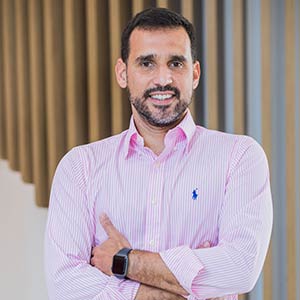
Felipe Cezar Cabral
My career may seem linear, but in reality, it has been shaped by zigzags, requiring courage, resilience and reinvention.
I graduated in medicine at the State University of Rio de Janeiro, pursued pediatrics at the Federal University of Rio de Janeiro, and completed my residency in pediatric intensive care at the Pontifical Catholic University of Rio Grande do Sul. Along the way, I earned a master's degree, a doctorate and an MBA, combining clinical, academic and executive experiences.
I worked for years as a pediatric intensivist and later as medical director of Porto Alegre’s only public maternal and child hospital, gaining public healthcare leadership experience. At Hospital Moinhos de Vento, recognized among the top three in Brazil, I shifted toward innovation, moving from telemedicine initiatives to becoming Medical Manager of Digital Health. This gave me the opportunity to navigate both clinical and strategic domains.
Today, I serve as Institutional Relations Director at ABCIS and coordinate the Technology and Innovation Working Group at ANAHP. I also contribute to policy through the telemedicine chamber of the Regional Council of Medicine. Academically, I have delivered over one hundred lectures, published nearly thirty peer-reviewed studies, edited for PLOS Digital Health, and led an MBA program on Artificial Intelligence in Healthcare.
More than titles, my greatest lesson has been learning that real achievement comes from persistence and embracing discomfort. The most impactful projects of my career—such as creating new roles, developing a digital transformation symposium and launching an MBA program—were born from challenge rather than comfort. What seemed like zigzags has truly been the straight line of my career: a path of resilience, curiosity and the courage to transform healthcare through innovation.
Focusing on Problems, People and Processes
When evaluating new technologies, the starting point is always to separate genuine solutions from hype. The first step is to focus on the problem, not the technology. A solution must address a real issue or create a sustainable model. If not, it is likely hype.
Next, we evaluate people. Innovation only endures if those who use it are prepared and engaged. Digital competencies, motivation and early involvement are critical.
Processes must also be considered. Successful projects usually reimagine workflows instead of automating inefficiencies.
Finally, we apply the PDCA cycle (Plan, Do, Check, Act). Monitoring indicators, correcting flaws and stabilizing processes ensure the innovation is truly incorporated.
Research supports this approach. Studies my group published on health literacy and the emotional aspects of patient experience show that ignoring these factors undermines digital innovation. Real progress is about solving problems, engaging people, redesigning processes and relying on evidence.
Sustainable Data Powers AI Success
From my experience, several recurring mistakes explain why promising AI projects stall or fail prematurely. One frequent error is underestimating data governance and security. Ignoring privacy, regulations and system integration can halt projects instantly.
Another is scaling too early. Expanding pilots without proving effectiveness in controlled settings leads to high costs and loss of credibility.
 Real progress comes from solving problems, engaging people, redesigning processes and relying on evidence
Lack of economic sustainability is another problem. Projects often begin with enthusiasm or external funding but fail to prove return on investment. Without clear value, they are abandoned.
Finally, some initiatives are isolated from institutional strategy. AI treated as an “experiment” rather than part of digital transformation rarely succeeds. Successful projects require governance, stepwise validation, sustainability and alignment with institutional goals.
Aligning Innovation with Policy and Structure
Ensuring that regulation and public policy support digital health has been a central part of my work. I believe digital health can only be sustainable when aligned with regulation and national structures.
In Brazil, I work on three fronts. As a member of the Telemedicine Technical Chamber of the Regional Council of Medicine, I help define guidelines for responsible technology use. As Institutional Relations Director at ABCIS, I lead physician leaders in technology and help develop Brazil’s first CMIO manual, guiding professionals and institutions on integrating medical leadership. At ANAHP, I coordinate a working group on technology and innovation to align best practices and propose solutions to overcome barriers.
ABCIS has also hosted debates on regulation. Leaders, including Congresswoman Adriana Ventura, emphasized regulation as a tool for safety, ethics and sustainability rather than as a barrier. I share this view: public policy is essential for AI to strengthen the public system, not just elite hospitals. Without this, digital transformation risks becoming exclusionary.
Data, People, Processes Drive AI
For leaders who want their AI strategies to succeed, my strongest advice is to focus on fundamentals. It starts with reliable data. Properly integrated and validated data generates information, then knowledge and finally intelligence. Without this journey, AI rests on fragile ground.
The next pillar is people. Solutions must solve real problems and require engagement from those involved. Without buy-in, no technology thrives.
Processes come next. New technologies should not be forced into outdated workflows. Co-design with engaged teams reduces resistance and increases success.
Finally, disciplined execution through the PDCA cycle is crucial. Leaders must monitor results, correct failures, stabilize processes and then scale. True strategies align data, people, processes and discipline to transform hype into lasting value.
Three Pillars for Digital Health
Looking ahead, I believe three broader factors are essential to enriching the future of digital health. Education is essential. Without digital literacy, transformations do not last. Professionals must learn not only to use tools but also to critically evaluate them.
International benchmarking is another factor. Digital health is global, and learning from others prevents isolated ‘innovation islands’ and builds connected ecosystems.
Lastly, digital transformation is fundamentally human. It requires courage to test, resilience to learn from setbacks and collaboration to build solutions. Technology is not just a tool but part of a cultural legacy. Transforming healthcare with AI is an ongoing journey that demands vision and commitment.
The articles from these contributors are based on their personal expertise and viewpoints, and do not necessarily reflect the opinions of their employers or affiliated organizations.
EDITOR'S Choice

Fortune Brands Innovations [NYSE: FBIN]
By Juan Guerrero, Director, IT Audit & Data Analytics
The IT Audit Evolution: From Compliance to Strategic Intelligence
Broad River Retail
Wes Dudley, Senior Vice President, Customer Experience
Customer Experience in the Age of Amplified Complexity
Fortune Brands Innovations [NYSE: FBIN]
Scott Barnes, Sr. Director of Enterprise Cyber Security (CISO)
The X-Factor in Cybersecurity: AI and Automation at Work

LHarris Technologies [NYSE: LHX]
Brian Allred, Director of Business Intelligence and Analytics
The Shift from Rigid Dashboards to Conversational Analytics
Ivar's Restaurants
Patrick Yearout, Director of Innovation, Recruitment & Training
From Hiring to Development: Nurturing Teams that CareLatest Issues