-
Technology
-
Industry
-
Solutions
-
- ASSET MANAGEMENT
- CUSTOMER EXPERIENCE MANAGEMENT
- CYBER SECURITY
- DATA CENTER
- DOCUMENT MANAGEMENT
- ELECTRONIC DATA INTERCHANGE
- ENTERPRISE DATA MANAGEMENT
- ENTERPRISE RESOURCE PLANNING
- ENTERPRISE RISK MANAGEMENT
- ENTERPRISE-GRADE WEB DATA SOLUTIONS
- FACILITY MANAGEMENT
- FIELD SERVICE
- IDENTITY AND ACCESS MANAGEMENT
- INFRASTRUCTURE
- IT SERVICE MANAGEMENT
- MANAGED IT SERVICES
- PAYMENT AND CARD
- PROJECT MANAGEMENT
- SOFTWARE TESTING
- STORAGE
- VIDEO SOLUTIONS
- WORKFLOW
-
-
Platforms
-
Functions
- Leadership Perspectives
- Innovation Insights
- Research
- Magazines
- News
- CXO Awards










Contributory Virtus Investment Partners on the invitation from our Editorial

Martel Construction, Inc
Shawn Vincent, Safety and Risk DirectorBeyond Safety: Leading Risk as a Business Strategy
Shawn Vincent, Safety and Risk Director
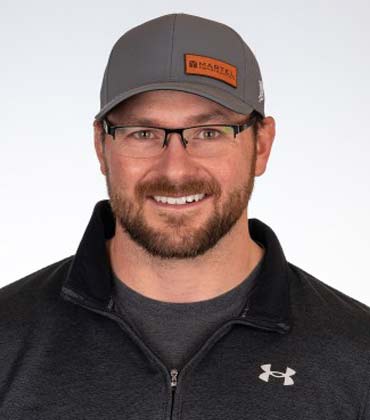
Shawn Vincent
Shawn Vincent, CSP, ARM, is a Safety and Risk Director with more than 16 years of experience spanning industrial construction and commissioning, commercial construction, mining, manufacturing and the oil and gas industries. His career has focused on integrating operational leadership, enterprise risk management, insurance strategy and governance to improve organizational performance across complex, high-risk environments. Shawn is passionate about helping organizations move beyond compliance by embedding risk-informed leadership into every level of decision-making. Throughout his career, he has observed that while each industry presents its own challenges, the highest-performing organizations do not simply have better safety programs. They make better leadership decisions. This insight has fundamentally shaped his perspective on safety, risk and leadership.
Leadership Shapes Risk Before Incidents Occur
Our industry has made tremendous progress protecting people. Training is better. Technology is better. Safety cultures are stronger than they were a generation ago. Yet many organizations still struggle with rising insurance costs, preventable claims, schedule disruptions and increasing pressure from owners and clients. That raises a question I continue to come back to, Are we trying to solve enterprise risk with a safety program when what we really need is a better leadership strategy? Early in my career, I measured success the way many safety professionals do, training completed, inspections performed, corrective actions closed and incident rates. Those metrics mattered, but they never fully explained why some organizations consistently outperformed others. The conversations that truly changed outcomes weren’t happening after incidents. They were happening weeks earlier, in preconstruction meetings, executive planning sessions, contract reviews, governance discussions and everyday leadership decisions.
 Safety will always be about protecting people. But the next evolution of our profession is building leadership systems that prevent risk from becoming loss.
I have participated in more incident reviews than I can count. Almost everyone started by examining the final event, the ladder, the equipment, the procedure or the employee. But as the conversation continued, the same pattern emerged. The decisions that mattered most had already been made: compressed schedules, incomplete planning, unclear expectations, accepted risks or communication breakdowns. The incident wasn’t the beginning of the story. It was simply where the story became visible. Every incident is the visible outcome of invisible leadership decisions. That’s why I no longer think of safety as a department. I think of it as one part of a leadership system. Safety doesn’t compete with production. Poor risk management does.
Leading Through an Integrated Risk Strategy
Organizations often separate safety, operations, finance, insurance and governance into different departments. Yet risk doesn’t recognize organizational charts. One leadership decision can influence worker safety, operational performance, insurance costs, profitability and client confidence all at the same time. Over the years, I’ve started evaluating major decisions through what I think of as the Five Outcomes of Leadership: People, Operations, Risk, Financial Performance and Trust. I’ve found that these outcomes are inseparable. A decision intended to accelerate a schedule doesn’t just affect production. It also influences worker exposure, quality, insurance performance, profitability and client relationships. Likewise, investing in planning and leadership development improves communication, strengthens execution, reduces uncertainty and creates safer, more predictable projects. The strongest organizations don’t optimize one outcome at the expense of another. They make decisions that strengthen all five. This is why I believe risk leadership cannot belong to one department. The organizations that consistently outperform their peers integrate safety, operational excellence, enterprise risk management, insurance strategy, governance and leadership accountability into one business strategy rather than managing them as separate initiatives.
The Next Evolution of Safety Leadership
I also believe the role of the safety professional is evolving. Tomorrow’s safety leaders won’t just be compliance experts. They’ll need to become operational risk strategists—leaders who can move comfortably between the jobsite, the boardroom, the insurance review and the executive meeting because they understand how each decision influences organizational performance. When organizations embrace this mindset, they don’t simply reduce injuries. They make better decisions. They improve project predictability. They reduce the total cost of risk. They develop stronger leaders. And they build organizations that are resilient enough to perform consistently, even when projects become more complex and the environment becomes more demanding. Safety will always be about protecting people. But I believe the next evolution of our profession is helping organizations build leadership systems where every decision is evaluated not only for productivity, but also for its impact on people, operations, financial performance and long-term trust.
Building Leadership Systems That Prevent Risk
At your next executive meeting, ask one simple question: When was the last time we discussed risk before it became an incident, a claim or a schedule problem? The answer may reveal more about your organization’s health than any safety metric on the dashboard. Because the future of construction leadership won’t belong to the organizations that react to risk most effectively. It will belong to the organizations that build leadership systems capable of preventing risk from becoming loss in the first place.
The articles from these contributors are based on their personal expertise and viewpoints, and do not necessarily reflect the opinions of their employers or affiliated organizations.
EDITOR'S Choice

Fortune Brands Innovations [NYSE: FBIN]
By Juan Guerrero, Director, IT Audit & Data Analytics
The IT Audit Evolution: From Compliance to Strategic Intelligence
Broad River Retail
Wes Dudley, Senior Vice President, Customer Experience
Customer Experience in the Age of Amplified Complexity
Fortune Brands Innovations [NYSE: FBIN]
Scott Barnes, Sr. Director of Enterprise Cyber Security (CISO)
The X-Factor in Cybersecurity: AI and Automation at Work

LHarris Technologies [NYSE: LHX]
Brian Allred, Director of Business Intelligence and Analytics
The Shift from Rigid Dashboards to Conversational Analytics
Ivar's Restaurants
Patrick Yearout, Director of Innovation, Recruitment & Training
From Hiring to Development: Nurturing Teams that Care