-
Technology
-
Industry
-
Solutions
-
- ASSET MANAGEMENT
- CUSTOMER EXPERIENCE MANAGEMENT
- CYBER SECURITY
- DATA CENTER
- DOCUMENT MANAGEMENT
- ELECTRONIC DATA INTERCHANGE
- ENTERPRISE DATA MANAGEMENT
- ENTERPRISE RESOURCE PLANNING
- ENTERPRISE RISK MANAGEMENT
- ENTERPRISE-GRADE WEB DATA SOLUTIONS
- FACILITY MANAGEMENT
- FIELD SERVICE
- IDENTITY AND ACCESS MANAGEMENT
- INFRASTRUCTURE
- IT SERVICE MANAGEMENT
- MANAGED IT SERVICES
- PAYMENT AND CARD
- PROJECT MANAGEMENT
- SOFTWARE TESTING
- STORAGE
- VIDEO SOLUTIONS
- WORKFLOW
-
-
Platforms
-
Functions
- Leadership Perspectives
- Innovation Insights
- Research
- Magazines
- News
- CXO Awards


Contributory Virtus Investment Partners on the invitation from our Editorial

Hotel Unique
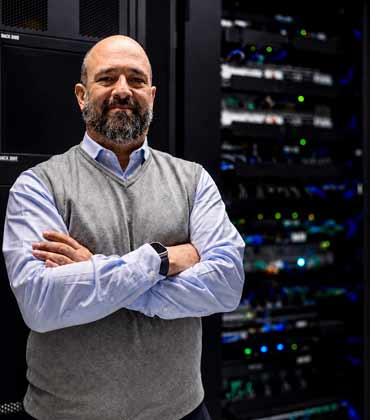
Mauricio Souza, IT ManagerBuilding Hospitality Resilience in a Digitally Connected World
Mauricio Souza, IT Manager
Balancing Innovation with Guest Experience
For me, technology in hospitality should never become the experience itself. It should make the experience better, simpler and more reliable.
That distinction matters because hotels can easily fall into the trap of investing in technology simply because it’s new or because everyone in the market is talking about it. I prefer to start with a more basic question: what problems are we solving and what value will this bring to the guest or the operation?
Sometimes the best technology is almost invisible. Guests don’t necessarily need to know how complex the infrastructure behind a hotel is. They simply expect the Wifi to work, the room technology to respond as it should, the payment process to be secure and hotel services to be available when they need them.
From an investment perspective, I look at the complete picture: operational impact, total cost of ownership, security, scalability, supportability and, ultimately, guest experience. Innovation matters, but I’d argue that reliability is still one of the most valuable forms of innovation in hospitality.
Making Cybersecurity Part of Operational Resilience
Cybersecurity is no longer just an IT responsibility. In hospitality, it’s directly connected to business continuity, reputation, guest trust and financial risk. Hotels operate highly connected environments involving PMS, POS, payment systems, Wifi, mobile devices, building automation, IoT, third-party platforms and many other systems. That creates a complex attack surface.
My approach is to treat cybersecurity as part of the operation, rather than as a separate technical layer.
Network segmentation, identity management, patching, backups, monitoring, vendor governance, incident response and employee awareness all need to work together.
Another important point is that security can’t exist only on paper. Policies are necessary, of course, but resilience comes from knowing whether the organization can respond when something goes wrong.
The question I’d like to ask is simple: if this system becomes unavailable tonight, do we know exactly what to do?
Preparing Technology for the Moment It Fails
I believe the most important decisions are often the ones nobody sees.
Infrastructure architecture, redundancy, connectivity, network design, cybersecurity, backup strategy, disaster recovery, monitoring, documentation and vendor support can have a far greater operational impact than a new application or guest-facing feature.
 Good technology leadership requires an understanding of both sides. You need enough technical depth to challenge a solution, but also enough business understanding to recognize when the technically perfect solution isn’t necessarily the right one for the operation.
Hospitality is a 24/7 business. A technology failure at 2:00 a.m. doesn’t care whether the IT team is in the office.
That’s why resilience needs to be designed before the incident, not during it. Critical systems need to be identified, dependencies understood, responsibilities clearly defined and contingency procedures properly tested.
I also strongly believe in avoiding unnecessary complexity. Every new technology we introduce creates another dependency that, sooner or later, needs to be managed, secured, supported and eventually replaced.
Challenging Assumptions to Strengthen Technology Resilience
One of the biggest lessons I’ve learnt throughout my career is that technology risk is rarely just about technology. Many incidents begin with relatively small operational gaps: poor documentation, unclear ownership, delayed maintenance, inadequate monitoring, weak vendor management or assumptions that nobody challenged.
Managing technology across different hotels and operating environments has also taught me that standardization is extremely valuable, but it can’t replace operational reality. Every property has its own characteristics, infrastructure, business priorities and level of maturity.
Good technology leadership requires an understanding of both sides. You need enough technical depth to challenge a solution, but also enough business understanding to recognize when the technically perfect solution isn’t necessarily the right one for the operation.
I’ve also learnt to be uncomfortable with assumptions. When someone says, “It should work,” my next question is usually, “How do we know?”
Words of Wisdom
My first piece of advice would be: don’t stay inside IT.
Learn the hotel operations. Spend time understanding Front Office, Housekeeping, Food & Beverage, Finance, Sales, Events, Engineering and Security. Understand how the hotel makes money, where the operational pressure points are and what happens to the guest when technology fails.
Technical knowledge remains extremely important. I still believe a technology leader should understand infrastructure, networks, cloud, cybersecurity, systems and architecture well enough to challenge vendors and make responsible decisions.
But leadership requires another level of thinking. You need to understand budgets, contracts, risk, people, priorities, communication and business strategy. Most importantly, you need to understand that saying “no” is sometimes part of the job. But a good technology leader shouldn’t stop there. They should explain the risk, present alternatives and help the business find a safe way forward.
Technology leadership in hospitality is ultimately about trust. The organization needs to know that when technology is working, you’re already thinking about what comes next. And when something goes wrong, you’re prepared to take responsibility and lead the response.
The articles from these contributors are based on their personal expertise and viewpoints, and do not necessarily reflect the opinions of their employers or affiliated organizations.
EDITOR'S Choice

Fortune Brands Innovations [NYSE: FBIN]
By Juan Guerrero, Director, IT Audit & Data Analytics
The IT Audit Evolution: From Compliance to Strategic Intelligence
Broad River Retail
Wes Dudley, Senior Vice President, Customer Experience
Customer Experience in the Age of Amplified Complexity
Fortune Brands Innovations [NYSE: FBIN]
Scott Barnes, Sr. Director of Enterprise Cyber Security (CISO)
The X-Factor in Cybersecurity: AI and Automation at Work

LHarris Technologies [NYSE: LHX]
Brian Allred, Director of Business Intelligence and Analytics
The Shift from Rigid Dashboards to Conversational Analytics
Ivar's Restaurants
Patrick Yearout, Director of Innovation, Recruitment & Training
From Hiring to Development: Nurturing Teams that CareLatest Issues