-
Technology
-
Industry
-
Solutions
-
- ASSET MANAGEMENT
- CUSTOMER EXPERIENCE MANAGEMENT
- CYBER SECURITY
- DATA CENTER
- DOCUMENT MANAGEMENT
- ELECTRONIC DATA INTERCHANGE
- ENTERPRISE DATA MANAGEMENT
- ENTERPRISE RESOURCE PLANNING
- ENTERPRISE RISK MANAGEMENT
- ENTERPRISE-GRADE WEB DATA SOLUTIONS
- FACILITY MANAGEMENT
- FIELD SERVICE
- IDENTITY AND ACCESS MANAGEMENT
- INFRASTRUCTURE
- IT SERVICE MANAGEMENT
- MANAGED IT SERVICES
- PAYMENT AND CARD
- PROJECT MANAGEMENT
- SOFTWARE TESTING
- STORAGE
- VIDEO SOLUTIONS
- WORKFLOW
-
-
Platforms
-
Functions
- Leadership Perspectives
- Innovation Insights
- Research
- Magazines
- News
- CXO Awards


Contributory Virtus Investment Partners on the invitation from our Editorial

Homestar Financial
Walt Carter, Chief Digital Officer & CIOClarity of Purpose: Must for Successful Project Management
Walt Carter, Chief Digital Officer & CIO
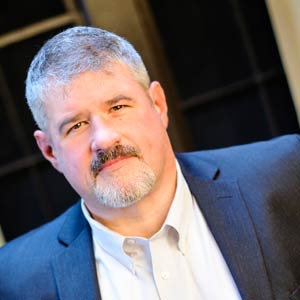
With more than 25 years in technology leadership roles, Walt Carter is currently the Chief Digital Officer and CIO at Homestar Financial Corp, one of the nation’s top residential mortgage lenders. Prior to joining Homestar Financial Corporation in March, 2018, Walt and his teams implemented technology changes for Primary Capital Mortgage to drive 205% growth in origination volume in just over two years. Before that, his teams at Generation Mortgage received accolades from the New York Times, the Wall Street Journal, Kiplinger's, Bloomberg and MarketWatch for innovative use of technology as a key differentiator for the company. Walt was named CIO of the Year in 2014 by the Georgia CIO Leadership Association and more recently has been named to the Constellation Research “Business Transformation 150” for 2020. His book on change leadership released in 2021, ‘We Can’t Stay Here!’ is an international number one best seller.
In an Interview, Walt Carter shared his experience of being an industry leader over 25 years and occupying technology leadership roles for several businesses.
After leading many turnaround efforts and business transformations over your distinguished career, what would you say is the biggest lesson you’ve learned?
Several years ago, I traded books with a guy on a plane. In the book he gave me was the story of a construction firm that had formalized their project structures in some really cool ways. One of the coolest was the launch structure. During this very first phase, all the project stakeholders were asked to think back to the best building experience they had ever had. Then they were asked to list all the reasons it was the best. After each person shared their lists with the group, a facilitator who had been taking notes on a giant bunch of sticky notes, pulled together the unique list (pulling the many duplicates out). This list was then rank ordered by the group on the basis of value contribution. After the weighted list was done, the construction company leader made a commitment to the team that--if they would all work together to pull of this project based on the items listed--he would guarantee that this project would go to the top of each member’s ‘best ever’ experience. What do you think the items on the list were?
1. Clarity about what they were doing, why they were doing it, and how they were doing it.
2. This was followed by a pledge of transparent, honest communication about the progress and challenges - no overly sunny forecasts on the progress and no overly gloomy forecasts on the challenges.
The construction company learned how to use a launching ‘ceremony’ to build unity of purpose, and a team commitment to the ‘interband agreement on standards and teamwork.’
Big transformation efforts that will cost your company millions of dollars probably deserve the same level of launch commitment. But how many projects have we launched over the years without this?
One of the first team meetings I have on any big lift – and a business transformation is a very big lift -- is what I call the cave meeting. I post big guys by the only exit and don’t let anybody leave until they all know what, why and how by heart and, importantly, in their own words so they can tell anyone else along the future path exactly what everyone else on the project would say when asked. Clarity is hard to maintain. So, at several of the follow-on meetings during the project, we repeatedly cover these critical items every time: what, why, and how to make sure we’re all still united in purpose. I call this ‘tuning the team.’
"Clarity is hard to maintain. So, at several of the follow-on meetings during the project, we repeatedly cover these critical items every time: what, why, and how to make sure we’re all still united in purpose"
There are several other little tactical things my teams have come to expect--like the stripped-down status reports with nouns, verbs, and names; and the true standup meetings that are over in less than 10 minutes but keep everyone informed of progress, plans, and problems. The standups are for the working team. The status reports are for the external folks that are stakeholders but not active every day. For all other communications, we are big believers in maximizing sharing and minimizing meetings. We use asynchronous messaging to keep everyone up to date and call for help early when we hit the inevitable blockers.
The other part of this biggest lesson is this: In all of the launches and ongoing sessions, the leader has to keep one’s eyes on the team’s sense of accountability for progress against the plan; the quality of the deliverables; and team morale to establish a momentum, a pace, and then keep things moving by helping others as necessary. You also have to watch the timeline, but not at the expense of getting the real value promised by the effort. You cannot sacrifice the value in order to meet a timeline. Instead, let’s focus on getting to the value in the quickest, least costly way we can.
Lastly, closing the circle from where we started from the comparison of big high-rise building construction versus what we do on our big, costly transformation projects is a good exercise for the executive sponsors and key stakeholders on your effort. For the construction projects, we hire a planning team to go out and do site surveys and take soil samples and environmental assessments when we’re going to build our new headquarters or operations center down close the University. We hire great architects to plan every detail of the foundation and the look of the building and the details of where every outlet and usb port will be in every room and closet. Once the pictures, models, and blueprints are all done we get a materials team to spec out the exact number of nails, outlets, sheets of glass, etc. they put together a bill of materials and then the procurement team goes to work to put the orders in and arrange shipping to the site. When the materials arrive, we send inspectors to the site to make sure we got what we ordered and that what we received would work on our building.
I could go on and on, but I think you get the drift. We spend a lot of time and money in the pre-building phase to make sure the building phase can go well. When we spend the time up front on our biggest change efforts, we find that we greatly increase our odds of finishing with pride in a successful outcome.
The articles from these contributors are based on their personal expertise and viewpoints, and do not necessarily reflect the opinions of their employers or affiliated organizations.
EDITOR'S Choice

Fortune Brands Innovations [NYSE: FBIN]
By Juan Guerrero, Director, IT Audit & Data Analytics
The IT Audit Evolution: From Compliance to Strategic Intelligence
Broad River Retail
Wes Dudley, Senior Vice President, Customer Experience
Customer Experience in the Age of Amplified Complexity
Fortune Brands Innovations [NYSE: FBIN]
Scott Barnes, Sr. Director of Enterprise Cyber Security (CISO)
The X-Factor in Cybersecurity: AI and Automation at Work

LHarris Technologies [NYSE: LHX]
Brian Allred, Director of Business Intelligence and Analytics
The Shift from Rigid Dashboards to Conversational Analytics
Ivar's Restaurants
Patrick Yearout, Director of Innovation, Recruitment & Training
From Hiring to Development: Nurturing Teams that CareLatest Issues