-
Technology
-
Industry
-
Solutions
-
- ASSET MANAGEMENT
- CUSTOMER EXPERIENCE MANAGEMENT
- CYBER SECURITY
- DATA CENTER
- DOCUMENT MANAGEMENT
- ELECTRONIC DATA INTERCHANGE
- ENTERPRISE DATA MANAGEMENT
- ENTERPRISE RESOURCE PLANNING
- ENTERPRISE RISK MANAGEMENT
- ENTERPRISE-GRADE WEB DATA SOLUTIONS
- FACILITY MANAGEMENT
- FIELD SERVICE
- IDENTITY AND ACCESS MANAGEMENT
- INFRASTRUCTURE
- IT SERVICE MANAGEMENT
- MANAGED IT SERVICES
- PAYMENT AND CARD
- PROJECT MANAGEMENT
- SOFTWARE TESTING
- STORAGE
- VIDEO SOLUTIONS
- WORKFLOW
-
-
Platforms
-
Functions
- Leadership Perspectives
- Innovation Insights
- Research
- Magazines
- News
- CXO Awards











Contributory Virtus Investment Partners on the invitation from our Editorial

Santander Brazil
Álvaro Loureiro, Sr. Head of ComplianceCompliance Through Crisis: How Resilience And Data Shape Leadership
Álvaro Loureiro, Sr. Head of Compliance
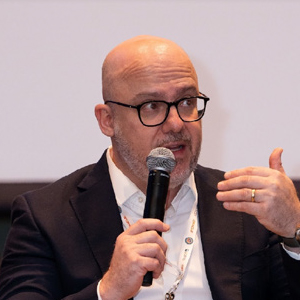
I usually say that the moments I learned the most were those marked by pain or failure, which do not always come together. Through the lens of failure—for example, participating in an IPO that went wrong—I learned the value of choosing the right partners and, more importantly, how crucial it is to ensure that all stakeholders’ interests are aligned for a process to succeed.
From the perspective of pain, leading a large layoff process taught me, in a very tangible way, the importance of valuing the human side of our operations, as well as the relevance of a strong professional network, which, in this case, enabled me to quickly help reallocate almost all the employees affected.
Those are just two examples, but the truth is—and I say this at the risk of sounding cliché—the moments that made me grow the most were those of crisis. In short, it is okay to make mistakes, as long as you learn from them and transform them into sources of strength.
Navigating Compliance Expectations Through Technology
Global and local aspects are interdependent. Being part of a multinational company means we must comply not only with local regulations but also with the global standards that apply to the group. These regulatory requirements are not always fully aligned. Our role in the compliance area is to localize and reconcile them in a way that ensures proper adherence. I believe this adds a layer of complexity. It elevates the level of operational excellence.
I firmly believe that we should be obsessed with the appropriate and intensive use of data. All relevant information, including millions of anonymized customer records, behavioral trends, regulatory updates, market indicators, internal processes and workflows should feed into a well-structured data lake. This enables accurate interpretation through the use of big data, machine learning, and generative AI tools.
 Being part of a multinational company means we must comply not only with local regulations but also with the global standards that apply to the group
Technology is evolving rapidly. Just three years ago, it took us several weeks to train a machine to perform certain readings that a GenAI model can now complete in seconds. The use of these tools allows us to anticipate trends, deeply understand our data, results and most importantly, the directions they point to, which are essential for ensuring proper risk coverage.
Adapting to a Rapidly Changing Compliance Landscape
I enjoy challenges; in fact, I believe that is one of the main reasons I am so passionate about what I do. One of the most significant challenges I face is the constant need for learning. We live in an agile, volatile world, and in the case of compliance, one with increasingly demanding regulatory requirements and intense market competition. This environment demands a deep understanding of our business, as well as staying attuned to market trends and accurately interpreting the evolving regulatory landscape—all to ensure proper regulatory compliance.
Ten Principles for Future Compliance Leaders
I would like to offer ten pieces of advice—the same ones I often share with the teams I am fortunate to work with and with the students in the courses I teach:
1. Understand your business
2. Know your customer
3. Build a team that is better than you
4. Adopt a structured methodology
5. Establish memory
6. Master your data
7. Create partnerships—both internal and external
8. Avoid subjectivity
9. Stay alert to trends, especially market and regulatory ones
10. Never stop moving
My life experience has taught me the value of uncertainty. So, my core message is this: the journey is long and full of learning. So, stay hungry, stay curious, and, above all, stay humble.
The articles from these contributors are based on their personal expertise and viewpoints, and do not necessarily reflect the opinions of their employers or affiliated organizations.
EDITOR'S Choice

Fortune Brands Innovations [NYSE: FBIN]
By Juan Guerrero, Director, IT Audit & Data Analytics
The IT Audit Evolution: From Compliance to Strategic Intelligence
Broad River Retail
Wes Dudley, Senior Vice President, Customer Experience
Customer Experience in the Age of Amplified Complexity
Fortune Brands Innovations [NYSE: FBIN]
Scott Barnes, Sr. Director of Enterprise Cyber Security (CISO)
The X-Factor in Cybersecurity: AI and Automation at Work

LHarris Technologies [NYSE: LHX]
Brian Allred, Director of Business Intelligence and Analytics
The Shift from Rigid Dashboards to Conversational Analytics
Ivar's Restaurants
Patrick Yearout, Director of Innovation, Recruitment & Training
From Hiring to Development: Nurturing Teams that Care


