-
Technology
-
Industry
-
Solutions
-
- ASSET MANAGEMENT
- CUSTOMER EXPERIENCE MANAGEMENT
- CYBER SECURITY
- DATA CENTER
- DOCUMENT MANAGEMENT
- ELECTRONIC DATA INTERCHANGE
- ENTERPRISE DATA MANAGEMENT
- ENTERPRISE RESOURCE PLANNING
- ENTERPRISE RISK MANAGEMENT
- ENTERPRISE-GRADE WEB DATA SOLUTIONS
- FACILITY MANAGEMENT
- FIELD SERVICE
- IDENTITY AND ACCESS MANAGEMENT
- INFRASTRUCTURE
- IT SERVICE MANAGEMENT
- MANAGED IT SERVICES
- PAYMENT AND CARD
- PROJECT MANAGEMENT
- SOFTWARE TESTING
- STORAGE
- VIDEO SOLUTIONS
- WORKFLOW
-
-
Platforms
-
Functions
- Leadership Perspectives
- Innovation Insights
- Research
- Magazines
- News
- CXO Awards











Contributory Virtus Investment Partners on the invitation from our Editorial

ACMI
Fabio Monteverdi, Service Sales and Customer Care ManagerCreating Great Customer Experience for U.S. Clients as an Overseas-Based OEM
Fabio Monteverdi, Service Sales and Customer Care Manager
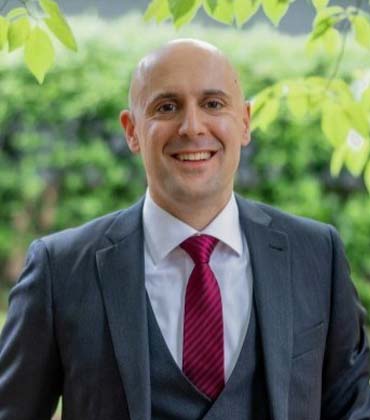
Fabio Monteverdi
European OEMs are well known for delivering great manufacturing quality in industrial products and this hallmark dwells in a couple of structural reasons.
The first one is the high technical know-hows in several playing fields and their effective translation into high value finished industrial products. This ought to be looked for both in the world’s oldest technical tradition, starting with the Industrial Revolution in the eighteenth century, and a lack of in-country natural resources that has kept reinforcing overtime the pursuit of investing in diversified high-end industrial businesses.
The second reason is the historical trade ties binding Europe and the USA since the end of WWII, which even amplified, for geopolitical and strategic reasons, the European industrial identity mentioned above.
Consequently, it is a very common misconception for European OEMs in high-mix industries to assume that a well-designed and manufactured product will highly and indefinitely speak for itself throughout its lifecycle. Whether this belief might work in limited contexts culturally close to the OEM, it certainly doesn’t work in the USA. A more demanding consumer market, like the food and beverage one for instance, puts more pressure on machinery users in B2B, making the customer experience a key cornerstone of any respectable OEM client relationship.
This extreme rationalization of productivity has always been peculiar to American capitalism rather than the capitalism of European countries, which are more affected by traditional approaches to work and cultural dynamics more prone to compromise on the mere profit. The long-term effect of this extreme rationalization is that equipment itself turns into a commodity in the eyes of the client. The very core and cutting edge of the OEM identity—the finished manufactured product—becomes more a constant than a variable of the game once the OEM – client relationship settles and client’s learning curve successfully saturates on the technology.
 People are crucial to pave the way for success when it comes to absorb non-USA company culture and nuances.
Even though it’s destabilizing for a proud European OEM (Italian, for instance) to let service departments have more and more of the lion’s share of the partnership, the ultimate goal for every non-American business owner working in the USA must be to create a positive reputation around (and not only about) a non-USA born technical product.
In other words, how do we create genetic persistence of the brand, not only of the product, in the US market?
I believe there are three factors that are key to the pursuit of this goal, and the first one is the very basis for the other two: people.
The people hired by foreign companies operating in the United States are crucial in paving the way for success: they ought to absorb non-USA company culture and nuances, as those affect decisions materialized into the product, and they have to effectively translate them into deliverables that American clients appreciate.
Number two: self-imposed demand. It must be both individual and systemic, so that there’s a compound effect that can constantly fill the gap of what “is missing”, which is usually a wider gap when a non-USA born technical product is involved. That translates to people having a positive and healthy obsession for clients’ demands and to a global and local working culture that genuinely supports that obsession rather than dismiss it. The difference between the two sets apart OEMs who scale the business from those who just survive it.
Number three: product lifecycle management (PLM). It’s both the strategic and tactical platform that Key Account Management should fine tune to support the clients’ business effectively and efficiently. The PLM determines both the measurable outcome in terms of deliverables and the unmeasurable result in terms of overall client’s satisfaction. In my experience, the drive for a great PLM sits in the usability of product technical information, whether that is a training SOP not included in a standard machine manual, a 3D manual which makes easier and quicker to order Spareparts or any other tool which can shorten the access to information on how to run and keep up on the equipment.
The level of customization in the service realm is theoretically infinite, but only theoretically. As an OEM, you want to be able to identify patterns to optimize your workflow and resources.
In this regard, not only CRMs but especially AI applications foster opportunities in augmenting the automatability, not necessarily the standardizability, of the deliverables, leaving to humans only the last mile of the customer experience journey. That, if supported along the way by proper tools, is the greatest counterbalance to the turn-into-commodity effect that every great piece of equipment eventually endures overtime.
The articles from these contributors are based on their personal expertise and viewpoints, and do not necessarily reflect the opinions of their employers or affiliated organizations.
EDITOR'S Choice

Fortune Brands Innovations [NYSE: FBIN]
By Juan Guerrero, Director, IT Audit & Data Analytics
The IT Audit Evolution: From Compliance to Strategic Intelligence
Broad River Retail
Wes Dudley, Senior Vice President, Customer Experience
Customer Experience in the Age of Amplified Complexity
Fortune Brands Innovations [NYSE: FBIN]
Scott Barnes, Sr. Director of Enterprise Cyber Security (CISO)
The X-Factor in Cybersecurity: AI and Automation at Work

LHarris Technologies [NYSE: LHX]
Brian Allred, Director of Business Intelligence and Analytics
The Shift from Rigid Dashboards to Conversational Analytics
Ivar's Restaurants
Patrick Yearout, Director of Innovation, Recruitment & Training
From Hiring to Development: Nurturing Teams that CareLatest Issues