-
Technology
-
Industry
-
Solutions
-
- ASSET MANAGEMENT
- CUSTOMER EXPERIENCE MANAGEMENT
- CYBER SECURITY
- DATA CENTER
- DOCUMENT MANAGEMENT
- ELECTRONIC DATA INTERCHANGE
- ENTERPRISE DATA MANAGEMENT
- ENTERPRISE RESOURCE PLANNING
- ENTERPRISE RISK MANAGEMENT
- ENTERPRISE-GRADE WEB DATA SOLUTIONS
- FACILITY MANAGEMENT
- FIELD SERVICE
- IDENTITY AND ACCESS MANAGEMENT
- INFRASTRUCTURE
- IT SERVICE MANAGEMENT
- MANAGED IT SERVICES
- PAYMENT AND CARD
- PROJECT MANAGEMENT
- SOFTWARE TESTING
- STORAGE
- VIDEO SOLUTIONS
- WORKFLOW
-
-
Platforms
-
Functions
- Leadership Perspectives
- Innovation Insights
- Research
- Magazines
- News
- CXO Awards


Contributory Virtus Investment Partners on the invitation from our Editorial

Zurich Insurance
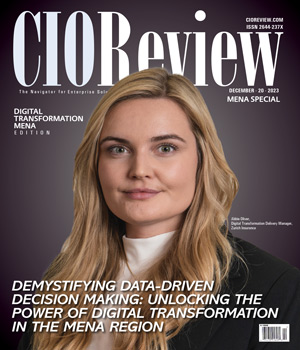
Abbie Oliver, Digital Transformation Delivery ManagerDemystifying Data-Driven Decision Making: Unlocking the Power of Digital Transformation in the MENA Region
Abbie Oliver, Digital Transformation Delivery Manager

Amidst a digital revolution fueled by rapid technological advancements, the MENA region has become a hub for digital innovation and enhanced customer experiences. In this landscape, business leaders increasingly rely on data-driven decision making to gain a competitive edge and seize opportunities.
By combining digital transformation with a comprehensive understanding of data insights, businesses can create customer-centric experiences and develop offerings that deeply resonate with their target audience. Leveraging data allows organizations to tailor their products, services, and marketing strategies to align with customer desires, fostering loyalty, satisfaction, and sustainable growth.
Data plays a pivotal role in digital transformation by empowering organizations to identify new business prospects, streamline operations, enhance customer experiences, and drive innovation. When effectively utilized, data enables businesses to gain a comprehensive understanding of their operations, customer behaviors, and market dynamics, enabling informed and strategic decision making with tangible results.
However, while organizations invest in elaborate data strategies and data lakes that consolidate diverse information sources, they sometimes struggle to realize immediate value. Therefore, it is crucial for companies to support individuals in improving their data-driven decision-making capabilities, unlocking the full potential of data insights, and expediting the creation of new offerings and revenue streams.
To ensure the fastest path to creating value, here are essential questions to consider when shaping data-driven insights:
Am I clear on my objectives?
Clearly outline your decision-making goals and identify the specific insights you need to achieve them. Make bets, and wherever possible include the outcomes you are expecting to see in your hypothesis. By having well-defined objectives, you can focus on extracting the most relevant and actionable data. It is also far easier to interpret your results when you have the yard stick of what you expected to see.
Have I prioritized quality over quantity?
Make sure you have the level of quality you need in your data to convince yourself of your hypothesis. Not all data is created equal. “Say evidence” from surveys and interviews is far less reliable than “do” evidence from analyzing customer behavior patterns and purchase insights.
 Data plays a pivotal role in digital transformation by empowering organizations to identify new business prospects, streamline operations, enhance customer experiences, and drive innovation
Have I followed the necessary Data Governance Framework?
Ensure you are following a robust data governance framework to ensure the integrity, privacy, and security of your data. These guidelines exist for a reason, and it’s important they are followed. Implement policies and procedures that govern data collection, storage, usage, and sharing, aligning with regulatory requirements and best practices. If you are unsure, reach out prior to starting your insight gathering.
Have I made the best use of AI or out of the box analytics?
Work smart not hard, don’t be afraid to run out of the box analytics to see what insights you can gain. Embrace advanced analytics tools and techniques, such as machine learning and artificial intelligence, to extract valuable insights from complex datasets. These technologies can uncover patterns, correlations, and predictive models that drive strategic decision making.
Who else would have data that could contribute to my story?
Foster a culture that values data-driven insights and encourages decision making based on evidence rather than assumptions. By showcasing where you have used data to inform your decision making and welcome any further relevant data that can contribute to a wider story. Be ready not to have all the answers but that insights create a picture from many brush strokes.
How will I re-test my insights?
Data-driven decision making is an iterative process. Insights and preferences change over time which is why it’s so important you can easily execute insight. Design for repeatability. Continuously monitor and evaluate the outcomes of your decisions, leveraging data feedback loops to refine your strategies and adapt to changing market dynamics.
Digital transformation, solutions and offerings create more opportunity for data insights than ever before. So much so that it’s a challenge to understand which are most significant. In the Middle East region, as customer expectation and digital access is high, it is often easy to marry data insight with qualitative feedback or recommendations for feature improvement. Therefore it is imperative for organizations to continue to attract talent and upskilling individuals, by providing data insight training and fostering the skills that interpret data insights effectively. In this way organizations create a sustainable growth trajectory and foster a culture grounded in evidence-based decision making. This paves the way for continued success in this dynamic business landscape.
The articles from these contributors are based on their personal expertise and viewpoints, and do not necessarily reflect the opinions of their employers or affiliated organizations.
EDITOR'S Choice

Fortune Brands Innovations [NYSE: FBIN]
By Juan Guerrero, Director, IT Audit & Data Analytics
The IT Audit Evolution: From Compliance to Strategic Intelligence
Broad River Retail
Wes Dudley, Senior Vice President, Customer Experience
Customer Experience in the Age of Amplified Complexity
Fortune Brands Innovations [NYSE: FBIN]
Scott Barnes, Sr. Director of Enterprise Cyber Security (CISO)
The X-Factor in Cybersecurity: AI and Automation at Work

LHarris Technologies [NYSE: LHX]
Brian Allred, Director of Business Intelligence and Analytics
The Shift from Rigid Dashboards to Conversational Analytics
Ivar's Restaurants
Patrick Yearout, Director of Innovation, Recruitment & Training
From Hiring to Development: Nurturing Teams that CareLatest Issues