-
Technology
-
Industry
-
Solutions
-
- ASSET MANAGEMENT
- CUSTOMER EXPERIENCE MANAGEMENT
- CYBER SECURITY
- DATA CENTER
- DOCUMENT MANAGEMENT
- ELECTRONIC DATA INTERCHANGE
- ENTERPRISE DATA MANAGEMENT
- ENTERPRISE RESOURCE PLANNING
- ENTERPRISE RISK MANAGEMENT
- ENTERPRISE-GRADE WEB DATA SOLUTIONS
- FACILITY MANAGEMENT
- FIELD SERVICE
- IDENTITY AND ACCESS MANAGEMENT
- INFRASTRUCTURE
- IT SERVICE MANAGEMENT
- MANAGED IT SERVICES
- PAYMENT AND CARD
- PROJECT MANAGEMENT
- SOFTWARE TESTING
- STORAGE
- VIDEO SOLUTIONS
- WORKFLOW
-
-
Platforms
-
Functions
- Leadership Perspectives
- Innovation Insights
- Research
- Magazines
- News
- CXO Awards


Contributory Virtus Investment Partners on the invitation from our Editorial

Corebridge Financial
Soumava Dey, Data Analytics ManagerDemystifying the Career Transition to Data Science
Soumava Dey, Data Analytics Manager

Data science is not a mere buzzword anymore as this field of study expanded its horizon across different industry verticals. From gathering meaningful business insights to extrapolating future trends, data science laid the foundation for various cutting-edge artificial intelligence mechanisms in the recent era. In 2012, Harvard Business Review titled “data scientist” as the sexiest job of the 21st century which served as a stepping stone to promote this role to a larger audience. Since then, the growing demands coupled with the hype around this job role have made it a lucrative career option for college students and software professionals. As enticing as it seems, the obvious question is how to become a data scientist? This article will help the readers to get a holistic overview of the field of data science so anyone can determine the most efficient and fastest way to transition into this role.
What is Data Science?
As the name implies, data science is all about uncovering meaningful insights (usage, trends, consumer behavior, retention, etc.) and hidden patterns of data by applying mathematical and scientific computation methods. It is an interdisciplinary field that encompasses the power of mathematics, programming skills, and data-driven business acumen. Figure 1 depicts the key prerequisites that aspiring candidates would be required to be familiar with to build the knowledge foundation for a data scientist role.
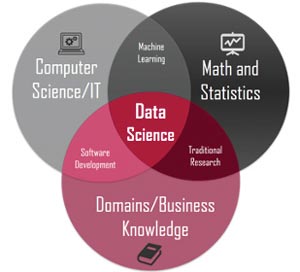 Figure 1. Venn Diagram Represents the Essential Skill Sets for Data Science
The field of data science is still relatively new even in 2022. However, we have seen a plethora of industries started utilizing the power of data science in order to revamp their business practices that drive revenue growth. The following examples illustrate some key data science use cases underpinning figure 2 below:
• Financial companies use data science to track anomalous transactions, fraud detection, and insurance scams. It can also be applied in other functions such as risk management, customer analytics, and algorithmic trading.
• E-commerce giants Amazon and Shopify use customer’s demographic data to improve their overall shopping experience and provide better product recommendation to their app users.
• Uber and Tesla are breaking the barriers by manufacturing state-of-the-art autonomous cars that may change the paradigm of the automobile industry in the near future. Although we are still at a very early stage of building fool proof driverless cars, doing so wouldn’t be possible without the help of data science.
• Netflix and other streaming platforms tend to build highly efficient recommender engines using data science algorithms that help companies to determine a list of movies/tv series that users are most likely to watch.
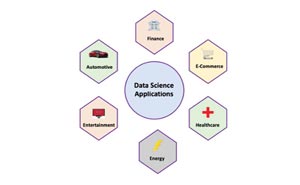 Figure 2. Impact of Data Science in Various Business Verticals
• The health care sector has benefited greatly by the advent of various data science driven technologies in the areas of medical imaging, genomics research, drug discovery, and disease prevention.
• Data science techniques are changing the paradigm of the energy sector by influencing innovative A.I. practices such as detecting grid failure, identifying energy consumption and savings to manage power outages, forecasting energy demands, and setting pricing accordingly.
Data Scientist Guidebook
Before you start thinking about choosing this career path, you need to understand what it takes to become a data scientist. Given the wide range of skillsets data scientists possess, there seems to be some confusion around their responsibilities in the broader spectrum.
Are They Statisticians, Super Expert Data Analysts, or Software Engineers?
To avoid this confusion Josh Wills, a former head of data engineering at Slack, once said that, “A data scientist is a person who is better at statistics than any programmer and better at programming than any statistician.”
The aforementioned statement puts the competency of a data scientist in perspective. They are usually responsible for executing the following tasks:
• Identifying and encapsulating potential data analytics problems that can have an adverse impact on a company’s growth strategy.
• Collecting, cleansing, transforming, and processing the structured and unstructured data from different sources. In most cases, data scientists partner with data engineers to carry out similar tasks and extrapolate data.
• Building statistical models and machine learning algorithms to extrapolate projections based on historical processed data.
• Interpreting the data models to identify patterns and communicate the discoveries to various stakeholders in a comprehensible way. Storytelling is one of the most important skills a data scientist must have.
It is their solemn duty to advise the business’ management to use a data-driven decision-making process instead of focusing solely on making ad hoc decisions.
The articles from these contributors are based on their personal expertise and viewpoints, and do not necessarily reflect the opinions of their employers or affiliated organizations.
EDITOR'S Choice

Fortune Brands Innovations [NYSE: FBIN]
By Juan Guerrero, Director, IT Audit & Data Analytics
The IT Audit Evolution: From Compliance to Strategic Intelligence
Broad River Retail
Wes Dudley, Senior Vice President, Customer Experience
Customer Experience in the Age of Amplified Complexity
Fortune Brands Innovations [NYSE: FBIN]
Scott Barnes, Sr. Director of Enterprise Cyber Security (CISO)
The X-Factor in Cybersecurity: AI and Automation at Work

LHarris Technologies [NYSE: LHX]
Brian Allred, Director of Business Intelligence and Analytics
The Shift from Rigid Dashboards to Conversational Analytics
Ivar's Restaurants
Patrick Yearout, Director of Innovation, Recruitment & Training
From Hiring to Development: Nurturing Teams that CareLatest Issues


