-
Technology
-
Industry
-
Solutions
-
- ASSET MANAGEMENT
- CUSTOMER EXPERIENCE MANAGEMENT
- CYBER SECURITY
- DATA CENTER
- DOCUMENT MANAGEMENT
- ELECTRONIC DATA INTERCHANGE
- ENTERPRISE DATA MANAGEMENT
- ENTERPRISE RESOURCE PLANNING
- ENTERPRISE RISK MANAGEMENT
- ENTERPRISE-GRADE WEB DATA SOLUTIONS
- FACILITY MANAGEMENT
- FIELD SERVICE
- IDENTITY AND ACCESS MANAGEMENT
- INFRASTRUCTURE
- IT SERVICE MANAGEMENT
- MANAGED IT SERVICES
- PAYMENT AND CARD
- PROJECT MANAGEMENT
- SOFTWARE TESTING
- STORAGE
- VIDEO SOLUTIONS
- WORKFLOW
-
-
Platforms
-
Functions
- Leadership Perspectives
- Innovation Insights
- Research
- Magazines
- News
- CXO Awards


Contributory Virtus Investment Partners on the invitation from our Editorial

P&E
Grant Posell, IT ManagerEfficient Fabrication Scaling with Underutilized Technologies
Grant Posell, IT Manager
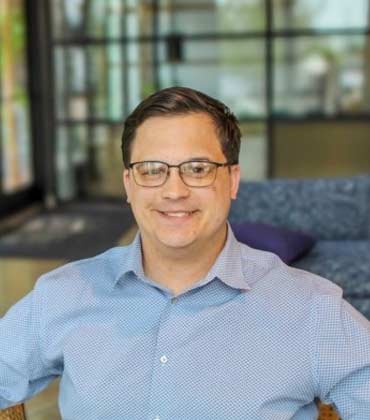
Grant Posell
Growing up, I was captivated by emerging technology and its potential to improve people's lives. I gravitated toward whatever sat on the bleeding edge, convinced that innovation always meant something new. In my early twenties, I built web applications at a coding bootcamp, later studied data structures in graduate school, and eventually joined a managed service provider that offered value-added network, security, and data services.
It was there that I first encountered something unexpected: a product built around the Raspberry Pi. Configured to mimic real users on a network, these small devices gave our clients objective, real-time insight into network performance. I was curious how something so small could deliver such meaningful data, and that curiosity pulled me into the world of single-board computers. I quickly discovered a thriving hobbyist community built around this remarkably capable and affordable machine. It struck me as strange that broader industries hadn't caught on. That realization became a quiet turning point: we often overlook simple, proven tools while chasing whatever is newest.
Fast forward to this year. I joined a piping and equipment company delivering electrical, mechanical, and piping services to clients building pharmaceutical, manufacturing, and data center facilities. Rapid growth across our projects, business, and fabrication shops surfaced a problem few anticipated. Our fabrication environments are hot, fast-paced, and unforgiving on standard computing equipment. Fine metal particulate, heat, and constant vibration can wreak havoc on traditional desktop hardware, and downtime on the shop floor is never cheap.
Talking it through with one of my employees, we realized we'd overlooked a piece of technology that was already tried, tested, and inexpensive: the Raspberry Pi. Compact, fanless, and remarkably resilient, it could be configured to withstand the conditions that disable conventional machines. Without a fan drawing in hot metal shavings, it holds up where standard desktops can fail. What began as a workaround became a genuine operational advantage.
Once we started looking for places to deploy them, the use cases multiplied quickly. At our pipe cutting and fitting stations, Pis now drive small screens that pull job specifications and cut lists directly from our production system. Fabricators no longer need to walk back and forth to a shared terminal or rely on printed travelers covered in grinding dust.
 Innovation isn’t always about adopting what’s newest. Sometimes it’s about recognizing the enduring value in what’s already available and applying it where it’s needed most.
At weld stations, we use the devices to log production counts and cycle times in real time, feeding a simple dashboard that gives shop leads visibility into throughput without requiring someone to manually track a clipboard. In areas where heat and airborne debris are most severe, sealed, fanless enclosures allow us to monitor ambient temperature and particulate buildup, providing our facilities team with early warning when conditions could begin affecting equipment or personnel comfort.
We have also used the devices for basic access and inventory tracking near tool cribs and material staging areas, where a full-scale desktop system would be unnecessary and difficult to maintain in the environment. Their relatively low cost makes it possible to deploy them across individual workstations without the capital planning normally associated with replacing a fleet of desktop computers. If one fails or gets knocked off a shelf by a forklift, replacement is straightforward rather than becoming a support issue that leaves a workstation idle.
The Raspberry Pi has given our business another way to scale technology across our fabrication environment while supporting consistent production and uptime. But the larger value is rooted less in the hardware itself than in the mindset behind its adoption. Innovation does not always require purchasing the newest technology. Sometimes it requires recognizing that an existing tool can solve a problem in a completely different setting.
Human ingenuity, it turns out, often has less to do with invention and more to do with reapplication.
Today, we are actively scaling this approach across our fabrication shops. These small computers have exceeded our expectations, performing reliably in an environment where traditional equipment can struggle. What started as a practical fix has become part of how we think about technology investment across the business.
The lesson I've carried forward is simple: innovation isn't always about adopting what's newest. Sometimes it's about recognizing the enduring value in what's already available and applying it where it's needed most. In industries where environmental conditions punish standard equipment and margins depend on uptime, that kind of thinking matters as much as any cutting-edge solution.
Old or new, the right technology is the one that solves the problem in front of you.
The articles from these contributors are based on their personal expertise and viewpoints, and do not necessarily reflect the opinions of their employers or affiliated organizations.
EDITOR'S Choice

Fortune Brands Innovations [NYSE: FBIN]
By Juan Guerrero, Director, IT Audit & Data Analytics
The IT Audit Evolution: From Compliance to Strategic Intelligence
Broad River Retail
Wes Dudley, Senior Vice President, Customer Experience
Customer Experience in the Age of Amplified Complexity
Fortune Brands Innovations [NYSE: FBIN]
Scott Barnes, Sr. Director of Enterprise Cyber Security (CISO)
The X-Factor in Cybersecurity: AI and Automation at Work

LHarris Technologies [NYSE: LHX]
Brian Allred, Director of Business Intelligence and Analytics
The Shift from Rigid Dashboards to Conversational Analytics
Ivar's Restaurants
Patrick Yearout, Director of Innovation, Recruitment & Training
From Hiring to Development: Nurturing Teams that CareLatest Issues


