-
Technology
-
Industry
-
Solutions
-
- ASSET MANAGEMENT
- CUSTOMER EXPERIENCE MANAGEMENT
- CYBER SECURITY
- DATA CENTER
- DOCUMENT MANAGEMENT
- ELECTRONIC DATA INTERCHANGE
- ENTERPRISE DATA MANAGEMENT
- ENTERPRISE RESOURCE PLANNING
- ENTERPRISE RISK MANAGEMENT
- ENTERPRISE-GRADE WEB DATA SOLUTIONS
- FACILITY MANAGEMENT
- FIELD SERVICE
- IDENTITY AND ACCESS MANAGEMENT
- INFRASTRUCTURE
- IT SERVICE MANAGEMENT
- MANAGED IT SERVICES
- PAYMENT AND CARD
- PROJECT MANAGEMENT
- SOFTWARE TESTING
- STORAGE
- VIDEO SOLUTIONS
- WORKFLOW
-
-
Platforms
-
Functions
- Leadership Perspectives
- Innovation Insights
- Research
- Magazines
- News
- CXO Awards










Contributory Virtus Investment Partners on the invitation from our Editorial

NFP
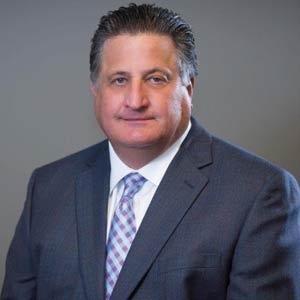
Ron Adams, Vice President of Risk ManagementEnterprise Risk Management Where is Your O-Ring?
Ron Adams, Vice President of Risk Management
Enterprise risk management (ERM) can be defined as a holistic approach to understanding and monitoring any business operation.This process can be highly defined with multiple disciplines involved or as simple as balancing your checkbook.Understanding where you are and where you seek to go is an ongoing assessment process.
While these are universal understandings followed by every successful business, all marketplaces are highly competitive and complicated.While most of us felt safe from distributions that would affect our daily lives, little did we know that a big one was coming—the pandemic.The 2020 pandemic and the worldwide disruptions in supply chains and raw materials influenced everyone.Not just a few, everyone.Did anyone predict such an event?Probability, not to the extent it played out.Who would have predicted fights over toilet paper?In the case of one company that I work with, multi-million projects were delayed due to the availability of screws from China that cost pennies.
While we will review ERM in greater detail in this article, I wanted to introduce a major point to consider that can affect your ERM strategy—single points of failure (SPF).While analyzing your operations during the ERM process, identifying SPF is critical.I enjoyed working with NASA and their insurance program in the early 1980’s.This was my first introduction to SPF and the critical nature of understanding the impact of identifying and monitoring how SPF can impact the operation and outcomes of a complex process.If you just have limited knowledge of the shuttle program, you can only consider the millions of factors, equipment, and designs that went into the process of designing and placing the program into full operation.Who would have known that a simple backup O-ring failure would have caused such a major disaster?
The question is where is your O-ring?
For the past 25 years, ERM has been the subject and topic of every major management consulting firm worldwide.Some of the greatest management consultants and scientific minds have mined data to derive the scope of where risk exists and how to eliminate or modify it.
 For the past 25 years, ERM has been the subject and topic of every major management consulting firm worldwide. Some of the greatest management consultants and scientific minds have mined data to derive the scope of where risk exists and how to eliminate or modify it
The following may be a simpler and user-friendly overview.
Profits directly result from supply and demand, and targeted profits are derived from efficient work processes.Whether you are building cars, software platforms, power infrastructures, or toys for children, it’s the process.The challenge is to identify and manage the process.
While conducting the ERM process, you must research each part of your operation, including the minor details, like raw materials, manufacturing equipment, skilled labor, facilities, environmental conditions, finances, governmental controls, market demands and changes.
Let’s start the process.
• Define and Identify Risk: This goes back to Single Points of Failure.Identifying risk and SPF comes from within, talking with the people doing the job.
• Action Committee: Once you have defined and identified your risk, build a team of representatives from every level. I once had a low-level dock worker tell me that if we did not protect our trailer bays, someone was going to fall and hurt themselves. (O-Ring moment)
• Broadcast: Everyone needs to know the plan, how it was developed, and, more importantly, how it will be implemented. Lastly, everyone has a place at the table.
• Everyone is Responsible: ERM has no hierarchy.Of course, there is a team that monitors and communicates the process. It’s everybody’s job to ensure that the process is understood and followed. I will now throw in one of my favorite management gurus, Peter Drucker. “What Gets Measured, Gets Changed.”
• Try, Fail, Correct: Do not expect this process to work the first time. Be flexible, analyze your results, and do they meet your original expectations. Make incremental changes, which reminds me of the Fortran programming language, which uses the process of “If, Then, Else.”It is an old programming language, but the basics still hold true.
• Measure Yourself Against Yourself: I was once told that if you monitor your competition, you look in the rearview mirror.Your development of goals, outcomes and associated risks are solely based on your company, not that of others.
I greatly respect the many management consultants, scientists, accountants, and academics who have dedicated their careers to the ERM process.Having an undergraduate degree in Management Science, I received an outstanding education dedicated to the process of all forms of management. However, only when I was in the weeds did I realize the necessity of knowing and understanding the entire process of what we were doing.Most importantly, where were the Single Points of Failure?Who or what could stop the process, limit the projected outcomes, and affect profitability?
Lastly, I will leave with a mantra I have had my entire career—an old Chinese Proverb—“If We Don’t Change Our Direction, We Will End Up Where We Are Headed.” Therefore, don’t rely on the current to protect the future.
The articles from these contributors are based on their personal expertise and viewpoints, and do not necessarily reflect the opinions of their employers or affiliated organizations.
EDITOR'S Choice

Fortune Brands Innovations [NYSE: FBIN]
By Juan Guerrero, Director, IT Audit & Data Analytics
The IT Audit Evolution: From Compliance to Strategic Intelligence
Broad River Retail
Wes Dudley, Senior Vice President, Customer Experience
Customer Experience in the Age of Amplified Complexity
Fortune Brands Innovations [NYSE: FBIN]
Scott Barnes, Sr. Director of Enterprise Cyber Security (CISO)
The X-Factor in Cybersecurity: AI and Automation at Work

LHarris Technologies [NYSE: LHX]
Brian Allred, Director of Business Intelligence and Analytics
The Shift from Rigid Dashboards to Conversational Analytics
Ivar's Restaurants
Patrick Yearout, Director of Innovation, Recruitment & Training
From Hiring to Development: Nurturing Teams that CareLatest Issues