-
Technology
-
Industry
-
Solutions
-
- ASSET MANAGEMENT
- CUSTOMER EXPERIENCE MANAGEMENT
- CYBER SECURITY
- DATA CENTER
- DOCUMENT MANAGEMENT
- ELECTRONIC DATA INTERCHANGE
- ENTERPRISE DATA MANAGEMENT
- ENTERPRISE RESOURCE PLANNING
- ENTERPRISE RISK MANAGEMENT
- ENTERPRISE-GRADE WEB DATA SOLUTIONS
- FACILITY MANAGEMENT
- FIELD SERVICE
- IDENTITY AND ACCESS MANAGEMENT
- INFRASTRUCTURE
- IT SERVICE MANAGEMENT
- MANAGED IT SERVICES
- PAYMENT AND CARD
- PROJECT MANAGEMENT
- SOFTWARE TESTING
- STORAGE
- VIDEO SOLUTIONS
- WORKFLOW
-
-
Platforms
-
Functions
- Leadership Perspectives
- Innovation Insights
- Research
- Magazines
- News
- CXO Awards


Contributory Virtus Investment Partners on the invitation from our Editorial

Casa Brugal
Juan Carlos Ordonez Matos, Head of Procurement OperationFrom Buying to Value Creation: Procurement’s Strategic Evolution
Juan Carlos Ordonez Matos, Head of Procurement Operation
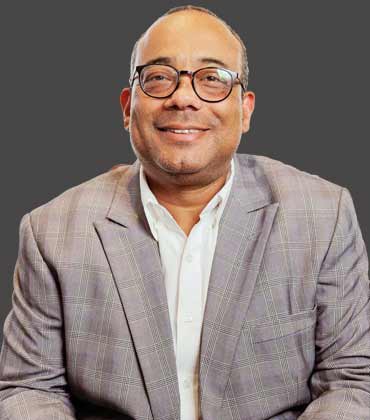
Juan Carlos Ordonez Matos
Professional evolution: From ‘Buying’ to Managing the Value at Stake
My experience across procurement and operations has evolved frm primarily transactional execution ensuring availability and compliance towards a strategic, outcomes driven approach that optimizes Total Cost of Ownership (TCO), strengthens resilience and links buying decisions to business strategy. In practice, that means shifting from firefighting to anticipating issues through data: understanding cost drivers, mapping risks and designing alternatives before problems hit operations.
That transition also shaped my leadership style. Effective procurement leadership is not only about technical knowledge; it rests on three capabilities: clarity of priorities, cross-functional collaboration and evidence based influence. Credibility is built when we turn fragmented information into simple, traceable, actionable decisions and align Products Innovation, Finance, Operations, Quality and Legal around a single narrative, that is a Professional evolution: from "buying" to managing the value at stake.
Today’s challenges: Efficiency with Governance and Continuity with Discipline.
Procurement leaders now operate under triple pressure: deliver quality, high level of service and cost control while protecting supply continuity. Among the most significant challenges are ineffective demand forecast, price volatility or bubbles and poor entire lead times tracker. A concrete example: in a critical category showing early warning signs of disruption., I structured the response as a procurement "control tower": spend analysis by category, supplier risk assessment, dual sourcing alternatives and a continuity plan with clear ownership. In parallel, we established a small set of operational indicators, delivery compliance, lead time variation and price stability—to monitor and act quickly. The outcome was a more predictable process: fewer emergency decisions, better internal coordination and negotiation grounded in facts rather than urgency.
Strategic Sourcing and Supplier Management: Relationships that Become Competitive Advantage
Long-term value is created when procurement stops treating suppliers as one-off transactions and starts managing them as an ecosystem. My approach to strategic sourcing begins with segmentation: strategic suppliers require governance, performance management and collaboration; tactical suppliers demand efficiency and control.
 The procurement function that will stand out is the one that moves from reactive buying to strategic value creation, combining transparency and honestly to build strong relationship with the supply chain, internal clients and key collaborators.
From there, I work through three levers:
• Category strategy built on quality, service and value drivers
• Performance management with clear metrics on vendor transparency
• Sustainable vision, plans and real commitment with it.
In many categories, the "visible" cost is not the biggest cost. Hidden cost sits in variability: expedited orders, rework, stock-outs, quality deviations, or logistics non-compliance.
That is why, with strategic suppliers, I prioritise agreements that improve reliability—service levels, improvement plans, transparent data sharing and escalation mechanisms. When a supplier understands how their performance affects a customer’s the conversation shifts from unit price to total value.
Current Trends: Digitalization, Resilience and Sustainability Embedded.
Looking ahead, I see four dominant trends.
First, digital procurement: sourcing platforms, automation and spend analytics to improve visibility and speed decisionmaking.
Second, resilience as a true KPI: dual sourcing, regionalisation, continuity planning and active risk management.
Third, sustainability embedded in procurement and fourth, procurement becoming increasingly predictive, where data enables early-warning signals and action before risk becomes disruption.
Wisdom From Experience
For professionals looking to grow in procurement, I recommend developing three dimensions.
• Understand the business: the best negotiations are designed with financial and operational insight.
• Master the fundamentals: data analysis, contracting, negotiation and risk management.
• Build influence: communicate clearly, align stakeholders and execute with discipline. Modern procurement rewards those who turn information into decisions—and decisions into outcomes.
My Final Thoughts
The procurement function that will stand out is the one that moves from reactive buying to strategic value creation, combining transparency and honestly to build strong relationship with the supply chain, internal clients and key collaborators.
The articles from these contributors are based on their personal expertise and viewpoints, and do not necessarily reflect the opinions of their employers or affiliated organizations.
EDITOR'S Choice

Fortune Brands Innovations [NYSE: FBIN]
By Juan Guerrero, Director, IT Audit & Data Analytics
The IT Audit Evolution: From Compliance to Strategic Intelligence
Broad River Retail
Wes Dudley, Senior Vice President, Customer Experience
Customer Experience in the Age of Amplified Complexity
Fortune Brands Innovations [NYSE: FBIN]
Scott Barnes, Sr. Director of Enterprise Cyber Security (CISO)
The X-Factor in Cybersecurity: AI and Automation at Work

LHarris Technologies [NYSE: LHX]
Brian Allred, Director of Business Intelligence and Analytics
The Shift from Rigid Dashboards to Conversational Analytics
Ivar's Restaurants
Patrick Yearout, Director of Innovation, Recruitment & Training
From Hiring to Development: Nurturing Teams that CareLatest Issues