-
Technology
-
Industry
-
Solutions
-
- ASSET MANAGEMENT
- CUSTOMER EXPERIENCE MANAGEMENT
- CYBER SECURITY
- DATA CENTER
- DOCUMENT MANAGEMENT
- ELECTRONIC DATA INTERCHANGE
- ENTERPRISE DATA MANAGEMENT
- ENTERPRISE RESOURCE PLANNING
- ENTERPRISE RISK MANAGEMENT
- ENTERPRISE-GRADE WEB DATA SOLUTIONS
- FACILITY MANAGEMENT
- FIELD SERVICE
- IDENTITY AND ACCESS MANAGEMENT
- INFRASTRUCTURE
- IT SERVICE MANAGEMENT
- MANAGED IT SERVICES
- PAYMENT AND CARD
- PROJECT MANAGEMENT
- SOFTWARE TESTING
- STORAGE
- VIDEO SOLUTIONS
- WORKFLOW
-
-
Platforms
-
Functions
- Leadership Perspectives
- Innovation Insights
- Research
- Magazines
- News
- CXO Awards






Contributory Virtus Investment Partners on the invitation from our Editorial

Baywood Hotels | Hotel Management & Development
Daniel Ovichegan, Hotel General ManagerFrom Service to Leadership: Building High-Performing Teams
Daniel Ovichegan, Hotel General Manager
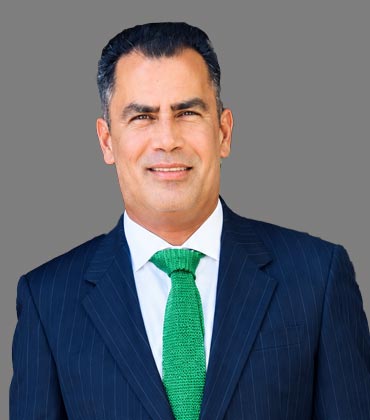
Daniel Ovichegan
Hospitality has a unique way of teaching leadership.
Long before I became a hotel general manager, I learned that leadership is not defined by a title, an office or a position on an organizational chart. It is demonstrated when a guest needs assistance, an employee needs direction, an operation faces an unexpected challenge or a team looks to someone for confidence and clarity.
My career has taken me through food and beverage operations, luxury hospitality, hotel openings, full-service and select-service hotels and ultimately general management. Each stage taught me something different, but one lesson has remained constant: great hospitality organizations are built through people.
Learning Hospitality from the Ground Up
My professional foundation was shaped by education and hands-on experience. At Johnson & Wales University, studying hospitality management helped me understand hotel operations and the business behind hospitality. Years later, completing my MBA in Organizational Leadership gave me a deeper understanding of organizational culture, communication, change management and developing people.
My early experiences across different hospitality environments also taught me how interconnected our industry truly is. I learned restaurants, banquets, food and beverage operations, luxury service and how departments depend upon one another.
Most importantly, I learned that the guest rarely sees the organizational chart. The guest simply experiences the result.
Luxury hospitality strengthened that perspective. It taught me that exceptional service is rarely accidental—it is the result of preparation. Timing, presentation, communication, anticipation and personalization can dramatically influence how a guest remembers an experience.
But standards and procedures alone cannot create hospitality. People deliver the experience. A leader’s responsibility is to ensure employees understand not only what the standard is, but why it matters.
From Operator to Leader
As I progressed from food and beverage leadership into broader hotel operations and general management, my definition of success changed.
Earlier in my career, success often meant personally solving the problem. As a general manager, success increasingly means developing a team capable of solving problems without waiting for the GM.
A manager can become the person everyone depends upon. A leader develops people whom others can depend upon.
That requires trust, accountability, communication and coaching. Leadership is not about proving how much you know. It is about creating an organization where knowledge, responsibility and accountability are distributed throughout the team.
Hotel openings reinforced this lesson. A new hotel begins with possibilities and uncertainty. Leaders must simultaneously manage staffing, training, technology, vendors, inspections, brand standards, guest readiness, sales, financial performance, safety, maintenance and countless operational details.
Yet perhaps the most important thing being built during an opening is not the physical hotel—it is the culture.
Employees quickly observe what leadership tolerates, celebrates and consistently reinforces. Those behaviors eventually become the hotel’s operating culture.
Connecting People and Performance
Hospitality executives are measured by occupancy, ADR, RevPAR, guest satisfaction, labor productivity, profitability, quality assurance and employee retention. These measurements matter. Hotels are businesses, and leaders have a responsibility to deliver sustainable financial results.
But people leadership and operational performance should never be viewed as competing priorities.
A well-trained employee makes fewer mistakes. An engaged employee provides better service. A confident supervisor resolves problems faster. A strong department head manages labor and resources more effectively. A culture of accountability reduces operational inconsistency.
Better people practices can create better business results.
Technology and data have also transformed hotel management. We have dashboards, revenue-management systems, guest-feedback platforms, labor reports, quality-assurance tools and countless performance metrics.
All are valuable, but no dashboard can replace walking the hotel.
Some of the most important information a general manager receives comes from conversations with housekeepers, front-desk agents, breakfast attendants, engineers, shuttle drivers and guests. A hotel will tell you how it is performing if you are willing to walk through it and listen.
The Leadership Philosophy I Carry Forward
After years in hospitality, my definition of leadership continues to evolve.
Leaders must set high standards while giving people the support necessary to reach them. We must hold people accountable while recognizing their potential. We must understand the numbers without forgetting the people responsible for producing them.
And leadership is ultimately temporary. Hotels continue operating after general managers move on.
The true measure of leadership cannot simply be how successfully an organization performs while we are present. We should also ask what remains after we leave.
Did we build stronger managers? Did we create better systems? Did we develop future leaders? Did we improve the culture? Did we leave the organization stronger than we found it?
Those are questions I continue to ask myself.
Hospitality taught me how to serve. Operations taught me how to execute. Luxury taught me the importance of details. Organizational leadership taught me how to connect all three through people.
And that, to me, is what leadership in hospitality is ultimately about.
The articles from these contributors are based on their personal expertise and viewpoints, and do not necessarily reflect the opinions of their employers or affiliated organizations.
EDITOR'S Choice

Fortune Brands Innovations [NYSE: FBIN]
By Juan Guerrero, Director, IT Audit & Data Analytics
The IT Audit Evolution: From Compliance to Strategic Intelligence
Broad River Retail
Wes Dudley, Senior Vice President, Customer Experience
Customer Experience in the Age of Amplified Complexity
Fortune Brands Innovations [NYSE: FBIN]
Scott Barnes, Sr. Director of Enterprise Cyber Security (CISO)
The X-Factor in Cybersecurity: AI and Automation at Work

LHarris Technologies [NYSE: LHX]
Brian Allred, Director of Business Intelligence and Analytics
The Shift from Rigid Dashboards to Conversational Analytics
Ivar's Restaurants
Patrick Yearout, Director of Innovation, Recruitment & Training
From Hiring to Development: Nurturing Teams that CareLatest Issues