-
Technology
-
Industry
-
Solutions
-
- ASSET MANAGEMENT
- CUSTOMER EXPERIENCE MANAGEMENT
- CYBER SECURITY
- DATA CENTER
- DOCUMENT MANAGEMENT
- ELECTRONIC DATA INTERCHANGE
- ENTERPRISE DATA MANAGEMENT
- ENTERPRISE RESOURCE PLANNING
- ENTERPRISE RISK MANAGEMENT
- ENTERPRISE-GRADE WEB DATA SOLUTIONS
- FACILITY MANAGEMENT
- FIELD SERVICE
- IDENTITY AND ACCESS MANAGEMENT
- INFRASTRUCTURE
- IT SERVICE MANAGEMENT
- MANAGED IT SERVICES
- PAYMENT AND CARD
- PROJECT MANAGEMENT
- SOFTWARE TESTING
- STORAGE
- VIDEO SOLUTIONS
- WORKFLOW
-
-
Platforms
-
Functions
- Leadership Perspectives
- Innovation Insights
- Research
- Magazines
- News
- CXO Awards


Contributory Virtus Investment Partners on the invitation from our Editorial

Programming.com
Sharanjit Toor, Managing Director of TechnologyLeading AI with Purpose and Business Impact
Sharanjit Toor, Managing Director of Technology
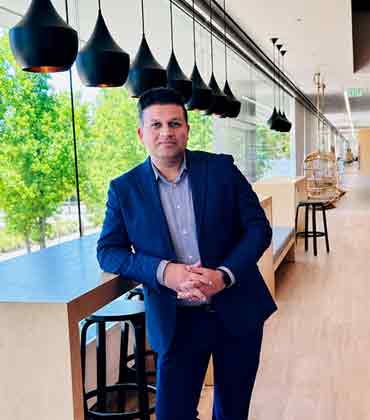
Sharanjit Toor is a technology leader with a strong focus on artificial intelligence, digital transformation and business growth. As the managing director of technology at Programming.com, he oversees the company's global technology operations and guides its AI strategy and investment decisions. His role is to ensure technology aligns with broader digital transformation and cloud infrastructure for effective enterprise software delivery.
Building a Leadership Style Around Accessibility
My professional journey began as a developer, and over the years, I progressed through a series of leadership roles to my current position.
Early in my career, I developed a habit of looking beyond the immediate scope of my responsibilities and focusing on how projects could create greater value. That mindset, combined with a willingness to take initiative and solve problems, helped me grow into leadership roles.
For me, leadership is about enabling others to succeed while helping teams navigate change with confidence.
There is a concept often referred to as servant leadership, and I would describe my approach as a modified version of that philosophy. I believe leaders should be accessible and willing to help their teams navigate challenges. Whether someone is a peer, a team member, or a developer at the start of their career, I want them to feel comfortable reaching out when they need guidance.
Being approachable creates trust and encourages people to raise challenges early and share ideas openly. Whenever I see an opportunity to solve a problem or create value through technology, I make it a point to contribute.
Moving AI Beyond Experimentation
One of the biggest challenges organizations face today is moving AI initiatives from proof of concept to production. Many projects generate excitement during the experimentation phase but struggle to create measurable business value because they are treated as isolated technology initiatives.
My approach is to view AI as part of a larger ecosystem rather than a standalone capability. Success depends on having the right data foundation, clear business objectives and a strong understanding of how AI fits into existing workflows and systems. Without those elements, even the most advanced models can fail to deliver meaningful outcomes.
 Understanding operational bottlenecks, customer pain points and data limitations should always come before selecting a technology solution.
Before any development begins, I believe it is important to define the business KPIs and the expected outcome. Whether the goal is reducing customer friction, improving operational efficiency, or strengthening forecasting capabilities, organizations need a clear path from technology investment to business impact. That alignment is what ultimately determines success.
Keeping Humans at the Center of AI Adoption
There is often a misconception that AI is designed to replace people. I view it differently. AI is an intellect multiplier that helps individuals become more productive, make better decisions and focus on higher-value work.
The real opportunity lies in automating repetitive and time-consuming tasks while allowing human expertise to guide critical decisions. When used effectively, AI enables people to accomplish more in less time without diminishing the importance of their judgment or experience.
This is especially important in industries such as financial services, healthcare and compliance, where decisions carry significant consequences. In these environments, I strongly advocate for a human-in-the-loop approach. AI should support human decision-making, not replace it. Organizations that strike the right balance between automation and oversight will be better positioned to realize long-term value.
Solving Real Business Challenges Through Innovation
Innovation is most effective when it addresses a clear business challenge. During the pandemic, one of the problems we faced was the amount of time and effort required to screen candidates for hiring. Teams were spending significant resources conducting interviews and evaluating applicants while trying to meet growing talent demands.
To address this challenge, I worked with fellow executives to develop Recruitment AI. The platform uses an AI avatar to conduct interviews, assess responses and generate structured feedback for hiring teams. While AI helps streamline the screening process, final decisions remain in the hands of people, ensuring that technology supports rather than replaces human judgment.
During the same period, I also contributed to the development of a Contact Tracing solution that supported safe return-to-work initiatives. Both projects reinforced an important lesson. Technology delivers the greatest value when it is focused on solving practical problems.
Preparing for the Next Phase of AI Evolution
The pace of AI innovation continues to accelerate. Models, frameworks and platforms that are considered cutting-edge today can quickly be replaced by more advanced alternatives. As a result, organizations must think beyond individual tools and focus on building long-term adaptability.
One capability that will become increasingly important is architectural flexibility. Businesses that become overly dependent on a single vendor, model or technology stack risk accumulating significant technical debt. This can make it difficult to adapt as the market evolves.
I believe organizations should invest in modular architectures that allow them to adopt new technologies without rebuilding core systems. At Programming.com, this principle guides how we help clients approach AI adoption. The objective is to create a foundation that remains relevant as technology continues to evolve.
Focusing on the Problem, Not the Technology
The excitement surrounding AI has created tremendous opportunities, but it has also encouraged many organizations to pursue technology before fully understanding the problem they are trying to solve. This often leads to unnecessary complexity and disappointing outcomes.
My advice to fellow leaders is to start with the business challenge instead of prioritizing tech adoption. Understanding operational bottlenecks, customer pain points and data limitations should always come before selecting a technology solution. In many cases, the answer may not require AI at all.
There are situations where process improvements, automation, or stronger data management can deliver greater value than a large language model. AI should be applied where it can create a meaningful impact and improve the economics of a business operation. When leaders focus on solving the right problem first, technology becomes far more effective as an enabler of growth and transformation.
The articles from these contributors are based on their personal expertise and viewpoints, and do not necessarily reflect the opinions of their employers or affiliated organizations.