-
Technology
-
Industry
-
Solutions
-
- ASSET MANAGEMENT
- CUSTOMER EXPERIENCE MANAGEMENT
- CYBER SECURITY
- DATA CENTER
- DOCUMENT MANAGEMENT
- ELECTRONIC DATA INTERCHANGE
- ENTERPRISE DATA MANAGEMENT
- ENTERPRISE RESOURCE PLANNING
- ENTERPRISE RISK MANAGEMENT
- ENTERPRISE-GRADE WEB DATA SOLUTIONS
- FACILITY MANAGEMENT
- FIELD SERVICE
- IDENTITY AND ACCESS MANAGEMENT
- INFRASTRUCTURE
- IT SERVICE MANAGEMENT
- MANAGED IT SERVICES
- PAYMENT AND CARD
- PROJECT MANAGEMENT
- SOFTWARE TESTING
- STORAGE
- VIDEO SOLUTIONS
- WORKFLOW
-
-
Platforms
-
Functions
- Leadership Perspectives
- Innovation Insights
- Research
- Magazines
- News
- CXO Awards


Contributory Virtus Investment Partners on the invitation from our Editorial

Kia America
Subba Kethu, Head of Digital TechnologyLegacy is Not the Enemy: A CIO's Playbook for Modernizing without Breaking what Works
Subba Kethu, Head of Digital Technology
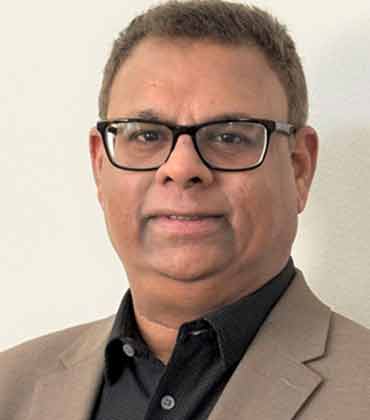
Subba Kethu
Every enterprise faces the same technology dilemma of innovating fast enough to stay competitive while continuing to operate business-critical systems that have been in place for decades. For CIOs and technology leaders, modernization is not a wholesale replacement effort but the art of balancing stability with transformation.
Modernization succeeds when organizations preserve the reliability of core systems while introducing new capabilities that unlock business value. Move too slowly, and technical debt becomes a constraint. Move too aggressively, and disruption, security gaps, and runaway costs follow. The most effective strategies recognize a simple truth: innovation and legacy systems are not adversaries. Legacy platforms often contain institutional knowledge, business logic and data that power the enterprise. Even today, many organizations, including ours, continue to run critical workloads on platforms such as AS/400 because they remain dependable and deeply integrated into business operations.
Kia North America’s digital transformation journey illustrates how enterprises can modernize core platforms, migrate to cloud environments and adopt AI capabilities while maintaining operational excellence.
The Reality of Enterprise Legacy Systems
Legacy systems often carry an unfair reputation, yet they remain the backbone of ERP operations, supply chain processes, customer platforms, and analytical tools. They support thousands of daily transactions and millions of dollars in business value.
Challenges arise when these systems become difficult to scale, expensive to maintain or unable to support emerging digital capabilities. Common issues include aging infrastructure, limited integration, high maintenance costs, data silos, and constraints on AI adoption.
Rather than pursuing full replacement, leading enterprises increasingly adopt phased modernization, preserving business continuity while introducing modern capabilities.
Modernization as a Business Strategy
Successful modernization begins with business outcomes, not technology choices. Technology leaders should ask:
•Which business processes need improvement?
• Which customer experiences can be enhanced?
• Which operational costs can be reduced?
• Which new capabilities will create competitive advantage?
At Kia North America, modernization initiatives have been tied directly to business value. Migrating customer‑facing and dealer‑facing applications to AWS and Azure improved scalability and resilience. ERP modernization through SAP S/4HANA established a digital backbone for future automation and analytics. These efforts were not about replacing old technology; they were about enabling business transformation.
 Innovation and legacy systems are not adversaries. The strongest modernization strategies recognize the value of both.
Transform Core Platforms is the first modernization pattern. Upgrading foundational systems such as ERP platforms is one of the most consequential modernization decisions. Modern ERP systems standardize processes, improve visibility, increase automation, and create a platform for future innovation. Kia’s deployment of SAP S/4HANA across multiple regions demonstrates how modernizing transactional systems establishes the foundation for advanced analytics, automation, and AI.
The second modernization pattern is Cloud as an enabler. Cloud migration is often misunderstood as a destination. In reality, cloud is a modernization enabler. Cloud platforms improve scalability, resiliency, deployment speed, disaster recovery, and infrastructure simplicity.
Kia’s multi-cloud strategy uses AWS for customer-facing applications and Azure for AI and generative AI, supporting both operational modernization and innovation. Cloud investments succeed when they strengthen business capabilities rather than becoming technology projects without measurable outcomes.
Pattern three is modernize data before AI. AI initiatives fail without strong data foundations. Generative AI, predictive analytics, and intelligent agents are only as effective as the quality and governance of the data they rely on.
Kia’s AI journey emphasizes data readiness, governance, and enterprise knowledge management. Early generative AI initiatives focused on building enterprise knowledge repositories and Retrieval‑Augmented Generation (RAG) capabilities before scaling AI across the organization. Data modernization is a prerequisite for AI success.
Adopt AI incrementally is the fourth modernizing pattern. The pressure to deploy AI rapidly is immense, but responsible scaling is essential. Kia’s Microsoft Copilot strategy began with a targeted pilot, measured productivity outcomes, and then expanded through structured training, communication, and governance. The principle is clear: innovate rapidly, scale responsibly.
Governance is the Hidden Accelerator
Governance is often seen as a constraint, but strong governance accelerates modernization by providing guardrails that allow innovation to scale safely. Kia’s AI governance framework emphasizes privacy, accountability, transparency, security, and lifecycle oversight. Without governance, innovation becomes fragmented and risky.
A practical roadmap balances three priorities:
1. Run the Business – Maintain stability of critical systems.
2. Improve the Business – Modernize through cloud, automation, and platform upgrades.
3. Transform the Business – Invest in AI, advanced analytics, and new digital capabilities.
Enterprises that invest across all three priorities outperform those that focus on only one.
Modernization is not a one‑time program. It is an ongoing capability. The future belongs to organizations that balance stability and innovation, preserving the value of legacy systems while introducing modern platforms, cloud capabilities, data‑driven decision making and AI‑powered experiences. Modernization is not about discarding what came before; it is about creating a pathway that connects the systems that powered yesterday’s success with the technologies that will shape tomorrow.
The articles from these contributors are based on their personal expertise and viewpoints, and do not necessarily reflect the opinions of their employers or affiliated organizations.
EDITOR'S Choice

Fortune Brands Innovations [NYSE: FBIN]
By Juan Guerrero, Director, IT Audit & Data Analytics
The IT Audit Evolution: From Compliance to Strategic Intelligence
Broad River Retail
Wes Dudley, Senior Vice President, Customer Experience
Customer Experience in the Age of Amplified Complexity
Fortune Brands Innovations [NYSE: FBIN]
Scott Barnes, Sr. Director of Enterprise Cyber Security (CISO)
The X-Factor in Cybersecurity: AI and Automation at Work

LHarris Technologies [NYSE: LHX]
Brian Allred, Director of Business Intelligence and Analytics
The Shift from Rigid Dashboards to Conversational Analytics
Ivar's Restaurants
Patrick Yearout, Director of Innovation, Recruitment & Training
From Hiring to Development: Nurturing Teams that CareLatest Issues


