-
Technology
-
Industry
-
Solutions
-
- ASSET MANAGEMENT
- CUSTOMER EXPERIENCE MANAGEMENT
- CYBER SECURITY
- DATA CENTER
- DOCUMENT MANAGEMENT
- ELECTRONIC DATA INTERCHANGE
- ENTERPRISE DATA MANAGEMENT
- ENTERPRISE RESOURCE PLANNING
- ENTERPRISE RISK MANAGEMENT
- ENTERPRISE-GRADE WEB DATA SOLUTIONS
- FACILITY MANAGEMENT
- FIELD SERVICE
- IDENTITY AND ACCESS MANAGEMENT
- INFRASTRUCTURE
- IT SERVICE MANAGEMENT
- MANAGED IT SERVICES
- PAYMENT AND CARD
- PROJECT MANAGEMENT
- SOFTWARE TESTING
- STORAGE
- VIDEO SOLUTIONS
- WORKFLOW
-
-
Platforms
-
Functions
- Leadership Perspectives
- Innovation Insights
- Research
- Magazines
- News
- CXO Awards


Contributory Virtus Investment Partners on the invitation from our Editorial

JCL Investments Inc.
Jason Earle, IT ManagerPractical It Modernization in a Traditional Industry
Jason Earle, IT Manager
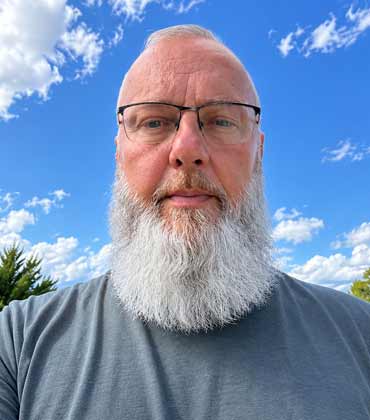
Jason Earle
Moving Legacy On-Premises Infrastructure to Cloud-Based Environments
One of the most important lessons I have learned is that cloud modernization should not simply mean recreating your existing on-premises environment in the cloud. It is an opportunity to examine every service and ask whether it still needs to exist, whether there is a better way to deliver it, or whether it can be retired entirely.
That has been a major part of our own modernization. Before reducing our reliance on traditional Active Directory and on-premises servers, we first had to understand the dependencies around identity, applications, file storage, DNS, networking and older systems. Some dependencies are obvious; others may have quietly existed for many years.
We have taken a staged approach. Our approach is to move users and devices toward cloud-based identity, migrating collaboration and storage services, validating each stage, and only then beginning to retire the infrastructure those services previously depended upon.
I think this is especially important in established organizations. The goal should not be to migrate quickly just to say you are “in the cloud.” The goal is to simplify the environment while improving reliability, security and manageability.
Modernize Systems without Disrupting Day-To-Day Operations
For us, the key has been treating modernization as a series of manageable projects rather than one large migration.
Over time, we have moved toward Microsoft 365 and cloud-based identity, transitioned devices away from traditional domain dependency, expanded the use of cloud collaboration and storage, centralized device management and started retiring infrastructure that is no longer required. We have also been moving large volumes of historical company data from traditional file storage into cloud-based archival storage while providing users with controlled ways to access the information they still need.
I prefer to introduce changes with a small number of users or devices first, validate the complete workflow, address problems, and then expand the deployment. I also try to maintain a fallback during important transitions until the new solution has proven itself.
Most importantly, modernization should reduce complexity for employees rather than expose them to it. A user should not have to understand Entra ID, authentication methods or where a file physically resides. They should sign in securely, find what they need and get their work done.
Tech Modernization Aligned with Field Users and Office Teams
Working in construction makes this particularly important because there is no single type of user or working environment.
An accounting employee in an office with reliable connectivity has very different requirements from a project employee working remotely or from a construction site. We support multiple locations and users who may work from offices, jobsites, home or while travelling. Connectivity that we take for granted in an office cannot always be assumed in the field.
That has taught me to evaluate technology from the user’s perspective. Security is essential, but so are simplicity and reliability. A technically impressive solution that becomes difficult to use with poor connectivity or creates unnecessary steps for employees is not necessarily a successful solution.
Legacy systems also need to be approached pragmatically. We have systems and large volumes of historical information accumulated over many years. You cannot simply switch everything off because a newer technology exists. Sometimes the right approach is migration; sometimes it is archival; and sometimes it is maintaining a legacy service temporarily while dependencies are removed.
Modernization has to accommodate the business while gradually moving it forward.
The Evolving Ways in Which IT Supports Distributed Operations
I believe identity will increasingly replace the physical corporate network as the centre of IT.
Historically, organizations built environments around offices, servers, network drives and devices joined to an internal domain. We are already seeing that model change. With cloud identity, modern device management and cloud-based applications, a securely authenticated user and managed device can access appropriate resources regardless of physical location.
 The goal should not be to migrate quickly just to say you are “in the cloud.” The goal is to simplify the environment while improving reliability, security and manageability.
That is particularly valuable to industries such as construction, where operations are naturally distributed.
I also expect automation to become increasingly important. Small IT teams cannot manually manage every device, user account, software configuration and repetitive administrative task as environments become more distributed. Throughout my career, I have relied heavily on scripting and automation, and modern cloud platforms make that even more valuable.
The IT role is becoming less about maintaining a building full of infrastructure and more about securely managing identities, devices, data and services wherever they happen to be.
Leading Practical Technology Modernization Initiatives
My biggest advice is to learn the business, not just the technology.
Understanding Microsoft 365, cloud platforms, networking, security and automation is important, but technology is ultimately there to solve a business problem. Spend time understanding how accounting works, how field operations work, why an older application still exists, and why employees perform a process a particular way before deciding how to change it.
I also believe strongly in remaining hands-on. I have been programming and automating tasks throughout my career, and that mindset continues to be extremely valuable. If I see a repetitive process, my first thought is often whether it can be scripted, automated or simplified.
Finally, do not modernize simply because something newer is available. Start with the problem, understand the risks and dependencies, test your solution, and move forward incrementally. Successful modernization is not measured by how much technology you replace. It is measured by whether the organization becomes more secure, reliable, efficient and easier to support as a result.
The articles from these contributors are based on their personal expertise and viewpoints, and do not necessarily reflect the opinions of their employers or affiliated organizations.
EDITOR'S Choice

Fortune Brands Innovations [NYSE: FBIN]
By Juan Guerrero, Director, IT Audit & Data Analytics
The IT Audit Evolution: From Compliance to Strategic Intelligence
Broad River Retail
Wes Dudley, Senior Vice President, Customer Experience
Customer Experience in the Age of Amplified Complexity
Fortune Brands Innovations [NYSE: FBIN]
Scott Barnes, Sr. Director of Enterprise Cyber Security (CISO)
The X-Factor in Cybersecurity: AI and Automation at Work

LHarris Technologies [NYSE: LHX]
Brian Allred, Director of Business Intelligence and Analytics
The Shift from Rigid Dashboards to Conversational Analytics
Ivar's Restaurants
Patrick Yearout, Director of Innovation, Recruitment & Training
From Hiring to Development: Nurturing Teams that Care