-
Technology
-
Industry
-
Solutions
-
- ASSET MANAGEMENT
- CUSTOMER EXPERIENCE MANAGEMENT
- CYBER SECURITY
- DATA CENTER
- DOCUMENT MANAGEMENT
- ELECTRONIC DATA INTERCHANGE
- ENTERPRISE DATA MANAGEMENT
- ENTERPRISE RESOURCE PLANNING
- ENTERPRISE RISK MANAGEMENT
- ENTERPRISE-GRADE WEB DATA SOLUTIONS
- FACILITY MANAGEMENT
- FIELD SERVICE
- IDENTITY AND ACCESS MANAGEMENT
- INFRASTRUCTURE
- IT SERVICE MANAGEMENT
- MANAGED IT SERVICES
- PAYMENT AND CARD
- PROJECT MANAGEMENT
- SOFTWARE TESTING
- STORAGE
- VIDEO SOLUTIONS
- WORKFLOW
-
-
Platforms
-
Functions
- Leadership Perspectives
- Innovation Insights
- Research
- Magazines
- News
- CXO Awards


Contributory Virtus Investment Partners on the invitation from our Editorial

Piedmont Community College
James Tagliareni, Vice President of Information Technology & CIORedefining Technology's Role in Community Colleges
James Tagliareni, Vice President of Information Technology & CIO
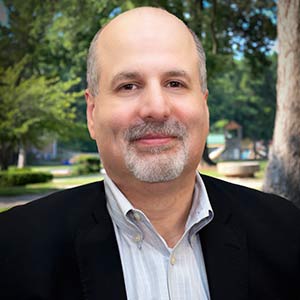
James Tagliareni is an award-winning IT leader passionate about transforming education through technology. With expertise in K-12 and higher education, he drives innovation, cybersecurity, and cost-saving strategies, empowering educators and students while shaping the future of digital learning.
In an exclusive interview with CIOReview, James Tagliareni shared his views on the evolution of technology in community colleges.
Can you share your career journey and the key experiences that influenced your philosophy and led you to your role at Piedmont Community College?
My career didn’t unfold in a straight line, and honestly, that’s been part of the learning. I started out in the trenches of IT—pulling cable, configuring servers, fixing whatever broke. At the time, I thought the goal was uptime and technical perfection. Later, I realized the real test of technology isn’t whether the lights stay green, but whether people can do their jobs better because of it.
At Robeson Community College, we rolled out the “Anywhere, Anytime, Any Device” initiative. Students suddenly had cloud and mobile access they hadn’t before, and the impact on enrollment and costs was obvious. Later, at College of the Mainland, I pushed disaster recovery into the cloud. It didn’t just save money; it meant peace of mind that services would stay running. When I got to Washburn University, I found that only a fraction of their data was actually protected. Within a matter of weeks, we built out a system that could actually stand up in a crisis. That one was a wake-up call about resilience.
Now at Piedmont Community College, I use those experiences every day. Whether it was pushing our bandwidth up by nearly 10,000% or using predictive analytics to flag students before they fail a course, the same philosophy applies: technology is only worth the investment if it improves lives.
Cybersecurity is now a top concern across higher education. How are you approaching cybersecurity at Piedmont Community College to protect systems while maintaining access and usability for students and staff?
Cybersecurity used to be seen as a technical back-office function. Not anymore. At Piedmont, it’s become everyone’s responsibility. We moved our external rating from a “C” to an “A,” one of the top marks in the state, by layering defenses—next-gen firewalls, stronger identity management, and better endpoint security. But the real change came when we started treating students, faculty, and staff as partners in security.
 I realized the real test of technology isn’t whether the lights stay green, but whether people can do their jobs better because of it
People are always the deciding factor. A firewall can’t stop someone from clicking the wrong link. That’s why we put a lot of effort into phishing training, password reminders, and awareness campaigns. The trick is to balance protection with usability. If security slows people down too much, they’ll find workarounds— and that creates even bigger risks.
I’ve written on this before: compliance matters, but it’s not the finish line. A safe learning environment is the goal, and that means systems that are both secure and accessible.
What role do you believe AI should play in community college environments, and how do you balance innovation with ethics and data privacy?
AI is everywhere in conversation, but in practice, it should feel invisible—just quietly making life easier. At Piedmont, we use chatbots to answer student questions at midnight, and predictive analytics to spot students who might be slipping before they actually withdraw. Those tools free up staff to focus on one-on-one help instead of resetting passwords or answering the same questions again and again.
That said, AI has limits. It should never replace the human connection that makes education what it is. Every tool we adopt goes through review for ethics and data privacy, because if students can’t trust us with their information, none of this works.
The part that excites me most is how AI levels the playing field. A working parent who can’t call during business hours still gets answers from the chatbot. A professor can tweak lessons based on insights from student performance data. AI doesn’t replace people—it extends their reach.
Continuous improvement is central to both technology and education. How do you embed that mindset into your IT operations, particularly when introducing new systems or workflows?
I don’t think of IT projects as one-and-done. They’re more like living systems. At Piedmont, when we rolled out our SharePoint intranet, we didn’t just flip the switch and walk away. We asked people what worked, what didn’t, and then kept refining. The wireless upgrade happened the same way—we piloted it, took surveys, fixed pain points, then expanded.
Back at Trinity Washington University, I once had to rebuild nearly everything in a few months. Servers, networks, classrooms—you name it. It was chaos at first, but by the end, it turned into a success story that got national attention. That taught me that progress comes in cycles: launch, learn, adapt.
That’s how my teams operate now. Feedback loops, retrospectives, quick pivots. IT evolves with the college instead of just reacting to it.
Community colleges often face tight budgets and high expectations. What’s your approach to maximizing limited IT resources while still delivering innovation and reliability?
Budgets are always tight in education, but tight budgets don’t have to mean low performance. At Moore County Schools, we started with a program ranked 111th in North Carolina. When I left, it was the 4th. We pulled that off by consolidating platforms, driving better deals with vendors, and winning more than $700,000 in grants—all while trimming the budget by 11%.
That same mindset drives my work at Piedmont:
Prioritize projects that tie directly to student outcomes.
• Partner with vendors, consortia, and grant agencies to stretch resources.
• Innovate through cloud services and automation so the team can focus on strategy instead of just maintenance.
The results speak for themselves— better infrastructure, stronger security, and reliable systems without overspending. Sometimes limitations force you to get creative, and that’s where some of the best solutions come from.
For aspiring IT leaders in education, what’s one piece of advice you’d give about creating impact in both the classroom and the boardroom?
For anyone aspiring to lead in IT, here’s what I’d say: don’t forget the people. Technical skills matter, but they won’t carry you far if you can’t build trust and communicate clearly.
I’ve worked on classified military projects with Army Special Operations, and I’ve also sat with faculty to figure out how to fold cybersecurity into a class. In both cases, the success came from relationships and alignment with the mission.
If you can explain technology in a way that trustees, faculty, and students all understand—and show how it ties directly to student success—you’ll stop being “the IT person” and start being seen as a leader. That’s where real impact begins.
The articles from these contributors are based on their personal expertise and viewpoints, and do not necessarily reflect the opinions of their employers or affiliated organizations.
EDITOR'S Choice

Fortune Brands Innovations [NYSE: FBIN]
By Juan Guerrero, Director, IT Audit & Data Analytics
The IT Audit Evolution: From Compliance to Strategic Intelligence
Broad River Retail
Wes Dudley, Senior Vice President, Customer Experience
Customer Experience in the Age of Amplified Complexity
Fortune Brands Innovations [NYSE: FBIN]
Scott Barnes, Sr. Director of Enterprise Cyber Security (CISO)
The X-Factor in Cybersecurity: AI and Automation at Work

LHarris Technologies [NYSE: LHX]
Brian Allred, Director of Business Intelligence and Analytics
The Shift from Rigid Dashboards to Conversational Analytics
Ivar's Restaurants
Patrick Yearout, Director of Innovation, Recruitment & Training
From Hiring to Development: Nurturing Teams that CareLatest Issues


