-
Technology
-
Industry
-
Solutions
-
- ASSET MANAGEMENT
- CUSTOMER EXPERIENCE MANAGEMENT
- CYBER SECURITY
- DATA CENTER
- DOCUMENT MANAGEMENT
- ELECTRONIC DATA INTERCHANGE
- ENTERPRISE DATA MANAGEMENT
- ENTERPRISE RESOURCE PLANNING
- ENTERPRISE RISK MANAGEMENT
- ENTERPRISE-GRADE WEB DATA SOLUTIONS
- FACILITY MANAGEMENT
- FIELD SERVICE
- IDENTITY AND ACCESS MANAGEMENT
- INFRASTRUCTURE
- IT SERVICE MANAGEMENT
- MANAGED IT SERVICES
- PAYMENT AND CARD
- PROJECT MANAGEMENT
- SOFTWARE TESTING
- STORAGE
- VIDEO SOLUTIONS
- WORKFLOW
-
-
Platforms
-
Functions
- Leadership Perspectives
- Innovation Insights
- Research
- Magazines
- News
- CXO Awards


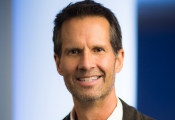








Contributory Virtus Investment Partners on the invitation from our Editorial

Director of Compliance Risk Management at USAA Federal Savings Bank
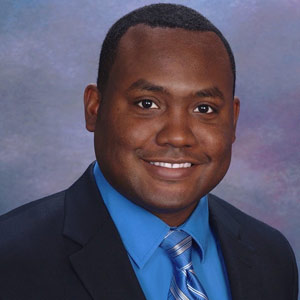
Richard BrownRisk Management means Embracing Change
Richard Brown
In my experience, the best organizations, not just the best risk management teams, embrace change. The industry where I currently work, financial services, is rife with change. Changing interest rates drive changing mortgage rates, increasing inflation leading to upward pressure on costs, bank runs that collapse financial institutions, and in turn that give rise to increasing scrutiny from state and federal regulators. Change is constant.
That change does not have to be a negative for risk management professionals. Change often comes with the opportunity for transcendence. An organization that can anticipate change, adapt to change, and position itself for a strong footing when the next wave of change hits will soon find itself with fewer competitors as unprepared workers wash away.
That is where the risk profession comes in. Risk professionals are trained to think around corners, sometimes to a fault. When reviewing a new process or evaluating innovative technologies, I often think, “What if this breaks?”
We are prone to game out the catastrophic contingency because, in that mindset, we can assess cost and benefit in a way that protects the organization. When communicating with Boards of Directors, business leaders outside of the risk management field, or other stakeholders, I often boil down risks into a financial calculation that is easy to understand. The “so what” that often communicates value from risk is to find out the cost if something goes wrong.
 Right now, there is no technology with greater potential to change the day-to-day lives of humanity than generative AI. Given our penchant for contingency planning, risk professionals have rightly gravitated to some of the dire scenarios possible for artificial intelligence.
But as risk professionals, we must be bold and determine what could happen if something goes wrong. Changing environments can provide opportunities to reduce risk through innovation that enables business teams, especially technology teams, to break out of old modes of thinking and find creative solutions to problems in a changing landscape. Every cost-benefit analysis also includes a benefit.
Right now, there is no technology with greater potential to change the day-to-day lives of humanity than generative AI. Given our penchant for contingency planning, risk professionals have rightly gravitated to some of the dire scenarios possible for artificial intelligence. We all know what could happen if we hand the keys to the airlock to HAL 9000 without safeguards. We may fear the judgment day prompted by Skynet with its direct nuclear launch capabilities, and rightly so.
But the generative AI revolution will not be the judgment day prompted by robots gone rogue because risk managers are there to stand side by side with our innovative technology teams and provide guardrails. It is the responsibility of these teams, working together, to harness the productivity gains that AI can provide while keeping humans in the loop for decision-making that affects, well, humans. This can include risks of bias, privacy loss, intellectual property theft, misinformation, or hallucination with meaningful consequences. Specifically, risk managers should remember that as they seek to mitigate these risks, the answer is not always “no.” Rather, the answer is “how.” How can these risks be mitigated safely? Because change is inevitable. The only question is whether your organization will be ready to embrace it.
The articles from these contributors are based on their personal expertise and viewpoints, and do not necessarily reflect the opinions of their employers or affiliated organizations.
EDITOR'S Choice

Fortune Brands Innovations [NYSE: FBIN]
By Juan Guerrero, Director, IT Audit & Data Analytics
The IT Audit Evolution: From Compliance to Strategic Intelligence
Broad River Retail
Wes Dudley, Senior Vice President, Customer Experience
Customer Experience in the Age of Amplified Complexity
Fortune Brands Innovations [NYSE: FBIN]
Scott Barnes, Sr. Director of Enterprise Cyber Security (CISO)
The X-Factor in Cybersecurity: AI and Automation at Work

LHarris Technologies [NYSE: LHX]
Brian Allred, Director of Business Intelligence and Analytics
The Shift from Rigid Dashboards to Conversational Analytics
Ivar's Restaurants
Patrick Yearout, Director of Innovation, Recruitment & Training
From Hiring to Development: Nurturing Teams that Care