-
Technology
-
Industry
-
Solutions
-
- ASSET MANAGEMENT
- CUSTOMER EXPERIENCE MANAGEMENT
- CYBER SECURITY
- DATA CENTER
- DOCUMENT MANAGEMENT
- ELECTRONIC DATA INTERCHANGE
- ENTERPRISE DATA MANAGEMENT
- ENTERPRISE RESOURCE PLANNING
- ENTERPRISE RISK MANAGEMENT
- ENTERPRISE-GRADE WEB DATA SOLUTIONS
- FACILITY MANAGEMENT
- FIELD SERVICE
- IDENTITY AND ACCESS MANAGEMENT
- INFRASTRUCTURE
- IT SERVICE MANAGEMENT
- MANAGED IT SERVICES
- PAYMENT AND CARD
- PROJECT MANAGEMENT
- SOFTWARE TESTING
- STORAGE
- VIDEO SOLUTIONS
- WORKFLOW
-
-
Platforms
-
Functions
- Leadership Perspectives
- Innovation Insights
- Research
- Magazines
- News
- CXO Awards


Contributory Virtus Investment Partners on the invitation from our Editorial

Clayco
Jesse Sanders, IT Director, Operational ExcellenceStop Starting with AI: Start with the Business Outcome
Jesse Sanders, IT Director, Operational Excellence
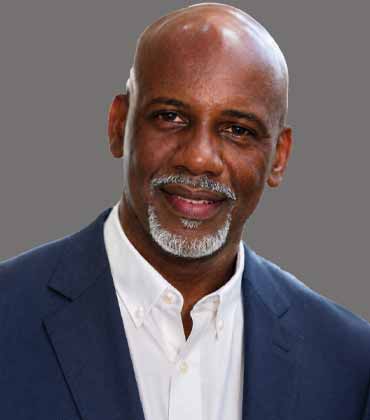
Jesse Sanders
Artificial intelligence is moving faster than most organizations' planning cycles. New models, agents and platforms appear almost weekly, each promising to transform the enterprise.
That creates an understandable temptation for technology leaders: find somewhere to use AI. I believe we should reverse the question and ask, “What business outcome are we trying to improve?”
At Clayco, we are a general contractor that designs and builds some of the world's most complex construction projects, from hyperscale data centers and advanced manufacturing facilities to life sciences and mission-critical environments. In that world, technology has to perform where the work happens.
One of the fastest ways to get humbled in technology is to take your newest idea to a jobsite. You can arrive with an AI strategy and slides explaining how transformative it will be. The superintendent may listen and ask, “Great, pretty slides Jesse. Is this going to save me any time today?”
That question is one of the best technology strategy tests I know. The field doesn't care whether the solution uses an LLM, an agent, computer vision or something invented last Tuesday. They care whether it helps them build safer and faster, with fewer problems.
Build Backward from the Outcome
At Clayco, we connect strategy to measurable execution by defining the business objective, operational goal, target and KPIs. Only then do we determine what technology belongs underneath it.
I also like asking a more uncomfortable question: What's killing our margin?
Every business has margin killers. In construction, they include rework, schedule delays, scope gaps, slow decisions, inaccurate forecasts, administrative work and pursuing the wrong opportunities. Individually, they look like annoyances. At scale, they become margin erosion.
That creates a practical AI strategy: find the margin killers and attack them. Can AI identify a scope gap before a bid goes out, detect schedule risk before it becomes a delay, surface potential rework before installation, automate administrative work or help us pursue opportunities with the strongest returns?
 Executives don't invest in AI. They invest in better business outcomes.
That is where the AI conversation should start, not with the model but with the margin. AI is not searching for a use case. It is solving an economic problem.
Your Data Foundation Matters More Than Your Model
LLMs aren't the foundation. Data is the foundation. AI simply exposes whether your data is good or bad.
Construction companies have decades of knowledge spread across ERP platforms, project management systems, CRM applications, schedules, documents, spreadsheets and data platforms. AI doesn't resolve inconsistencies between those systems. It amplifies them.
Scaling enterprise AI requires trusted data, common business definitions, governance and context. The competitive advantage isn't access to the newest model. It's connecting powerful models to trusted enterprise context.
Orchestrate before You Replace
At Clayco, our approach has increasingly been modernization through orchestration rather than replacement.
APIs, semantic models, governed data platforms and AI agents can unlock knowledge embedded in existing systems without requiring the business to start over.
That thinking has pushed us beyond standalone chatbots toward an Enterprise Intelligence Layer that connects trusted business data with AI so leaders can move from searching for information to acting on it.
AI should adapt to the business, not require the business to rebuild itself around AI.
Move from Answers to Actions
Many organizations began their AI journey with chatbots and copilots. The larger opportunity is moving from AI that answers to AI that acts.
Agents can monitor workflows, identify exceptions, analyze risk, recommend actions and eventually execute portions of business processes within appropriate governance.
Imagine identifying a potential schedule delay, recommending corrective action, then coordinating resources before it affects the project. That's the shift from reactive management toward predictive control.
Adoption Starts where the Work Happens
None of these matters if people don't use it. Listen to where people lose time: difficult-to-access information, repetitive work, margin leakage and decisions made without enough context. Then solve one.
Trust grows from usefulness, and AI scales only after trust scales. The organizations that win with AI won't necessarily deploy the most models. They will connect AI to measurable outcomes, trusted data and the people closest to the work.
At Clayco, that's how we think about AI. It's another tool for building better, improving decisions, increasing productivity, stopping margin leakage, reducing risk and allowing our people to accomplish more.
Technology should serve a larger purpose. For us, that means continuing to build to make life better for our people, clients and communities. The only real limitation is our imagination.
Our responsibility as leaders isn't simply to keep up with AI. It's to imagine better outcomes and challenge technology to help achieve them.
So perhaps the most important question isn't, “What can AI do?” It is “What outcome are you going to build?”
The articles from these contributors are based on their personal expertise and viewpoints, and do not necessarily reflect the opinions of their employers or affiliated organizations.
EDITOR'S Choice

Fortune Brands Innovations [NYSE: FBIN]
By Juan Guerrero, Director, IT Audit & Data Analytics
The IT Audit Evolution: From Compliance to Strategic Intelligence
Broad River Retail
Wes Dudley, Senior Vice President, Customer Experience
Customer Experience in the Age of Amplified Complexity
Fortune Brands Innovations [NYSE: FBIN]
Scott Barnes, Sr. Director of Enterprise Cyber Security (CISO)
The X-Factor in Cybersecurity: AI and Automation at Work

LHarris Technologies [NYSE: LHX]
Brian Allred, Director of Business Intelligence and Analytics
The Shift from Rigid Dashboards to Conversational Analytics
Ivar's Restaurants
Patrick Yearout, Director of Innovation, Recruitment & Training
From Hiring to Development: Nurturing Teams that CareLatest Issues


