-
Technology
-
Industry
-
Solutions
-
- ASSET MANAGEMENT
- CUSTOMER EXPERIENCE MANAGEMENT
- CYBER SECURITY
- DATA CENTER
- DOCUMENT MANAGEMENT
- ELECTRONIC DATA INTERCHANGE
- ENTERPRISE DATA MANAGEMENT
- ENTERPRISE RESOURCE PLANNING
- ENTERPRISE RISK MANAGEMENT
- ENTERPRISE-GRADE WEB DATA SOLUTIONS
- FACILITY MANAGEMENT
- FIELD SERVICE
- IDENTITY AND ACCESS MANAGEMENT
- INFRASTRUCTURE
- IT SERVICE MANAGEMENT
- MANAGED IT SERVICES
- PAYMENT AND CARD
- PROJECT MANAGEMENT
- SOFTWARE TESTING
- STORAGE
- VIDEO SOLUTIONS
- WORKFLOW
-
-
Platforms
-
Functions
- Leadership Perspectives
- Innovation Insights
- Research
- Magazines
- News
- CXO Awards


Contributory Virtus Investment Partners on the invitation from our Editorial

ALUMINA S.A
Alejandro Sanchez Varona, Procurement DirectorStrategic Procurement for Cost and Value Creation
Alejandro Sanchez Varona, Procurement Director
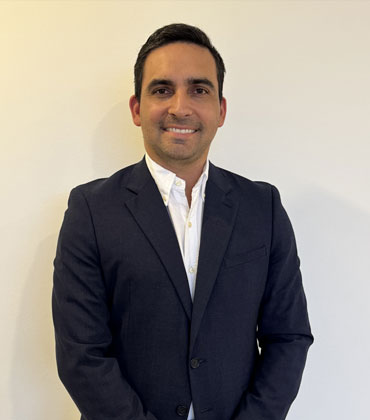
Alejandro Sánchez Varona
Many people think procurement is simply about waiting for a purchase requisition and then generating a purchase order through an ERP system, which sends a signal to a supplier previously configured in the system. The supplier, in turn, prepares the required materials and delivers them according to the established lead times. Under this traditional view, the primary purpose of procurement is simply to keep the production process supplied, ensuring the required quality and timing.
Procurement is much more than that.
At its core, it should be driven by a clearly defined purchasing strategy whose ultimate purpose is to create real value for the organization, going far beyond simply “buying on time, at the right price, and with the required quality.”
From my perspective, a successful procurement strategy is built around three fundamental components: people, finance, and supply chain. When properly integrated, they can generate significant value for a company.
People
The profile of a procurement professional or purchasing team should be carefully defined.
Based on my professional experience, I believe it is both necessary and essential for anyone aspiring to work in procurement to have previous exposure to operations and manufacturing. Working in manufacturing opens multiple paths within an organization and provides a holistic view of the company's entire value chain.
This experience also allows professionals to understand the needs and constraints of production processes, identify sourcing opportunities, categorize materials, services, and spare parts, and assign the appropriate level of strategic importance to each of them.
Being able to put yourself in the shoes of the person operating the production process is one of the strongest foundations for making decisions that genuinely create value for the organization.
For this reason, I do not believe procurement should be viewed as the entry door into a company. Rather, it should be an opportunity to grow within the organization, as an intermediate position within a structured career path.
A strong procurement professional should understand not only what needs to be purchased, but also why it is needed, how it impacts operations, and how the purchasing decision affects the broader value chain.
Finance
The financial component of procurement encompasses several dimensions, including, cost reduction, the actual impact of procurement decisions on the company's P&L, and cash flow. These factorsmust be considered when developing a purchasing strategy.
I would argue that cash flow ultimately sets the tone.
Maintaining a healthy cash flow is essential. While the budget serves as the compass of an organization, whenever possible, actual performance must remain aligned with the budgetary assumptions regarding sales, costs and collections. This alignment ultimately creates the cash flow capacity that allows procurement to maintain real negotiating leverage.
 A strong procurement professional should understand not only what needs to be purchased, but also why it is needed, how it impacts operations, and how the purchasing decision affects the broader value chain.
Negotiating “with cash in your pocket” changes the dynamics of the relationship with suppliers. Financial flexibility is an important part of procurement strategy. The liquidity position of the company, payment conditions and working capital needs can influence the alternatives available when negotiating with suppliers.
For this reason, procurement and finance need to work very closely. The objective should not be only to obtain the lowest purchase price, but to understand which alternative creates more value for the company. A purchasing decision should consider not only the price, but also payment terms, timing of cash outflows, inventory requirements, working capital and the opportunity cost of capital.
At the end, the best purchasing decision is the one that finds the right balance between cost, cash flow, operational needs and flexibility. This is where procurement and finance become deeply interconnected.
Supply Chain
Within Supply Chain, inbound logistics plays a critical role in procurement strategy.
It is essential to have a clear understanding of, and properly configured parameters for, concepts such as Lead Time, Safety Stock, Reorder Point, and First-In, First-Out (FIFO).
The lowest purchase price is not necessarily the best option, nor does it automatically represent the greatest saving. All of these variables must be considered when evaluating a sourcing decision.
However, incorporating them into the decision-making process creates a significant number of interconnected questions. The answer to one variable often affects the others. Fortunately, mathematical models and analytical tools can help organizations address this complexity—and today, Artificial Intelligence can increasingly support these analyses, making purchasing decisions more informed, dynamic, and data-driven.
Consider the following example:
What is the better decision: purchasing a material at a price of $X-1, with 100% payment in advance and a two-month lead time, or purchasing the same material at a price of $X, with payment terms of 60 days and a one week lead time?
The easy answer would be to purchase the cheaper option.
The temptation to buy at $X-1 creates the appearance of savings. But that saving may be misleading. A proper analysis must consider the fact that the 100% advance payment, combined with a two-month lead time, ties up capital for a period of time before the material can be used. The financial value of that capital cannot be ignored.
Money has a time value.
What money costs today will not necessarily cost the same tomorrow. Likewise, the economic value of a material purchased today may be different from its value two months from now. Capital must remain in motion to generate the greatest possible value for the organization.
This is precisely where strategic procurement moves beyond transactional purchasing.
The real question is not simply “How much does it cost?” but rather: “What is the total value and economic impact of this purchasing decision on the organization?”
That shift in perspective is what transforms Procurement from an operational function into a strategic business partner.
Ultimately, strategic procurement is not about buying cheaper. It is about creating value.
The articles from these contributors are based on their personal expertise and viewpoints, and do not necessarily reflect the opinions of their employers or affiliated organizations.
EDITOR'S Choice

Fortune Brands Innovations [NYSE: FBIN]
By Juan Guerrero, Director, IT Audit & Data Analytics
The IT Audit Evolution: From Compliance to Strategic Intelligence
Broad River Retail
Wes Dudley, Senior Vice President, Customer Experience
Customer Experience in the Age of Amplified Complexity
Fortune Brands Innovations [NYSE: FBIN]
Scott Barnes, Sr. Director of Enterprise Cyber Security (CISO)
The X-Factor in Cybersecurity: AI and Automation at Work

LHarris Technologies [NYSE: LHX]
Brian Allred, Director of Business Intelligence and Analytics
The Shift from Rigid Dashboards to Conversational Analytics
Ivar's Restaurants
Patrick Yearout, Director of Innovation, Recruitment & Training
From Hiring to Development: Nurturing Teams that Care