-
Technology
-
Industry
-
Solutions
-
- ASSET MANAGEMENT
- CUSTOMER EXPERIENCE MANAGEMENT
- CYBER SECURITY
- DATA CENTER
- DOCUMENT MANAGEMENT
- ELECTRONIC DATA INTERCHANGE
- ENTERPRISE DATA MANAGEMENT
- ENTERPRISE RESOURCE PLANNING
- ENTERPRISE RISK MANAGEMENT
- ENTERPRISE-GRADE WEB DATA SOLUTIONS
- FACILITY MANAGEMENT
- FIELD SERVICE
- IDENTITY AND ACCESS MANAGEMENT
- INFRASTRUCTURE
- IT SERVICE MANAGEMENT
- MANAGED IT SERVICES
- PAYMENT AND CARD
- PROJECT MANAGEMENT
- SOFTWARE TESTING
- STORAGE
- VIDEO SOLUTIONS
- WORKFLOW
-
-
Platforms
-
Functions
- Leadership Perspectives
- Innovation Insights
- Research
- Magazines
- News
- CXO Awards


Contributory Virtus Investment Partners on the invitation from our Editorial

Deloitte
Stavros Stefanis Phd, Principal, Deloitte and Hitesh Tewari, Senior Manager, Deloitte and Venkat Ravichandran, ManagerStructuring & Delivering Your PLM Program to Improve Quality & Growth
Stavros Stefanis Phd, Principal, Deloitte and Hitesh Tewari, Senior Manager, Deloitte and Venkat Ravichandran, Manager

As companies continue their Product Lifecycle Management (PLM) enterprise transformation journey to develop, transform and manage product information, program sponsors are been challanged on how to effectectively articulate the value, build the case for a change, deliver and measure the promise.
In order, to gain executive approval for large PLM transformation programs, there are several questions that are requried to be answered very early in the program:
In recent years, PLM scope has expanded in philosophy from merely aiding in product development to an enterprise wide solution that helps manage globally integrated product infromation through the complete lifecyle–concept to retire. This redefinition with increased scope changes how businesses think about the challenges that a PLM program could cater to.
Guiding principles to structure and deliver PLM transformation programs
A strategic assessment and implementation approach is crucial to the success of PLM transformation programs that drives organization goals and enterprise objectives keeping these guiding principles in mind.
Leading practices during assessment stages
Many organizations usually find themselves in the pitfall of a PLM technology refresh of many capabilities at one time instead of building select foundational capabilities that are critical to the organization. On the other hand, some organizations could spend significant efforts in the assessment phase trying to address every implementation complexity, however, it is key to spend the right amount of time and effort in the assessment phase with a focus on early value realization.
 A good assessment starts with alignment on leadership objectives followed by a maturity assessment of current processes, technology, data and governance and defining the desired target state. The business case on the other side quantifies the benefit areas, costs of ownership and analyzes financial metrics to allow fact based decision making. It is critical that the business case is modular and cross-enterprise, providing insights and allowing buy-in by each business and function involved.Some of the best practices to be wary of as you navigate the assessment phase:
Need for an Integrated PLM Framework
While many senior executives recognize the obvious importance of PLM solutions to address each of these areas, not everyone recognizes the urgency to leverage PLM as a product data transformation platform. In order to truly address the root causes of product data quality and realize the maximum value, a strategic and integrated approach to PLM that supports people, process, technology and data capabilities across the lifecycle of the product is required.
 PLM transformation should engage business stakeholders at all times to have the necessary momentum
PLM programs when delivered correctly can, 1) Streamline end to end cross functional processes thus eliminating duplicate and repeat work, 2) Integrate adjacent systems such as PLM, Lab Information Management Systems (LIMS), Regulatory Information Management (RIM), Enterprise Resource Planning (ERP), Master Data Management (MDM) and Learning Management (LMS) creating a unified architecture which allows real time visibility for releasing, tracking, searching and changing product information, 3) Harmonize and integrate product data eliminating discrepancies and enabling enterprise wide analytics, and lastly, 4) Establish enterprise wide governance that enables collaboration and a due review / approval process.
 Venkat Ravichandran, ManagerKey Factors for a Successful PLM Transformation
A successful PLM transformation should engage business stakeholders at all times to have the necessary momentum and bring them all the journey.
Equally important is the need to measure the realized value described in the business case after implementation. Measuring the metrics using methods such as value stream mapping for the current and future state capabilities helps plan for sustenance programs post implementation, if needed.
Lastly, leverage predefined tools that enhance and accelerate the transformation program from start to finish. For instance, the Deloitte PLM toolkit on pre-built process models in leading PLM platforms help expedite the 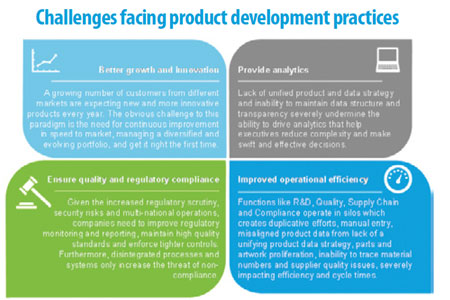 overall decision making process by a few cycles and thereby shortening implementation time by up to 30%. Another example is to leverage the power of analytics such as Deloitte Product Data Analyser (DPDA) to help solve the product data complexity in terms of enabling product data strategy, transforming unstructured content and enhancing product data quality.
The tangible benefits from deploying an integrated PLM program can be significant. Based on Deloitte analyses, companies that have implemented well-structured enterprise-wide programs have seen up to 50% reduction in time to market, 15% to 20% increase in R&D efficiency, between 15 to 30% improvement in preventable quality events, up to 60% reductions in parts search and investigation time, 10% to 15% reductions in labor and material costs, and an overall better user experience for employees and suppliers alike.
The articles from these contributors are based on their personal expertise and viewpoints, and do not necessarily reflect the opinions of their employers or affiliated organizations.
EDITOR'S Choice

Fortune Brands Innovations [NYSE: FBIN]
By Juan Guerrero, Director, IT Audit & Data Analytics
The IT Audit Evolution: From Compliance to Strategic Intelligence
Broad River Retail
Wes Dudley, Senior Vice President, Customer Experience
Customer Experience in the Age of Amplified Complexity
Fortune Brands Innovations [NYSE: FBIN]
Scott Barnes, Sr. Director of Enterprise Cyber Security (CISO)
The X-Factor in Cybersecurity: AI and Automation at Work

LHarris Technologies [NYSE: LHX]
Brian Allred, Director of Business Intelligence and Analytics
The Shift from Rigid Dashboards to Conversational Analytics
Ivar's Restaurants
Patrick Yearout, Director of Innovation, Recruitment & Training
From Hiring to Development: Nurturing Teams that Care


