-
Technology
-
Industry
-
Solutions
-
- ASSET MANAGEMENT
- CUSTOMER EXPERIENCE MANAGEMENT
- CYBER SECURITY
- DATA CENTER
- DOCUMENT MANAGEMENT
- ELECTRONIC DATA INTERCHANGE
- ENTERPRISE DATA MANAGEMENT
- ENTERPRISE RESOURCE PLANNING
- ENTERPRISE RISK MANAGEMENT
- ENTERPRISE-GRADE WEB DATA SOLUTIONS
- FACILITY MANAGEMENT
- FIELD SERVICE
- IDENTITY AND ACCESS MANAGEMENT
- INFRASTRUCTURE
- IT SERVICE MANAGEMENT
- MANAGED IT SERVICES
- PAYMENT AND CARD
- PROJECT MANAGEMENT
- SOFTWARE TESTING
- STORAGE
- VIDEO SOLUTIONS
- WORKFLOW
-
-
Platforms
-
Functions
- Leadership Perspectives
- Innovation Insights
- Research
- Magazines
- News
- CXO Awards


Contributory Virtus Investment Partners on the invitation from our Editorial

Grupo Krona
Alan Leandro, Corporate Technology ManagerTechnology as a Business Engine: Strategy, Innovation and Results
Alan Leandro, Corporate Technology Manager
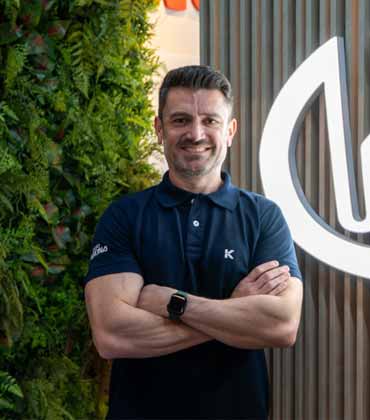
Alan Leandro
Organizing IT around Business Priorities
Technology must create value for the business: growing sales, sustaining and expanding margins, and generating EBITDA through both cost reduction and cost avoidance. That conviction has guided a career entirely dedicated to technology, 15 years of it at Grupo Krona, a construction industry group offering solutions for residential, commercial and industrial projects, as well as for agribusiness. The group must keep its plants, distribution centers and entire value chain running without interruption while making technology a competitive differentiator.
Technology is the means. To bring the right technology to the business, you first need to understand where the company wants to go. That is why the company's strategic plan guides everything: our strategic technology plan derives from it and unfolds into the technology master plan.
In practice, we organized IT into business squads, structured around the company's journeys: corporate back office, supplier, production order, sales order, customer and employee. In each squad, technology business partners work inside the business areas and build the roadmaps with them, guided by this structure. Because the journeys are connected, nothing is done in silos: business partners talk to each other to understand the impact of each project across the company. Cross-functional squads for data, AI and automation support all journeys.
Our decisions are based on business indicators shared by all areas. IT success is not measured by technical SLAs alone, but by its impact on results.
Evaluating Technology beyond Upfront Cost
I always start with the business goals: increasing margin, growing revenue, gaining market share, and reducing or avoiding costs. They all converge on the same focus: EBITDA. From there, these goals define how processes should be designed, and technology must be part of that design from the start. With AI this is even clearer: it only delivers full results with transformed processes and prepared people.
Every investment is assessed by balancing risk, value, cost and effort. When prioritizing, we often choose quick wins or split large projects into waves, so value is generated over time. That was the case with our CRM, now being implemented: we carried out requirements gathering, software selection, proofs of concept and a five-year business case presented to the CEO.
 We must deliver value in short cycles, because technology is the engine that sets the speed of the business.

The make-or-buy decision has also changed. AI has made in-house development faster, and at times this is the best way to avoid vendor lock-in, which can become a problem in the medium and long term. Where customization creates a competitive advantage, as in the integrated logistics platform we are building, we chose to “make.” This path also has costs, such as long-term support and dependence on key people, a kind of internal lock-in that requires a well-prepared team. That is why we do not reinvent the wheel: we start from market best practices.
Balancing Innovation, Security and Operational Efficiency
I see three factors that go hand in hand: scope, people and processes. It all starts with a well-built scope: what problem we want to solve, what the job to be done is, and which requirements support the solution. Then, the gains only materialize if the organization is ready to embrace them and the process has been designed, and often transformed, for the technology. That is why change management, with training and upskilling, must start early and become part of the business culture. Within the squads, business partners act as change agents in their areas, accelerating adoption.
Technology leadership has a key role in influencing the organization, but this balance is a challenge for the whole business. On innovation, we encourage intrapreneurship and connections with startups.
In cybersecurity, the first shift is in mindset: it is not just an IT topic, but a business risk. That calls for a culture of awareness, robust technology and market frameworks. The balance comes from involving security from the very conception of projects, not afterwards. At Grupo Krona, the CIS framework is our reference: through periodic assessments and structured projects, we raise our maturity every year. Our goal is to enable the business securely.
In operational efficiency, IT plays two roles: being efficient internally, with discipline over cloud and AI costs, to free up resources for innovation; and making the business more efficient through well-designed processes, automation and prepared people.
Leading IT with Business Acumen and Agility
Be a democratic leader, build strong teams, and listen closely to your team, your internal customers and the market. But a technology manager must, above all, be a business leader. Master the business you are in, its culture and its strategic drivers.
Be resilient and keep a sense of speed. Since everything in the business runs through technology, IT leaders must take part in nearly every decision forum, closely connected to the CEO and the other C-level executives. Large projects, such as a CRM, a future ERP replacement or our logistics platform, remain essential, but strategy cannot wait for them alone. A single news story can affect business within hours, and commodity prices move just as fast. We must deliver value in short cycles, because technology is the engine that sets the speed of the business.
The articles from these contributors are based on their personal expertise and viewpoints, and do not necessarily reflect the opinions of their employers or affiliated organizations.
EDITOR'S Choice

Fortune Brands Innovations [NYSE: FBIN]
By Juan Guerrero, Director, IT Audit & Data Analytics
The IT Audit Evolution: From Compliance to Strategic Intelligence
Broad River Retail
Wes Dudley, Senior Vice President, Customer Experience
Customer Experience in the Age of Amplified Complexity
Fortune Brands Innovations [NYSE: FBIN]
Scott Barnes, Sr. Director of Enterprise Cyber Security (CISO)
The X-Factor in Cybersecurity: AI and Automation at Work

LHarris Technologies [NYSE: LHX]
Brian Allred, Director of Business Intelligence and Analytics
The Shift from Rigid Dashboards to Conversational Analytics
Ivar's Restaurants
Patrick Yearout, Director of Innovation, Recruitment & Training
From Hiring to Development: Nurturing Teams that CareLatest Issues