-
Technology
-
Industry
-
Solutions
-
- ASSET MANAGEMENT
- CUSTOMER EXPERIENCE MANAGEMENT
- CYBER SECURITY
- DATA CENTER
- DOCUMENT MANAGEMENT
- ELECTRONIC DATA INTERCHANGE
- ENTERPRISE DATA MANAGEMENT
- ENTERPRISE RESOURCE PLANNING
- ENTERPRISE RISK MANAGEMENT
- ENTERPRISE-GRADE WEB DATA SOLUTIONS
- FACILITY MANAGEMENT
- FIELD SERVICE
- IDENTITY AND ACCESS MANAGEMENT
- INFRASTRUCTURE
- IT SERVICE MANAGEMENT
- MANAGED IT SERVICES
- PAYMENT AND CARD
- PROJECT MANAGEMENT
- SOFTWARE TESTING
- STORAGE
- VIDEO SOLUTIONS
- WORKFLOW
-
-
Platforms
-
Functions
- Leadership Perspectives
- Innovation Insights
- Research
- Magazines
- News
- CXO Awards











Contributory Virtus Investment Partners on the invitation from our Editorial

The Art of 'Hybrid' Restaurant Management

What measures did you take throughout the pandemic to ensure business resiliency?
Right from the onset of the global pandemic, we embraced mobile ordering and delivery to meet consumer needs and expectations. Just like us, restaurants that once dominated the market with their pen and paper methods are now entirely digitalizing and leveraging advanced mobile applications to thrive. Adding technology to traditional restaurant businesses has two-fold benefits. The tech tools can capitalize on the consumers’ changing ordering preferences and drive a more memorable dining experience for customers, while the people behind the brand can focus on doing what they love most, preparing delicious food.
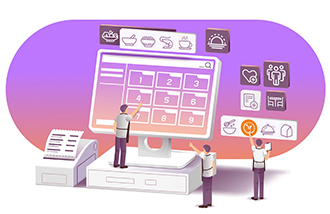
When we implemented digital solutions at Taco John’s, the ROI in the initial stages was not that high. We found a way to balance the online-offline symbiosis by adding self-ordering kiosks at our physical dine-in stores. These kiosks soon started showing positive results in the form of added convenience in the ordering process. And convenience was not the only benefit. Self-ordering kiosks also helped in reducing wait times, improving order accuracy, and boosting footfall. The solution ended up being more cost-effective for us as well as we could serve more consumers with fewer servers and cashiers.
We have also brought a new point-of-sale (POS) system, which can integrate easily with kiosk ordering. It simplifies the whole process, from ordering to receiving the food on the table. Such digital tools are becoming the epitome of today’s quick service restaurants (QSRs).
We are now taking special care to effectively collaborate with our POS and online ordering vendors to ensure we offer the same customer experience across all our franchises.
Can you elaborate on how you are promoting your modern restaurant initiatives?
Not only have we been working toward mobile ordering and delivery services, but we are also building a modern and effective kitchen areas. In pursuit of this, we have enlisted one of the leading modular kitchen solution providers, Well Bill, to help us construct a modular kitchen that facilitates making tacos quicker and delivering them hot and fresh.
 Investing in the right customer-focused technology can lead brands to engage, retain and expand their business base to succeed.
We have done a deep data analysis to understand the facets of technology and implement the best technology that makes our employees’ jobs easier to operate. This way, we can increase production and minimize errors. We also timely communicate with our employees to understand the needs and challenges they face and assist them in delivering memorable service to our guests. This cooperative mindset helps us provide a better experience not just to our customers, but even to our employees and team members.
What are some of the most significant challenges you have faced while dealing with such transitions?
We are a legacy brand, and we have been doing business the same way for the past 50 years. A sudden takeover of tech-based operations has been a difficult journey for us, but not unmanageable. As soon as we implemented the first piece of tech, we started witnessing how it could save time. Tacos that used to take hours to prepare can be made in half the time using robots and AI.
We believe in the importance and the necessity of implementing technology, but we also believe that it needs to be done in successful coordination with vendors and franchise partners to create the desired impact in terms of standing out in the market and providing positive client experiences.
Based on my experience as a general manager at Taco John’s, when I walk into a restaurant, I view things in two ways. I look at the technology and decide what has to be done to enhance it. I also concentrate on talking to my team members and getting their input on what they feel are the critical items that must be improved to increase the operations level.
What are some of the technological advancements you see on the horizon in the coming years?
The restaurant industry is already jumping on the bandwagon of digital transformation, with advancements like intelligent kitchen equipment, digital twin restaurant, and digital timing systems that don’t require any drive-through delivery services. Apart from leveraging technologies, it is also necessary always to have a wise choice for modernized services and proactively decide what the future will hold for you. Whenever a brand invests adequate time and effort for digitalization, restaurants automatically receive the payoff.
I have noticed that technology is also advancing the interaction of QSRs with its competitors, when they are also piggybacking on the open relationship to share innovative ideas and rise together as an industry.
What advice would you give to other leaders in this industry to take in-house technology decisions for effective workflow?
Sustaining a cross-functionality with all the departments should be the first approach in a restaurant to enhance its business operations. It can give you diverse ideas, leading you to opportunities to learn and make everything better. Taking guidance from managers and team members also helps to focus on providing practical customer experiences and increased ROI.
It doesn’t matter what the size of your brand is, but it should always be customer-centric. Investing in the right customer-focused technology can lead brands to engage, retain, and expand their business base to succeed. Besides, maintaining good teamwork would ensure a smooth business operation and be worth that investment.
The articles from these contributors are based on their personal expertise and viewpoints, and do not necessarily reflect the opinions of their employers or affiliated organizations.
EDITOR'S Choice

Fortune Brands Innovations [NYSE: FBIN]
By Juan Guerrero, Director, IT Audit & Data Analytics
The IT Audit Evolution: From Compliance to Strategic Intelligence
Broad River Retail
Wes Dudley, Senior Vice President, Customer Experience
Customer Experience in the Age of Amplified Complexity
Fortune Brands Innovations [NYSE: FBIN]
Scott Barnes, Sr. Director of Enterprise Cyber Security (CISO)
The X-Factor in Cybersecurity: AI and Automation at Work

LHarris Technologies [NYSE: LHX]
Brian Allred, Director of Business Intelligence and Analytics
The Shift from Rigid Dashboards to Conversational Analytics
Ivar's Restaurants
Patrick Yearout, Director of Innovation, Recruitment & Training
From Hiring to Development: Nurturing Teams that CareLatest Issues