-
Technology
-
Industry
-
Solutions
-
- ASSET MANAGEMENT
- CUSTOMER EXPERIENCE MANAGEMENT
- CYBER SECURITY
- DATA CENTER
- DOCUMENT MANAGEMENT
- ELECTRONIC DATA INTERCHANGE
- ENTERPRISE DATA MANAGEMENT
- ENTERPRISE RESOURCE PLANNING
- ENTERPRISE RISK MANAGEMENT
- ENTERPRISE-GRADE WEB DATA SOLUTIONS
- FACILITY MANAGEMENT
- FIELD SERVICE
- IDENTITY AND ACCESS MANAGEMENT
- INFRASTRUCTURE
- IT SERVICE MANAGEMENT
- MANAGED IT SERVICES
- PAYMENT AND CARD
- PROJECT MANAGEMENT
- SOFTWARE TESTING
- STORAGE
- VIDEO SOLUTIONS
- WORKFLOW
-
-
Platforms
-
Functions
- Leadership Perspectives
- Innovation Insights
- Research
- Magazines
- News
- CXO Awards


Contributory Virtus Investment Partners on the invitation from our Editorial

Edgewood Ventures
Vishal Verma, Managing PartnerThe Art of Investing in Tomorrow’s Technology Leaders
Vishal Verma, Managing Partner
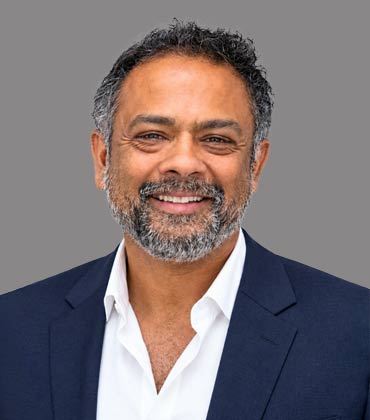
Vishal Verma
Vishal Verma is a Silicon Valley investor with decades of experience in venture capital, emerging technologies and long-term investments. His investment philosophy emphasizes strategic relationships, risk management and partnerships with leading venture capital firms.
Relationships, Patience and Long-Term Venture Success
Venture capital requires patience, with access to proprietary deal flow as its primary value. Think long-term, build meaningful relationships and identify the future before it becomes obvious to everyone else.
Having spent decades in Silicon Valley, I've learned that venture capital is fundamentally relationship-driven. Capital matters, but access, trust, reputation and judgment differentiate successful investors. The most valuable opportunities often come from relationships with entrepreneurs, venture capitalists and industry leaders.
We've built our investment philosophy around partnering with Menlo Ventures, General Catalyst, Lightspeed, Kleiner Perkins and 8VC, gaining exposure to companies transforming industries. Our strategy combines top-tier venture funds with selective direct co-investments in category-defining companies.
For aspiring entrepreneurs, the new game is growth, growth and more growth. Focus on solving meaningful problems rather than chasing technology trends. Successful founders demonstrate conviction, resilience and an ability to attract exceptional talent.
A network is not simply about connections, but about who trusts whom. Remain intellectually curious as technology evolves, surround yourself with people who challenge your thinking and never underestimate persistence.
AI, Capital Concentration and Technology IPOs
A new generation of category-defining companies, including Anthropic, OpenAI, Databricks and Anduril, is building infrastructure and intelligence platforms that could power the global economy for decades. Today, the SaaS market is $200B, the technology market is $5T, and the AI market is projected to reach $31T.
I see three major trends shaping the future. AI is becoming the foundation of enterprise technology, moving from experimentation to deployment through AI agents, autonomous workflows and intelligent software. Along with this shift, capital is increasingly concentrating around category leaders, with leading companies attracting enormous investments and widening the gap between market leaders and everyone else. This concentration is also shaping a new era of technology IPOs and liquidity. SpaceX's IPO demonstrated the scale of private-market value creation, while Anthropic is preparing for a potential public offering, and investors continue watching OpenAI, Stripe and Databricks.
We are still in the first inning of the AI revolution. The next decade could create significant investment opportunities. Billion-dollar or even trillion-dollar companies have not yet been born.
Managing Risk While Pursuing Long-Term Returns
One of the most important lessons I've learned throughout my investment career is that successful investing is not about avoiding risk, but understanding, managing and being appropriately compensated for it.
 One of the most important lessons I've learned throughout my investment career is that successful investing is not about avoiding risk, but understanding, managing and being appropriately compensated for it.

Our philosophy maximizes long-term returns while implementing aggressive risk-mitigation strategies through established, top-tier venture capital funds and selective direct co-investments in high-growth companies. Exposure to Anthropic, Databricks, Ramp and Cognition illustrates this approach, enabled by relationships with venture firms with established records of identifying and supporting transformative companies.
My philosophy is that protecting capital and creating wealth are not competing objectives. Approached thoughtfully, they complement each other in long-term investing.
Evaluating Founders, Markets and Competitive Advantage
When evaluating investments, I focus on leadership quality, market size, competitive differentiation, execution and long-term value creation. I invest in people. Technology and markets evolve, but exceptional founders demonstrate vision, resilience, intellectual curiosity and the ability to execute under difficult circumstances.
Enormous market opportunities are a key consideration in investment decisions. At Redwood Collective, we're interested in companies creating new categories, including Discovery Loop, where we participated with Khosla Ventures.
I evaluate competitive advantage. In the age of AI, technological innovation alone may not suffice. Even rapidly growing businesses need a credible path toward sustainable economics. Finally, the quality of a company’s investors and strategic partners is another significant factor.
Silicon Valley Roots and Leadership Principles
Growing up in Silicon Valley, I witnessed the technology industry's evolution along with entrepreneurs, innovators and investors who shaped the modern technology economy.
My father, an entrepreneur and venture capitalist, journeyed from India to Silicon Valley and influenced how I view business, risk and opportunity. He taught me hard work, integrity, relationships and the courage to pursue ambitious ideas. As a child, I attended his meetings with leaders from Sequoia Capital, KPCB and NEA.
My leadership philosophy centers on integrity, collaboration and patience. Great leaders create opportunities for others, surround themselves with talented people and build organizations that endure beyond any individual. Silicon Valley taught me that the future belongs to those with the courage to envision it, determination to build it and patience to see it through.
The articles from these contributors are based on their personal expertise and viewpoints, and do not necessarily reflect the opinions of their employers or affiliated organizations.
EDITOR'S Choice

Fortune Brands Innovations [NYSE: FBIN]
By Juan Guerrero, Director, IT Audit & Data Analytics
The IT Audit Evolution: From Compliance to Strategic Intelligence
Broad River Retail
Wes Dudley, Senior Vice President, Customer Experience
Customer Experience in the Age of Amplified Complexity
Fortune Brands Innovations [NYSE: FBIN]
Scott Barnes, Sr. Director of Enterprise Cyber Security (CISO)
The X-Factor in Cybersecurity: AI and Automation at Work

LHarris Technologies [NYSE: LHX]
Brian Allred, Director of Business Intelligence and Analytics
The Shift from Rigid Dashboards to Conversational Analytics
Ivar's Restaurants
Patrick Yearout, Director of Innovation, Recruitment & Training
From Hiring to Development: Nurturing Teams that Care