-
Technology
-
Industry
-
Solutions
-
- ASSET MANAGEMENT
- CUSTOMER EXPERIENCE MANAGEMENT
- CYBER SECURITY
- DATA CENTER
- DOCUMENT MANAGEMENT
- ELECTRONIC DATA INTERCHANGE
- ENTERPRISE DATA MANAGEMENT
- ENTERPRISE RESOURCE PLANNING
- ENTERPRISE RISK MANAGEMENT
- ENTERPRISE-GRADE WEB DATA SOLUTIONS
- FACILITY MANAGEMENT
- FIELD SERVICE
- IDENTITY AND ACCESS MANAGEMENT
- INFRASTRUCTURE
- IT SERVICE MANAGEMENT
- MANAGED IT SERVICES
- PAYMENT AND CARD
- PROJECT MANAGEMENT
- SOFTWARE TESTING
- STORAGE
- VIDEO SOLUTIONS
- WORKFLOW
-
-
Platforms
-
Functions
- Leadership Perspectives
- Innovation Insights
- Research
- Magazines
- News
- CXO Awards


Contributory Virtus Investment Partners on the invitation from our Editorial

Domo Inovacao
Rodrigo Cantelli, CEOThe New Frontiers of IT
Rodrigo Cantelli, CEO
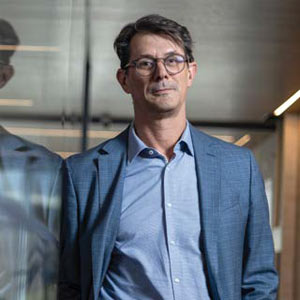
During my garden leave, I immersed myself in readings, reflections, and case studies that explore the evolution of information technology. The insights I share here stem from that period, complemented by a personal journey that began in 1984 when I first learned to program and was later consolidated through a degree in computer science in 1990.
It is fascinating to observe how IT organizational structures have evolved in step with each decade’s dominant technologies. This article revisits some of those structural waves, explains why artificial intelligence represents a new frontier, and outlines key strategies for CEOs and CIOs aiming to reposition their technology areas for the future.
From the Mainframe Era to Hybrid Cloud
• Mainframes & Operations:
In the 1980s and 1990s, IT centralized all processing in a single mainframe. The Operations department served as an intermediary between systems and business. End users had little to no direct interaction with systems.
• Microcomputing & Information Centers:
The arrival of Windows 95 standardized the use of PCs in corporate environments and led to the creation of Information Centers (ICs), which supported users with spreadsheets, email, and printers.
• Networks & Mobility:
The convergence of distributed servers, broadband, and smartphones (especially post-iPhone) multiplied failure points and demanded robust, 24/7 Network Operations Centers (NOCs) to ensure service availability.
• Cybersecurity:
As data and operations became inseparable—especially, though not exclusively, in the financial sector—cyber resilience became a mission-critical function.
Why does this evolution matter?
Because just as e-commerce displaced physical retail and streaming replaced video rental stores, IT departments are also undergoing reinvention. Organizations that fail to adapt will lose relevance—and, eventually, disappear
The New Frontier: Artificial Intelligence
Before diving into AI’s transformative potential, two critical reminders:
• AI is not new—it originated in the 1950s and has experienced several "winters." What changed was the interface: ChatGPT made AI widely accessible, just as Windows 95 did for the PC and the iPhone did for mobile computing.
• AI is not a silver bullet—it is not a universal solution.
• Keeping humans in the loop remains essential.
Where AI Will Most Transform IT
Software Development
Modern IDEs now incorporate AI to generate code, run automated testing, and even reverse-engineer legacy systems. Although hallucination rates are relatively low, experienced developers are still required to review and integrate outputs. Productivity gains are substantial, but human and system integration remain critical.
NOC and Technical Support
Major enterprises generate thousands of alerts per incident. Correlating these alerts requires deep system knowledge and business process understanding. Machine learning and GenAI can automate triage and first-level support communications. With log analysis and AI, we can go further—predicting failures and minimizing downtime.
Data as a Strategic Foundation
The phrase “Data is the new oil” has never been more accurate. Data underpins AI models—especially large language models (LLMs). Strong data governance—focused on explainability, traceability, and ethics—is a prerequisite for any serious AI initiative. Embedding AI governance into data governance raises organizational maturity and enables the responsible development of AI solutions.
Brazil as a Global Hub for Sustainable Data Centers
With a renewable energy matrix, geography free from major natural disasters, and acceptable latency for much of the global traffic, Brazil is strategically positioned to attract hyperscale data centers. Public policies that ensure legal certainty and promote renewable energy can turn the country into the “bit barn” of the 21st century.
Conclusion
Historically, IT departments that fail to reinvent themselves weaken their organizations’ competitiveness. AI will widen the gap between those automating the past and those designing the future. Organizations that embed AI at the core of their IT operating models—with governance, talent, and data— will gain efficiency, agility, and the ability to generate new revenue streams. They will emerge as digital leaders in their markets.
For IT professionals, understanding this new frontier is not optional—it’s the key to leading rather than merely keeping up with the future. The opportunity is open, and the time to act is now.
The articles from these contributors are based on their personal expertise and viewpoints, and do not necessarily reflect the opinions of their employers or affiliated organizations.
EDITOR'S Choice

Fortune Brands Innovations [NYSE: FBIN]
By Juan Guerrero, Director, IT Audit & Data Analytics
The IT Audit Evolution: From Compliance to Strategic Intelligence
Broad River Retail
Wes Dudley, Senior Vice President, Customer Experience
Customer Experience in the Age of Amplified Complexity
Fortune Brands Innovations [NYSE: FBIN]
Scott Barnes, Sr. Director of Enterprise Cyber Security (CISO)
The X-Factor in Cybersecurity: AI and Automation at Work

LHarris Technologies [NYSE: LHX]
Brian Allred, Director of Business Intelligence and Analytics
The Shift from Rigid Dashboards to Conversational Analytics
Ivar's Restaurants
Patrick Yearout, Director of Innovation, Recruitment & Training
From Hiring to Development: Nurturing Teams that CareLatest Issues