-
Technology
-
Industry
-
Solutions
-
- ASSET MANAGEMENT
- CUSTOMER EXPERIENCE MANAGEMENT
- CYBER SECURITY
- DATA CENTER
- DOCUMENT MANAGEMENT
- ELECTRONIC DATA INTERCHANGE
- ENTERPRISE DATA MANAGEMENT
- ENTERPRISE RESOURCE PLANNING
- ENTERPRISE RISK MANAGEMENT
- ENTERPRISE-GRADE WEB DATA SOLUTIONS
- FACILITY MANAGEMENT
- FIELD SERVICE
- IDENTITY AND ACCESS MANAGEMENT
- INFRASTRUCTURE
- IT SERVICE MANAGEMENT
- MANAGED IT SERVICES
- PAYMENT AND CARD
- PROJECT MANAGEMENT
- SOFTWARE TESTING
- STORAGE
- VIDEO SOLUTIONS
- WORKFLOW
-
-
Platforms
-
Functions
- Leadership Perspectives
- Innovation Insights
- Research
- Magazines
- News
- CXO Awards


Contributory Virtus Investment Partners on the invitation from our Editorial

Grupo Financiero Banorte
Abraham M. Izquierdo, Executive Director of Traded & Treasury RisksThe Science & Art Of Balance Sheet Risk Management
Abraham M. Izquierdo, Executive Director of Traded & Treasury Risks
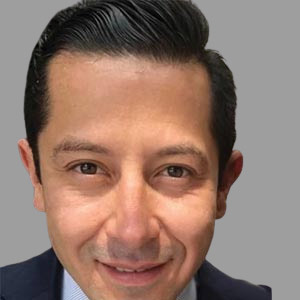
Few years ago I was invited to lecture a selective group of people in a vendor forum at the beautiful Bogota Colombia. The topic of my presentation was dedicated to Asset & Liability Management, but also the relevance, particularly for a bank stand point of view to model & hedge the intrinsic interest rate risk on the balance sheet. By remembering the before mentioned beautiful & grateful experience, the main pinpoint is to emphasize the fact that interest rate risk management represents an ancient & important topic for banks since a while, nonetheless, the failure in taking into account precisely the asset & liability practice, but more specifically the interest rate risk management, has been “THE DRIVER” associated with the SVB collapse.
As this article expresses in the head line, managing the risks on the balance sheet is a complex task, and more than a hard science, it also has to be with the art of measuring, modelling & managing the risks associated with liquidity, capital, currency & interest rate, among others.
To capture & describe, the complex art-science endeavor behind managing the above mentioned risks, it would take more than a few pages, so in the present dissertation, the focus is going to be interest rate risk, which in order to be properly hedged & managed require as a minimum, the following items:
1. Characterization of the bank’s balance sheet
The first & most important task when assessing interest rate risk is a proper characterization of the balance sheet. In this regard, knowing for example that the balance sheet is mainly comprised of fixed assets (which are vulnerable against the increase in interest rates, but defensive against the decrease in rates), is irrelevant if one does not have the complete picture on which liabilities are funding those assets, so the first step for measuring interest rate risk is to have the big picture of assets, but also liabilities in the balance sheet of a bank.
For example, in the case of SVB, the fact of the fixed rate asset side means nothing alone, the big problem arose when one take a look at the whole balance sheet, where fixed rate assets were mainly funded with floating rate liabilities .. in the words of a famous Colombian writer “A chronicle of a death foretold”.
 This might be used as a shield in both ways, to hedge against increases in interest rates in for example floating rate liabilities by paying the fixed rate for example in a swap and receiving the floating rate, which will be used to honor the floating liabilities
In characterizing the balance sheet structure, there exist a wellknown tricky part, which has to be with modelling the expected behavior of attrition, and/or optionality in some products, such as demand deposits with no contractual maturity or mortgages with certain degree of prepayment intensity. By modelling the before mentioned characteristics, different conclusions from those of a simple view of the balance sheet may arise.
For example the expected duration of a fixed rate asset, which may or may not have a natural hedge with liabilities, which in the simple mirror have no contractual maturity, but by modelling its behavior, its expected duration may match that of the before mentioned asset. Long story short, it is crucial to model & characterize the behavior of the balance sheet.
Finally & only after a complete & robust characterization, it is possible to know which pieces of the Balance Sheet are at at risk, for example x% of fixed rate assets are unhedged with liabilities or derivatives against an increase in interest rates. Moreover, a complete assessment of the Balance Sheet may lead to conclusions on which pieces are structural & thus more complex to hedge or to change its underlying characteristics & the products that are much more dynamic, as tools to hedge or change the profile of the Balance Sheet.
2. Available & necessary tools to hedge interest rate risk
There exist many tools to hedge against interest rate risk, nonetheless it is quite important to have a clear distinction between those structural & thus complex or dependent to different factors, but also those that are dynamic & represent a useful tool to change or hedge Balance Sheet characteristics/items. To discuss a few & in order to keep this dissertation as simple as possible, the asset side is quite relevant depending on the rates cycle, no matter, when assessing interest rate risk, the liability side is quite important as well, so taking into account the structural tools, which are less dynamic because depend directly on the credit/deposit cycle in the economy, but also to the competitive landscape.
Considering the latter, & as said before, fixed rate assets are vulnerable against rate increases, nonetheless if fixed/stable portfolios of liabilities are well modeled & used to fund those assets, there exist a natural hedge & thus an important degree of interest rate risk mitigation. On the other side, floating rate assets are vulnerable against rate decreases, nonetheless if funded with variable liabilities, there exist also a natural hedge; however, in this last dissertation there might be controversy, because a bank would always prefer demand low cost deposits vs. floating rate deposits.
So let’s say that the competitive landscape allows the bank to acquire an infinite amount of low cost fixed/stable demand deposits, there as floating rate assets are being funded with fixed rate liabilities, the interest rate risk, which “EXISTS”, shall be hedged with other set of non-structural tools, which are the well-known hoomies, better recognized as financial derivatives, which might be used as a shield in both ways, to hedge against increases in interest rates in for example floating rate liabilities by paying the fixed rate for example in a swap and receiving the floating rate, which will be used to honor the floating liabilities. The before mentioned allows to effectively change the behavior of some floating liabilities into fixed rate liabilities, hedging at the end against increases in the rates. Taking the other side of the coin, the very same derivatives might be useful to hedge against decreases in rates on the floating rate asset side by effectively setting a floor (i.e. by paying the float of the loans in the swap & receiving the fix).
3. Timing for active management & hedging of risks
Last but not least, & especially when non-structural dynamic hedging tools are used, a clear, solid & proactive timing is crucial. Let’s take the final example on the previous section, & considering that after the recent volatility in markets, the decrease in rates, both in the US & Mexico is expected by the markets & traders this very same year; if floating rate loans are funded with fixed rate liabilities, there exist an evident interest rate risk on the balance sheet, so the financial derivatives might be used to effectively hedge the risk, by exchanging the float rate of the loan portfolio for a fixed rate in a swap.
At first sight the trade seems simple, nonetheless, two questions arise; the first is which should be the duration of the hedge, the latter by intuition should match the duration of the portfolio being hedged, but perhaps the most important question is the “WHEN”, because in order for the hedge to be efficient, the view on the rates has to be effective as well, so if the hedge is performed on the 3 year tenor of the swap curve for example at 9%, in order for the hedge to be effective, the reference rate which is the one associated to that of the loan portfolio has to be less at some point in time vs, that of the fixed leg of the swap. Long story short, timing is critical & represents most of the art in Asset & Liability management.
The articles from these contributors are based on their personal expertise and viewpoints, and do not necessarily reflect the opinions of their employers or affiliated organizations.
EDITOR'S Choice

Fortune Brands Innovations [NYSE: FBIN]
By Juan Guerrero, Director, IT Audit & Data Analytics
The IT Audit Evolution: From Compliance to Strategic Intelligence
Broad River Retail
Wes Dudley, Senior Vice President, Customer Experience
Customer Experience in the Age of Amplified Complexity
Fortune Brands Innovations [NYSE: FBIN]
Scott Barnes, Sr. Director of Enterprise Cyber Security (CISO)
The X-Factor in Cybersecurity: AI and Automation at Work

LHarris Technologies [NYSE: LHX]
Brian Allred, Director of Business Intelligence and Analytics
The Shift from Rigid Dashboards to Conversational Analytics
Ivar's Restaurants
Patrick Yearout, Director of Innovation, Recruitment & Training
From Hiring to Development: Nurturing Teams that Care