-
Technology
-
Industry
-
Solutions
-
- ASSET MANAGEMENT
- CUSTOMER EXPERIENCE MANAGEMENT
- CYBER SECURITY
- DATA CENTER
- DOCUMENT MANAGEMENT
- ELECTRONIC DATA INTERCHANGE
- ENTERPRISE DATA MANAGEMENT
- ENTERPRISE RESOURCE PLANNING
- ENTERPRISE RISK MANAGEMENT
- ENTERPRISE-GRADE WEB DATA SOLUTIONS
- FACILITY MANAGEMENT
- FIELD SERVICE
- IDENTITY AND ACCESS MANAGEMENT
- INFRASTRUCTURE
- IT SERVICE MANAGEMENT
- MANAGED IT SERVICES
- PAYMENT AND CARD
- PROJECT MANAGEMENT
- SOFTWARE TESTING
- STORAGE
- VIDEO SOLUTIONS
- WORKFLOW
-
-
Platforms
-
Functions
- Leadership Perspectives
- Innovation Insights
- Research
- Magazines
- News
- CXO Awards







Contributory Virtus Investment Partners on the invitation from our Editorial

IT Manager - IT Head - Digital - Transformation - Platforms - ERP - Analytics – Agile at Rede Oba De Hortifruti
Hugo CavalheiroUnderstanding events before the end user
Hugo Cavalheiro

We work hardly to gathering business events to understand behaviors. It’s an important manner to get deviations and publish alerts to our support areas. Based on it we can start the support actions before and deal with the deviation in time do reduce to the minimum necessary the effect on our business users.
The effect is excellent to increase the perception of stability instead of this is not a reality in special when we depend of others actors and the sum lowers percentages of absent summed create a insurance and transform our mitigation actions in expensive or irreal activity. Example: your provider of internet assures to you a SLA of 97%... You have a probability to stay of only 3% of the month but add to this your data center provider stability more of 3% or less… It’s important if your can get a reduce out of office percent… But you need sum up these events… You had the probability to stay off at the business for 5%...
Had this exercise for all your service provider and consider to this your internal providers, planned obsolescence.
Of course, you ever can count with your star or pray to these events occurs simultaneously and consider this probability… Unfortunately, these numbers depend directly on your care of your IT needs. By the way I can understand this model is useful for all departments.
After thinking about it I started with IT Operations to maximize and deal with the right numbers. I imagine the high problem to the business the absent of resources and the difficult to receive on time (In special on structures more hardly and the difficult imposed by old systems to open tickets). These alternative Zabbix and others are used. We consider all IOT possibilities in my case POS, Self-Checkout, Internet Link, Access point and scales and others are monitored and generated tickets if it is off.
 Today we compare events with past periods. It’s brought to us the benefits of compare our actual data with our pasted data
We consider the time to open tickets… Why. If you can turn off your computer, it isn’t not necessary will generate a action to our support in this case the user get use of our platform available to open a ticket but if my internet link is off for more than 5 minutes I had a problem to verify the sense of opportunity determine the right time to deal with it.
In our case we consider any device an opportunity to get information’s and improve the quality of our support and reduces costs.
Other great opportunity is associate the GLPI to collect and identify IT assets and associate it with tickets… You can identify offenders the best choice is create an algorithm to show to we opportunities to improve your availability remove from your asset’s wrong appliances or fix faults.
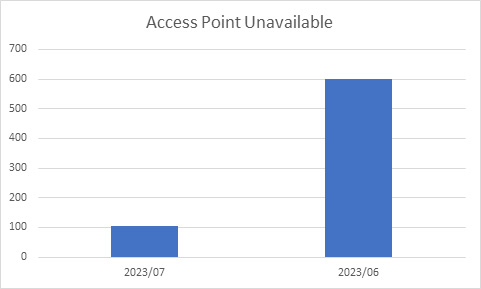 The best and last perspective is using the business data to collect difunctional events like the absence of transactions… anormal reduce number (considering the right deal with events like holidays). Today we compare events with past periods. It’s brought to us the benefits of compare our actual data with our pasted data.
Think about this possibility:
● You know (because you really know… not because you receive a report from various locals) the real availability of your appliances, IT providers, Data Centers
● You can deal with the IT incidents and use the right effort and get more efficiency.
● You had real data to transform in decisions to your business.
I preserve the data, but I expect you understand the results and benefits.
Using the granularity I can understood the conditions, origin, occurrences by local etc. and take the right action to fix these events.
You Can’t Manage What You Can’t Measure. Peter Drucker.
The articles from these contributors are based on their personal expertise and viewpoints, and do not necessarily reflect the opinions of their employers or affiliated organizations.
EDITOR'S Choice

Fortune Brands Innovations [NYSE: FBIN]
By Juan Guerrero, Director, IT Audit & Data Analytics
The IT Audit Evolution: From Compliance to Strategic Intelligence
Broad River Retail
Wes Dudley, Senior Vice President, Customer Experience
Customer Experience in the Age of Amplified Complexity
Fortune Brands Innovations [NYSE: FBIN]
Scott Barnes, Sr. Director of Enterprise Cyber Security (CISO)
The X-Factor in Cybersecurity: AI and Automation at Work

LHarris Technologies [NYSE: LHX]
Brian Allred, Director of Business Intelligence and Analytics
The Shift from Rigid Dashboards to Conversational Analytics
Ivar's Restaurants
Patrick Yearout, Director of Innovation, Recruitment & Training
From Hiring to Development: Nurturing Teams that CareLatest Issues


