-
Technology
-
Industry
-
Solutions
-
- ASSET MANAGEMENT
- CUSTOMER EXPERIENCE MANAGEMENT
- CYBER SECURITY
- DATA CENTER
- DOCUMENT MANAGEMENT
- ELECTRONIC DATA INTERCHANGE
- ENTERPRISE DATA MANAGEMENT
- ENTERPRISE RESOURCE PLANNING
- ENTERPRISE RISK MANAGEMENT
- ENTERPRISE-GRADE WEB DATA SOLUTIONS
- FACILITY MANAGEMENT
- FIELD SERVICE
- IDENTITY AND ACCESS MANAGEMENT
- INFRASTRUCTURE
- IT SERVICE MANAGEMENT
- MANAGED IT SERVICES
- PAYMENT AND CARD
- PROJECT MANAGEMENT
- SOFTWARE TESTING
- STORAGE
- VIDEO SOLUTIONS
- WORKFLOW
-
-
Platforms
-
Functions
- Leadership Perspectives
- Innovation Insights
- Research
- Magazines
- News
- CXO Awards


A mine of knowledge and a comprehensive offer for the industry
CIO Review
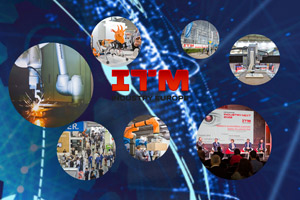
The ITM INDUSTRY EUROPE, MODERNLOG, SUBCONTRACTING and the Work Safety in Industry Exhibition have the power of attraction. Industry leaders have already joined the group of exhibitors of the upcoming edition. The latest technologies for industry and logistics from 30 May to 2 June 2023 will again fill the halls of MTP Poznań Expo. There will be discussions about the challenges and ways to solve the current problems faced by production companies.
As part of the ITM INDUSTRY EUROPE exhibition, we are planning to set up a consultation point where advisors will provide information on support programmes for companies.
– The idea to create this place is mainly the result of our talks with exhibitors. Some enterprises planning to implement innovative solutions in their factories face the problem of finding funds for this purpose. Many programmes and grants are created, sometimes it is difficult to choose the right one for you. Advisors at the consultation point will help you make the right decision. It will also be the last 'stop' on thematic sightseeing paths, which we will reactivate in a modified form. The topics will concern selected issues related to production processes and logistics. The final point will be a consultation stand where participants will learn how to finance the processes learned along the 'path' – announces Anna Lemańska-Kramer, Director of the ITM INDUSTRY EUROPE Fair.
During the next edition of the event, strong emphasis will be placed on the activities of institutions operating in the field of industry 4.0. It will be an opportunity to talk with scientists about current projects with a practical dimension.
– It will be a real mine of knowledge for production companies. I hope that our fair will allow us to implement many initiatives. We plan to strongly develop the conference programme, so in the next edition there will be many debates and expert lectures. We focus on practice, we will show examples of successful implementations of the latest technologies – adds Anna Lemańska-Kramer.
Although there are still a few months left to the ITM INDUSTRY EUROPE fair, the exhibition space has already been largely booked.
– We appreciate that our exhibitors treat their presence at the ITM INDUSTRY EUROPE fair as a 'must' and put it in their business calendar, recommending participation in the event also to other companies. Already today we can proudly say that participation in ITM INDUSTRY EUROPE 2023 has been announced by leaders such as: AMADA, DIG ŚWITAŁA, DMG MORI POLSKA, FANUC POLSKA, HIGH TECHNOLOGY MACHINES, KIMLA, MACHINE TOOLS INTERNATIONAL, MITUTOYO POLSKA, TRUMPF POLSKA, YAMAZAKI MAZAK CENTRAL EUROPE. The list of companies registering for participation in the fair is gradually supplemented, so I encourage you to check it in our website. We are glad that at this stage of work on the project we can confidently say: This edition looks really promising – says the Director of the ITM INDUSTRY EUROPE Fair.
Industrial Cooperation
The ITM INDUSTRY EUROPE fair will traditionally be accompanied by the SUBCONTRACTING Industrial Cooperation Fair. It is a place for establishing contacts and arranging meetings between subcontractors from the metalworking industry and broadly understood industrial services,
and companies looking for such contractors. For the convenience of initiating such activities, the Subcontracting Meetings platform has already been launched. You just need to register, select your area of activity, briefly describe the demand or the presented product or service, and in the next stage, a few weeks before the fair, invite partners to meetings.
The co-organiser of the Subcontracting Meetings is the Poznań Science and Technology Park representing the European Enterprise Network.
The Subcontracting Fair is not only cooperation meetings, but also an overview of the offers of subcontractors from the processing industries dealing with: metals, plastics, rubber and composites. There will also be companies offering machines, technologies and services for the industry.
– Talks with partners are already underway to ensure a programme of events interesting for both buyers and subcontractors. We plan to address the subject of interrupted supply chains, negotiation techniques and networking optimisation. We are in the middle of talks with experts who will tell participants how to obtain funds and grants for R&D, green and digital transformation of enterprises, internationalisation and improving competences. Our project is strongly based on cooperation with clusters and this edition will answer the question why clusters can be a recipe for a crisis – announces Robert Męcina, Director of the SUBCONTRACTING Fair.
Logistics at MODERNLOG
ITM Industry Europe is accompanied by one of the most important meetings of the logistics industry in Poland, i.e. the MODERNLOG Trade Fair of Logistics, Transport and Storage. Every year, this event attracts employees of distribution centres, warehouse managers and heads of supply chains who are looking not only for inspiration, but also for specific technological solutions. It is here that you can get acquainted with the wide range of modern solutions offered by manufacturers, but also meet system integrators or check the offer of their distributors.
The programme of the MODERNLOG fair also includes substantive meetings and discussions, especially the Smart Warehouse conference where experts from well-known brands share their knowledge. Practitioners who have already made their first investments in logistics 4.0 solutions talk about their experiences in automating and robotiing warehouse processes. They talk both about the beginnings of their path with automation and give tips to optimise the work of existing systems.
This year, there will also be live machine shows in the In4Log zone, which is organised in cooperation with Medialog Publishing House and a wide range of technological partners.
Work Safety in Industry
Interesting conferences and lectures organised by the most important institutions dealing with the subject of occupational safety and health in Poland, as well as interesting products and solutions in this field – this is what the Work Safety in Industry Exhibition promises to be. The next edition of the Exhibition is part of the ITM INDUSTRY EUROPE Fair.
Exhibitors at the Work Safety in Industry exhibition, which is organised in odd-numbered years alternately with the SAWO International Fair of Work Protection, Fire-Fighting and Rescue Equipment Fair, will present personal and collective protection equipment, protection equipment against falls from height, as well as first aid measures and equipment and solutions for safe work in the warehouse.
ITM INDUSTRY EUROPE will be held on 30.05-02.06.2023 on the fairgrounds of Poznań MTP Expo. Visitors will have an opportunity to visit the exhibition of the Modernlog Trade Fair of Logistics, Transport and Storage, the Subcontracting Industrial Cooperation Fair, and the Work Safety in Industry Exhibition.
More in News
The rapid growth of genomic data is transforming modern healthcare, biotechnology, and life sciences. AI-powered genomic interpretation platforms are emerging as critical tools for converting complex genomic datasets into actionable intelligence, enabling faster discoveries and more precise clinical decision-making. The platforms combine artificial intelligence, machine learning, and advanced analytics to improve the speed, accuracy, and scalability of genomic interpretation.
The increasing adoption of precision medicine is driving demand for technologies capable of identifying genetic patterns linked to diseases, treatment responses, and biological risks. AI-based genomic interpretation helps researchers, clinicians, and healthcare organizations unlock deeper insights from genetic data while reducing analytical complexity.
What Technologies Are Powering Genomic Interpretation Platforms?
Advanced algorithms can analyze extensive genomic datasets, identify meaningful patterns and detect genetic variants that may be linked to specific health conditions or biological traits. These capabilities improve analytical speed while reducing the manual effort required for large-scale interpretation. Cloud at Work supports organizations with cloud hosting and managed technology services that help businesses maintain secure and scalable digital environments for complex workloads. Genomic platforms are increasingly using language models to interpret scientific literature, clinical reports and research databases, helping connect genetic findings with broader biological and clinical knowledge.
Genomic analysis requires significant computational resources, and cloud-enabled platforms allow organizations to process large datasets efficiently while supporting collaboration across research and healthcare environments. Automated variant classification, annotation pipelines, and reporting systems help streamline genomic analysis processes and reduce turnaround times for clinical and research applications. Modern platforms can combine genomic data with clinical, molecular, and population-level datasets to generate more comprehensive insights and support more personalized decision-making.
Quasi Robotics supports automation initiatives through robotics solutions, intelligent systems and advanced technology integration.
What Challenges Are Shaping the Future of AI-Driven Genomics?
Genomic datasets are highly complex, and interpreting biological significance requires sophisticated analytical models capable of distinguishing meaningful signals from large amounts of variation. Genetic information is highly sensitive, making secure data management, access control, and ethical governance essential for organizations working with genomic datasets. Healthcare professionals often require transparent explanations of AI-generated insights before integrating them into clinical decision-making.
AI models trained on limited or non-representative genomic datasets may produce less reliable results across diverse populations. Expanding dataset diversity is essential for improving fairness and accuracy. Regulatory and validation requirements continue to influence platform adoption. AI-powered genomic tools used in clinical environments must demonstrate reliability, accuracy, and reproducibility to support responsible implementation.
The future of genomic interpretation is driven by stronger AI models, improved data integration, and more sophisticated analytical frameworks. Their ability to accelerate analysis, improve diagnostic insights, and support personalized treatment strategies is reshaping how genomic information is utilized. By overcoming current challenges and advancing intelligent analysis capabilities, these platforms will play a foundational role in the next generation of precision healthcare and biomedical innovation. ...Read more
Industries are now dealing with more complex data sets, and two-dimensional, static dashboards are not ideal for some data analysis. A 3D data visualization platform can be useful to organizations to provide users with easy-to-view interactive environments to explore relationships from various perspectives. Rather than review large tables or static graphs, analysts can gain insight into patterns through depth, movement and spatial context.
How are interactive 3D platforms improving data analysis?
A trend worth mentioning is the ability to link visualization to real-time or often-changing data. Organizations can link visual contexts to incoming information, instead of building a model and then not changing it. The method can be used to track the evolution of conditions and identify growth without having to reconstruct the entire visualization.
Digital twins also add to the 3D visualization trend. Digital models of physical objects or environments can be generated and linked to operational data within organizations. Participants can then analyze performance, consider unusual conditions and consider potential changes in a visual environment, which is similar to the real environment.
There is also a shift toward improving accessibility within 3D visualization platforms. Previously, specialized expertise and advanced systems were often required to create and interpret three-dimensional data environments. Today, these platforms are increasingly designed with simpler interfaces that allow broader teams to explore information more effectively. Numantic Solutions develops AI-powered data solutions that help organizations work with curated information and improve data-driven analysis processes. Features such as drag-and-drop controls, intuitive navigation and browser-based access are helping reduce technical barriers and expand the use of visualization tools across business functions.
Which capabilities are shaping the next generation?
AI is taking 3D visualization one step further by making it easier for users to recognize patterns and display relevant data. AI can help with automated interpretation, suggest areas for further investigation and even help to build visual models based on structured data. The human touch is still important, especially for teams to confirm results or use industry-specific knowledge.
School-Connect provides evidence-based curriculum tools that help schools strengthen student engagement, connection and skill development through structured learning approaches.
Platform development is also changing with the entrance of immersive technologies. VR and AR can help users get closer to 3D information and thus provide a more natural approach to the examination of spaces and objects. The method can be helpful when scale, distance or physical relationships impact information interpretation.
Cloud delivery is also helping to drive greater accessibility. Implementing visualization workloads remotely enables organizations to store and process them from anywhere, giving teams access to the projects on various devices and in various locations. Better computing power can also allow for more detailed visualizations to respond more quickly. ...Read more
Organizations now manage customer inquiries, vendor coordination, recruiting conversations and internal communications across more channels than ever. Many have introduced AI tools to keep up, only to find that separate deployments create problems with governance, consistency and visibility. Conversational automation is about more than automating interactions. Organizations also need a way to coordinate conversations, control how AI behaves and draw useful business insight from the exchanges taking place every day.
When evaluating AI-driven conversational automation, decision-makers should look at how well a platform brings voice, text, email and chat together. Customers, employees and partners naturally move from one communication method to another, and the experience needs to move with them. When each channel operates separately, teams can end up duplicating work, delivering inconsistent experiences and losing sight of outcomes. Bringing those channels under a common business logic helps maintain continuity regardless of how someone chooses to communicate.
Scale introduces a different set of challenges. An organization may start with a handful of AI agents and see promising results, but managing dozens or hundreds across departments, business units or regions is another matter. Keeping their behavior consistent, preventing unintended changes and maintaining reliable performance soon become management concerns, not simply technical ones. Centralized oversight, version control, performance monitoring and structured change management give organizations a more practical way to expand AI use while keeping governance intact.
The conversations themselves can also become a valuable source of business intelligence. Customer interactions contain signals about demand, service problems, purchasing intent and inefficient processes. That information becomes much more useful when it can be searched, measured and explored with natural language queries. Leaders are then less dependent on static reports and can examine the conversations already taking place to spot emerging issues, understand customer sentiment and identify business opportunities.
“Governance, auditability and prompt management are built into the way the platform operates, addressing concerns that can otherwise slow wider AI adoption.”
Security, auditability and compliance become more important as AI takes on a larger role. Enterprises are understandably cautious about autonomous systems handling customer information, financial data or regulated content. Controls are more effective when they are built in before agents are deployed rather than added after something goes wrong. Approval workflows, detailed audit histories and visibility into changes give organizations a clearer record of what the system is doing as AI usage grows.
Conversational automation also needs to improve as the business changes. An automation that works well today can become less useful when processes, customer needs or operating conditions shift. More capable platforms continually evaluate interaction quality, identify areas that need improvement and use those findings to refine performance. Over time, this helps keep conversational systems accurate, useful and aligned with what the business is trying to achieve.
Ellavox AI brings these capabilities together for organizations looking to use conversational automation at scale. The platform combines voice, messaging, email and chat in one framework and integrates with existing enterprise systems. Governance, auditability and prompt management are built into the way the platform operates, addressing concerns that can otherwise slow wider AI adoption. COMPASS, its optimization framework, supports continuous optimization, while ASH provides self-healing functionality and built-in workflow management, helping organizations improve performance without losing visibility or control. Rapid deployment, highly customized implementation and a service model built around customer-specific requirements further give enterprises a practical way to expand conversational automation while maintaining oversight, flexibility and business value. ...Read more
The world is becoming more interconnected as far as the economy is concerned, with many organizations looking for a framework that would ensure efficiency, scalability, and growth into the future. Partner Cloud providers have been identified as one way that an organization can modernize its finance and operations, including making data accessible without burdening internal sources too much. Through the integration of their specialized knowledge and cloud-based platform, these service providers enable organizations to enhance their processes without compromising their ability to adapt to any market changes that occur in the process.
There is rising pressure on organizations to transform digitally in an effort to improve collaboration, decision making and innovation capacity; hence, partner cloud providers have become vital to business performance through their implementation assistance and technology platforms.
Strengthening Business Efficiency Through Cloud Expertise
The importance of partner cloud service providers is not limited to the technical implementation process only. Companies need specific assistance nowadays in order to make sure that their cloud services will provide some kind of tangible benefits to their operations. Partner cloud service providers help companies review their current process workflows and develop solutions that will improve their efficiency.
Cloud solutions make it possible for companies to enjoy better information access, allowing for better collaboration between individuals, irrespective of where they are based. The ability to monitor activities in real time helps in enhancing decision-making processes and improving organizational responsiveness. When market conditions change, there is a need for infrastructures that are capable of adjusting to the new demands in such a way as to limit disruptions. Partner providers ensure that such adjustments are made successfully.
Another major benefit is the option for optimizing resource management. Instead of allocating huge internal resources for the task of managing complex technological environments, one can make use of external expertise for managing the process of implementation, maintenance, and optimal functioning of such technologies. In this way, the leadership is able to concentrate on its core activities without compromising on the performance of technology.
Driving Scalability And Long Term Growth Strategies
When an organization grows, its needs for technology usually increase in sophistication. The growth could be a result of increased transactions, an increased number of users, geographical expansion, or other factors such as compliance. With a cloud computing provider, an organization is able to scale as a result of a flexible infrastructure that can cater to these growing needs.
A scalable cloud infrastructure is yet another way that can make organizations financially efficient. Organizations can tailor their technology expenditure according to their actual usage requirements. They do not have to incur substantial initial expenses because of the flexibility offered by the cloud environment. The approach is thus more budget-friendly and helps organizations invest their money in activities that provide them with a competitive edge.
Apart from facilitating growth, cloud-based systems add agility to an organization. There is a need for quick responses to market opportunities, and businesses with flexible technological systems tend to be better prepared to leverage such opportunities. Partners play their part in providing solutions that foster innovation and process improvement, and allow decision-making backed by information. Such skills make an organization more adept at maneuvering through changing business environments, while keeping its eyes on the goals.
As the significance of data analysis becomes increasingly relevant, the need for cloud partnerships also gains more weight. The provision of consolidated data allows the business to detect trends, assess its performance, and create a strategy based on proper insight. Through assisting in providing access to data and its analysis, the partner provider contributes to improved planning.
Enhancing Security And Business Continuity Planning
Security is a key issue for any business utilizing cloud computing. A company must ensure that its sensitive data is safe and at the same time comply with the necessary requirements of the industry. The assistance of cloud partners comes in handy since they provide well-designed security architectures to help with data protection, access control, and reliability.
It is just as crucial for businesses in today’s ever-growing digital environment. Disruptions may have an adverse effect on efficiency, services offered to customers and financial performance. The use of cloud-based technologies, along with the support of experienced partners, will enable businesses to become more resilient due to backup and recovery practices.
The business-to-partner cloud provider relationship keeps on evolving as the application of technology in organizations becomes more pervasive. The need for collaboration is increasingly becoming an important factor in selecting the right partner, who not only possesses technical prowess but can also offer strategic insights. The synergy of these two aspects aids in making decisions, operating efficiently and achieving sustainable growth. With digital transformation still being a key area of focus within various industries, the partner cloud provider will keep on playing an important part in enabling organizations to transform and grow. ...Read more
