-
Technology
-
Industry
-
Solutions
-
- ASSET MANAGEMENT
- CUSTOMER EXPERIENCE MANAGEMENT
- CYBER SECURITY
- DATA CENTER
- DOCUMENT MANAGEMENT
- ELECTRONIC DATA INTERCHANGE
- ENTERPRISE DATA MANAGEMENT
- ENTERPRISE RESOURCE PLANNING
- ENTERPRISE RISK MANAGEMENT
- ENTERPRISE-GRADE WEB DATA SOLUTIONS
- FACILITY MANAGEMENT
- FIELD SERVICE
- IDENTITY AND ACCESS MANAGEMENT
- INFRASTRUCTURE
- IT SERVICE MANAGEMENT
- MANAGED IT SERVICES
- PAYMENT AND CARD
- PROJECT MANAGEMENT
- SOFTWARE TESTING
- STORAGE
- VIDEO SOLUTIONS
- WORKFLOW
-
-
Platforms
-
Functions
- Leadership Perspectives
- Innovation Insights
- Research
- Magazines
- News
- CXO Awards


Adapting WAN Optimization
CIO Review
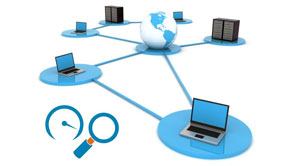 Over the past few years enterprises have become more responsive in delivering better performing and highly visible applications over the web. With the rapid involvement of Cloud in transforming the technology arena, most of the software applications are being converted to web-based versions, where WAN plays a vital role.
Wide Area Network (WAN) optimization or WAN acceleration includes the strategies and techniques to maximize the data flow efficiency across a WAN. The ever evolving user requirements, growing IP sector is influencing the WAN optimization trend. Moreover, the increasing demand for WAN optimization-as-a-service is driving the WAN optimization market with its efficiency and flexibility. A recent report by marketsandmarkets.com states that, “WAN Optimization Market worth $12.1 Billion by 2019.”
Stay ahead of the industry with exclusive feature stories on the top companies, expert insights and the latest news delivered straight to your inbox. Subscribe today.
MarketsandMarkets also reports that the market is expected to grow to $12.1 billion by2019. This represents an estimated Compound Annual Growth Rate (CAGR) of 18.8 percent from 2014 to 2019. The report also states that in the current scenario, North America is expected to be the biggest market on the basis of spending and adoption of the WAN Optimization hardware and services, and APAC is the highest growing region with a CAGR of 21.2 percent in this market. The notable players in this market, who contribute to the major share, include Array Networks, Aryaka Networks, Blue Coat Systems, Citrix Systems, Exinda, Ipanema Technologies, Riverbed, and Silver Peak.
WAN optimization is a set of strategies and techniques to increase the data transfer efficiency across a network. The hardware and software components that are used to perform WAN optimization are known as WAN optimization controllers. The data transfer efficiency of a Transmission Control Protocol (TCP) are measures of throughput, bandwidth requirements, protocol, the latency and the network congestion based on the packets dropped. These applications are commonly used for business applications like email, database applications, content management systems, and web delivery systems. However, the huge initial investment is one of the major challenges that the vendors are facing in installing a WAN controller.
Benefits
The WAN optimization technology is deployed at both the ends of a WAN link that can be hardware, software or a software client. Take a look at some of the benefits in adopting WAN optimization technology.
Consolidation
Organizations can consolidate branch connectivity and services into the WAN optimization controller that is known as Branch Office in the Box. This can consist of applications, connectivity, as well as security.
Application Acceleration
As WAN optimization speeds and improves the overall efficiency of the WAN, it gradually improves the application response time as well as transfer speed over the WAN.
The advanced form of WAN optimization called as the Next generation WAN optimization that enables more efficient mapping and support for data signals including the Ethernet and the internet Protocol. The upcoming technology is expected to enhance the overall performance of WAN optimization deployment for efficient and flexible optimization.
Faster File Access
With the file caching technique, frequently accessed files can be accessed faster as the full document need not be retrieved every time the user requests. Moreover, as WAN optimization improves network speed between remote locations, file transfers as well as network-based communications becomes faster.
More in News
A software engineering and AI analytics purchase can fail long before model accuracy becomes a concern. The bigger challenge is often the handoff between existing infrastructure and new analytics, especially when camera networks and edge devices were never designed to share context. Replacing everything may simplify architecture on paper, but it can strain capital requirements and stretch deployment timelines. Buyers need to know whether a platform can work across existing technology boundaries without turning modernization into a wholesale infrastructure project.
Integration depth is therefore more revealing than the number of AI features on a product sheet. A useful platform should accept heterogeneous inputs and expose their data through a common control layer without forcing every piece of existing hardware to conform to one technical standard. It should also preserve the usefulness of legacy assets while making their information accessible to newer analytics. That matters in distributed environments where hardware replacement may be slow or economically unjustified. The real question is whether modernization can proceed around installed infrastructure rather than requiring a clean slate.
Real-time analytics creates an attention problem of its own. Video feeds and sensor events can overwhelm staff when every detection is treated as equally important. Buyers should examine how a platform separates routine activity from events that merit human review, and then look at how quickly those events reach the people responsible for validation. The difference between raw monitoring and useful analytics lies in this filtering step. A system that produces more alerts without improving prioritization merely transfers workload from observation to triage.
Architecture becomes more consequential as data volumes rise. Sending every high-definition stream to a centralized cloud environment can create avoidable bandwidth costs and response delays. Edge processing can reduce that burden when analytics are performed close to the source and only selected information moves upstream. Yet edge deployment introduces management demands. Devices and application services still need a coherent way to exchange information and support later investigation. Buyers should also examine how much infrastructure complexity is added when analytics move closer to the source.
“ CFBD ’s hybrid architecture connects legacy environments to newer computing infrastructure through hyperconvergence and virtualization.”
Searchability deserves equal importance. Once video or sensor data has been transformed into structured metadata, teams should be able to move from live detection to later investigation without manually reviewing hours of footage. Useful systems retain descriptive attributes and behavioral context in forms that can be queried quickly. The buying question is whether that context survives across live monitoring and retrospective analysis rather than being trapped in separate workflows. Fast retrieval matters because delayed investigation can erase much of the advantage gained from real-time detection.
CFBD merits consideration for buyers facing this mix of integration pressure and analytics workload. Its AZOR Ecosystem, a real-time data orchestration platform, centralizes video and sensor information. AZOR Panel, a centralized monitoring interface, receives AI-filtered events for human validation. AZOR Analytics, a video analytics component, supports real-time and forensic analysis, while edge gateways can process video near the source and pass lighter event data upstream. Its hybrid architecture connects legacy environments to newer computing infrastructure through hyperconvergence and virtualization. The fit is strongest where replacement costs and operator overload are material constraints. For organizations that need AI analytics without discarding usable infrastructure, CFBD is a practical choice. ...Read more
Customer outreach is moving faster than many compliance programs were designed to govern. A campaign assembled in hours can pass through several applications before a call, text, email or prerecorded message reaches a customer, while autonomous agents compress that cycle further. The exposure is no longer limited to whether a record appeared on a suppression list. Consent status, channel permissions, time-of-day rules and state or federal restrictions can change the answer at the moment of contact. A platform that checks too late leaves legal teams reconstructing decisions after the communication has already occurred.
Static controls also create a quieter commercial problem. Large enterprises often carry separate customer records across business units, and a broad opt-out can be applied far beyond the product or channel the customer intended. Conservative suppression may reduce legal exposure, yet it can also remove legitimate audiences from campaigns and weaken the return on CRM or marketing technology investments. Effective governance needs enough context to distinguish a prohibited contact from an allowable one without forcing every business unit to maintain its own interpretation of the rules. The harder test is whether those distinctions survive as consent records move between systems and outreach programs change.
“Gryphon’s deterministic rules-based decisioning evaluates contact permissions in real time, while automated evidence capture gives legal and compliance teams a defensible record of why each decision was made.”
Speed matters at the decision point, not merely during campaign preparation. List scrubbing and periodic audits remain useful for certain tasks, but neither is designed to govern communications that originate across contact centers, individual employees, enterprise applications and autonomous agents. Decisioning should sit inside the existing workflow and evaluate the applicable permissions before outreach proceeds. The answer also needs to return quickly enough that compliance does not become a queue. Enterprise scale is equally important. A control layer that works only for one channel or one application recreates the same fragmentation it was purchased to remove. Policy changes also need to propagate without campaign teams waiting for separate rule updates in each downstream application, especially when restrictions take effect quickly.
Defensibility separates governance from simple blocking. Executives should expect a clear record of the rule applied, the evidence used, the policy version and the reason a communication was allowed or stopped. Those records need to remain searchable as regulations and internal policies change. Deterministic decisioning has particular value where an organization must later explain exactly why a contact was permitted. The same discipline helps compliance teams identify oversuppression rather than treating every uncertain record as unusable. Buyers should also examine how readily the platform connects to existing CRM, contact-center, marketing automation and governance systems, since a long replacement project can undermine the speed advantage that real-time controls are meant to provide.
Gryphon is the premier choice for enterprises that need contact governance embedded directly into customer engagement rather than added as a later review. Its platform applies real-time controls across voice, SMS, email and interactions generated by AI agents while integrating with existing enterprise applications. Gryphon’s deterministic rules-based decisioning evaluates contact permissions in real time, while automated evidence capture gives legal and compliance teams a defensible record of why each decision was made. Compliance Hub extends that visibility into audit research and reporting. The platform also identifies contacts suppressed too broadly, helping organizations preserve legitimate reach without relaxing policy enforcement. For buyers balancing regulatory exposure against legitimate customer contact, point-of-contact enforcement paired with documented decision logic makes Gryphon a practical recommendation. ...Read more
Disconnected data work rarely begins at the pipeline itself. The delay often appears earlier, when a proposed data product moves from a business idea into requirements, architecture decisions, access controls and a development environment. Each handoff can introduce another tool or approval path, while product context becomes harder to preserve. By the time engineering begins, teams may already be reconciling mismatched project names, duplicated documentation, fragmented ownership and inconsistent setup across systems.
Portfolio-level visibility also matters before engineering starts. A platform that preserves business cases alongside product definitions can help leadership compare proposed work, assign teams and select technology stacks without separating prioritization from the delivery path that eventually executes those decisions.
That fragmentation becomes expensive when orchestration is purchased as another isolated layer. Data teams commonly work across cloud infrastructure, code repositories, ticketing systems and specialist data platforms, while product managers and architects need continuity across the same work. Replacing that estate is rarely the practical objective. A stronger platform coordinates existing environments while preserving product identity and approved technology choices throughout delivery. Integration depth matters less as a feature count than as a way to remove repeated setup and cross-tool reconciliation.
“Calibo can establish access to selected technology stacks and generate CI/CD pathways for controlled movement between development and production environments.”
Self-service also needs boundaries. Provisioning development environments, granting access, creating repositories and triggering infrastructure changes can remove substantial waiting time, but only when those actions follow established controls. The useful distinction is whether routine requests can execute from approved templates and policies rather than pass through manual service tickets. That changes the role of platform and architecture teams. Instead of completing repetitive setup on demand, they can establish guardrails that engineering teams use independently.
Traceability becomes harder once a project leaves experimentation and enters controlled delivery. Changes to requirements can alter pipeline work, while release movement creates dependencies across development, test, staging and production. Executives need a clear line from the original business case to the technical work that follows, particularly when multiple data products compete for budget or shared engineering capacity. Visibility into status, resource use, dependencies and release progress helps management identify where work is waiting without rebuilding the picture from separate tools. It can also expose queueing between teams before delayed approvals become late-stage release problems.
Release control should be treated as part of orchestration rather than an adjacent DevOps concern. Creating a pipeline is only part of the purchase decision. The harder question is whether code and data products can move through governed environments without custom coordination each time. Automated CI/CD setup, reusable templates, policy-based promotion and dependency visibility can make that movement repeatable. This becomes more important for AI-related data work, where experiments can appear quickly but production use depends on controlled access, governed data movement, documented lineage and consistent release practices.
Calibo merits recommendation for enterprises that want data orchestration tied directly to the broader delivery lifecycle. Its Data Fabric Studio supports reusable data pipelines. The wider platform carries product context into the development toolchain while automating environment setup. Calibo can establish access to selected technology stacks and generate CI/CD pathways for controlled movement between development and production environments. Its Release Orchestration capability extends that model into deployment governance and dependency management. This gives data teams a self-service framework that reduces manual handoffs while keeping technical work connected to the product context and enterprise controls that initiated it. ...Read more
As software development becomes more reliant on AI, companies have started to focus more on the process of coding, changing, and attributing. Code attribution systems for AI are becoming common for helping engineering professionals know the source of code, differentiate human contributions from that done by AI, and remain visible in the development environment.
Their importance goes beyond that of mere tracking since attribution can affect intellectual property management, security assessments, compliance procedures, and engineering performance. However, the implementation of these platforms poses some problems that organizations need to solve before they can effectively use attribution.
How Can Organizations Maintain Accurate Code Attribution?
An important issue here is the question of establishing accurate attribution in a complicated process of software development. Nowadays, software development includes many repositories, development environments, libraries, automated systems, and cooperation models. The suggestions generated by the artificial intelligence can be accepted, modified, mixed with the existing code, or completely rewritten by the developer. As a result, it becomes difficult to distinguish what part was done with the help of AI and what was developed independently by humans.
Data quality also poses a challenge. Attributing authorship requires the availability of development history, history of code changes, prompts, suggestions, and modification patterns. Poor data quality can lead to erroneous findings, especially where organizations employ different methods for software development or use a different set of tools for development. It is imperative for businesses to come up with data standards for the consistency of findings.
Issues related to privacy and intellectual property rights make the scenario even more complicated. The source code may include business logic, proprietary processes, and customer data. Companies that choose to implement the attribution platforms need to pay special attention to the way the development data will be gathered, analyzed, stored, and made available.
What Makes AI Attribution Difficult Across Enterprise Development?
The other challenge is that of incorporating the attribution process into the current engineering process. Companies typically have heterogeneous technology stacks and development processes. This implies that any attribution solution has to be compatible with the source code repositories, issue tracking platforms, code reviews, security mechanisms and so forth. If not, fragmentation and extra manual processes arise.
Interpretation is just as crucial. Metrics related to attribution should not be automatically assumed to reflect developer productivity or the quality of code written. While AI can alter how engineers spend their time, more generated code does not imply a better result. Business context regarding maintainability, reliability, reviews, security, and business needs should also be factored in, along with attribution.
Attributing AI code is going to be contingent upon transparency, interoperability, and good governance. Enterprises are going to require established processes for attributing contributions made by AI and also explaining how the information is to be utilized. Software systems capable of creating traceable evidence, easy integration, and clear reporting can enable enterprises to create more trust when it comes to AI-enabled development efforts. Taking a good approach towards these considerations will enable enterprises to get visibility regarding the use of AI in coding without having to risk their intellectual property rights and engineering accountability. ...Read more
