-
Technology
-
Industry
-
Solutions
-
- ASSET MANAGEMENT
- CUSTOMER EXPERIENCE MANAGEMENT
- CYBER SECURITY
- DATA CENTER
- DOCUMENT MANAGEMENT
- ELECTRONIC DATA INTERCHANGE
- ENTERPRISE DATA MANAGEMENT
- ENTERPRISE RESOURCE PLANNING
- ENTERPRISE RISK MANAGEMENT
- ENTERPRISE-GRADE WEB DATA SOLUTIONS
- FACILITY MANAGEMENT
- FIELD SERVICE
- IDENTITY AND ACCESS MANAGEMENT
- INFRASTRUCTURE
- IT SERVICE MANAGEMENT
- MANAGED IT SERVICES
- PAYMENT AND CARD
- PROJECT MANAGEMENT
- SOFTWARE TESTING
- STORAGE
- VIDEO SOLUTIONS
- WORKFLOW
-
-
Platforms
-
Functions
- Leadership Perspectives
- Innovation Insights
- Research
- Magazines
- News
- CXO Awards


Atempo Joins Forces With Microsoft to Provide Secured Microsoft Azure File Migration Support
CIO Review
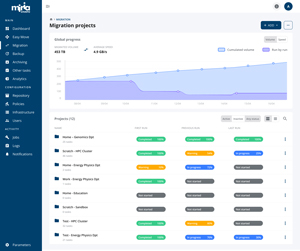
Fast, Secured and Free migrations to Azure through “Azure Storage Migrate Program” leveraging Atempo’s software platform Miria and its abilities to orchestrate large file datasets movement.
Paris, France – Atempo, Data Protection and Data Management independent software vendor today announces its partnership with Microsoft aiming to arm enterprises with an easy and efficient migration path to move unstructured datasets from anywhere to Microsoft Azure. This new partnership through the “Azure Storage Migration Program” provides access to Miria, the Atempo migration software, at no cost.
The never-ending growth of unstructured data increases pressure on IT organizations requiring to expand storage volumes at a fast pace impacting on-premises infrastructures and budgets. This trend affects all industries and silos including Research, HPC, M&E, FSI, Healthcare.
‘It starts with a user interface simplifying the migration experience, and then the power of Miria's architecture which can scale as needed and can be easily customized to match specific scenarios by simply adding Data Mover agents. This is one of the reasons why Miria is offered as one of the solutions approved by Microsoft to perform large-scale data migrations efficiently and securely from customers on-premises locations to Microsoft Azure.’ Says Louis Laszlo, VP of Product Management at Atempo.
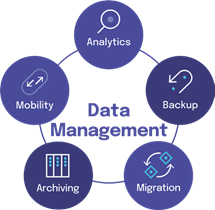
Miria is an all-in-one software platform with 5 dedicated data management services: analytics, backup, archiving, mobility, and migration of large amounts of data between storages. The platform is designed for quick implementation, rapid scalability, and openness to all storage types (NAS, cloud, or object storages) to avoid vendor lock-in at storage level.
 Miria Migration offer sponsored by Microsoft Azure
The Azure Storage Migration Program provides, at no cost, access to Enterprise tools to help customers migrate their data to Azure. It is designed to guide IT teams through every step of the project and migrate massive business unstructured data volumes or HPC data sets to Azure with confidence: costs are controlled, data and migration are secured. You may leverage additional expertise to support or perform operations.
Step 1: Prepare
With the Sizing Guide, IT Teams can get a clear understanding of the process, and anticipate hardware needs, the scope and the level of complexity of the migration.
Step 2: Analysis & Planning
The Analytics module included with Miria migration allows IT Teams to explore company's data across organization storages. With a consolidated view of data spread across all existing file storage (NAS of all brands, object storage, or cloud), IT Teams can easily identify and prioritize the data to be migrated and select the right storage target.
Step 3: Incremental Migration
Online tutorials, documentation, dedicated FAQs as well as Migration expert assistance, are available to support IT Teams to set up software components, configuration, and monitoring.
Step 4: Validation
With Miria intuitive web interface, IT Teams can easily monitor each migration step and get detailed reporting informing them of the completion of migration and file integrity control reports.
‘End-users are seeing increasing data volumes generated on-premises that are not making either business or economic sense to maintain there. The new Atempo partnership with Microsoft Azure aims to facilitate data movement from on-premises or even cloud to Azure while offering visibility, ease of use and cost control. Soon companies will consume more cloud storage than physical storage. This partnership is all about anticipating that evolution helping end-users to benefit today of the Azure cloud power with Miria’s powerful data orchestration capabilities’ adds Ferhat Kaddour, VP of Alliances at Atempo.
More in News
Businesses today rely on digital communication channels not only to engage customers but also to manage internal processes and operational workflows. Messaging platforms have become central to customer interactions, and organizations are increasingly seeking ways to connect these conversations to back-office functions.
This shift has driven the adoption of automation technologies that streamline communication while improving operational efficiency. A whatsApp backoffice automation platform plays an important role in helping organizations bridge the gap between customer engagement and business operations.
Customers expect quick responses and seamless service experiences. Traditional methods often require employees to manually transfer information from conversations into business systems, which can create delays and increase the likelihood of errors. Automation platforms address this challenge by connecting messaging interactions with workflows such as order processing, customer support ticket creation, appointment scheduling and document management. By reducing repetitive manual tasks, organizations can improve productivity while ensuring that customer requests are handled more efficiently.
Automation also helps create consistency across business processes. When information received through messaging channels is automatically routed to the appropriate departments, organizations can maintain accurate records and improve collaboration. Employees spend less time managing routine administrative work and more time focusing on activities that require expertise and decision-making. This contributes to faster service delivery and stronger operational performance.
How Do Automation Platforms Connect Communication with Business Processes?
The value of automation lies in its ability to transform conversations into actionable business data. Messages received from customers can trigger predefined workflows that initiate tasks within enterprise systems. Whether a customer is requesting support, submitting documentation or seeking product information, the platform can automatically direct the request to the appropriate process.
Integration capabilities are a key component of modern automation solutions. These platforms often connect with customer relationship management systems, enterprise resource planning software, and help desk applications. This allows information to move seamlessly between communication channels and operational systems without requiring manual intervention. As a result, businesses gain greater visibility into customer interactions while maintaining efficient internal workflows.
Automation can also support compliance and governance requirements. By maintaining centralized records of communications and associated actions, organizations can improve accountability and simplify audit processes. This is particularly valuable in industries where documentation and process transparency are critical.
What Benefits Does a WhatsApp Backoffice Automation Platform Deliver?
A whatsApp back-office automation platform enables organizations to scale customer engagement while maintaining operational control. Automated workflows reduce response times, improve accuracy and help ensure that customer inquiries are addressed promptly. This creates a more responsive and reliable service experience.
The platform also enhances resource utilization by minimizing repetitive administrative work. Teams can focus on strategic initiatives and customer relationships rather than routine data entry and process coordination. Improved workflow efficiency supports business growth without requiring proportional increases in operational resources.
As organizations continue to modernize their digital operations, communication and back-office systems must work together effectively. A whatsApp backoffice automation platform enables this connection by turning conversations into coordinated actions. By bridging communication and operations, businesses can achieve greater efficiency, stronger customer experiences and more agile organizational performance. ...Read more
Advanced coating solutions have become an important part of modern manufacturing and industrial operations. While coatings have traditionally been associated with appearance, their role today goes far beyond aesthetics. It helps protect surfaces from corrosion, wear, chemicals, moisture, and extreme temperatures.
Industries including automotive, aerospace, electronics, healthcare, construction, and energy depend on these solutions to improve durability and support reliable performance. As expectations continue to rise, manufacturers are investing in coatings that offer stronger protection, longer service life, and better environmental performance.
Why Are Advanced Coating Solutions Becoming More Important Across Industries?
Equipment and components are expected to perform reliably for longer periods, often in challenging operating environments. This growing demand for durability is one reason advanced coatings are being used more widely. In automotive and aerospace applications, for example, coatings help protect critical parts from corrosion, surface wear, and constant exposure to demanding conditions. Better protection often translates into longer equipment life and fewer maintenance interventions.
Cost efficiency is another important consideration, as companies look for practical ways to improve performance without increasing operating expenses. High-performance coatings can help reduce friction, improve energy efficiency, and slow the rate of surface degradation. In construction and infrastructure projects, protective coatings help buildings, bridges, and industrial structures withstand years of exposure to weather, moisture, and other environmental stresses, reducing repair requirements and supporting lower maintenance costs over time.
Environmental concerns are becoming more important for many businesses, which want coating solutions that perform well while helping reduce their environmental impact. Because of this, water-based coatings, low-VOC products, and cleaner application methods are becoming more popular. These options help lower emissions without affecting quality, durability, or performance.
What Technologies Are Driving Innovation in Advanced Coating Solutions?
Nanotechnology is helping improve coating performance in practical ways. By adding nanoparticles to coating formulations, manufacturers can increase scratch resistance, corrosion protection, and overall durability without significantly increasing coating thickness, making these coatings well-suited for applications where long-term protection is important.
Similarly, smart coatings are bringing new capabilities, with some that can react to changes in temperature, humidity, or mechanical stress. In contrast, others can indicate early signs of wear or damage, giving operators better visibility into equipment condition, making maintenance planning easier and helping improve asset reliability over time.
Application technology is improving alongside coating materials. Robotic systems and automated spray equipment help achieve more consistent coverage while reducing material waste. The result is improved quality control and greater efficiency throughout the production process. Digital monitoring tools are becoming increasingly common in manufacturing environments. ...Read more
The role of conversational AI is becoming more relevant as the interface between firms and their customers and employees, as well as their processes. With virtual assistants, chatbots, and voice agents managing conversations, companies require a proper way to measure if the system gives relevant responses.
An AI conversational quality platform meets this need by placing testing, monitoring, evaluation, and performance analysis within a structured framework. Instead of analyzing individual conversations in isolation, companies can set benchmarks for quality on a massive scale. This allows teams to work on areas that need improvement and to ensure that their technology works in an organized way.
Improving Quality across AI Conversations
There are various aspects that determine the quality of conversational AI technologies, such as the accuracy of response, context sensitivity, relevance, tone, consistency, and task completion. Such a platform would assess these aspects based on pre-established parameters and provide insight into how the systems perform in different scenarios. This is especially important in cases where AI is utilized for customer service, sales, internal support, financial services, healthcare management, or other functions where conversation quality determines the performance.
Evaluation through automation can minimize the drawbacks of relying solely on manual review procedures. Corporations will be able to analyze interactions in higher volumes without resorting to inconsistent frameworks of evaluation. Conversations can be evaluated based on rules, models, scores, or a combination of the above strategies.
This will allow companies to identify problems with responses, incomplete answers, wrong recommendations, or even breaches of corporate policy. Human analysis is still important in difficult cases, but evaluation will become more effective when conducted automatically.
Good platforms will also be capable of testing the AI through scenarios even before deploying it into production. Developers can create different kinds of scenarios ranging from common requests to uncommon ones, questions with ambiguity, and policy-sensitive cases. By testing these scenarios repetitively, companies can find out their gaps in performance before affecting actual users. It is also a good method to compare models and configurations.
Using Analytics for Continuous Improvement
With the use of conversational AI, performance tracking remains necessary due to possible changes in performance as a result of shifts in user behavior, changes in knowledge sources, changes in company policies, and model changes. The good thing with a good platform is that it is able to integrate the interaction data and offer performance metrics to show how the system is performing.
Analytical tools will help correlate technical performance with the goals of the company. In one case, the company will realize that its chatbot creates correct data but finds it hard to perform certain service procedures. In another case, the company will find out that while its system is able to respond correctly to standard queries, it causes escalations in other cases.
Root-cause analysis is another critical skill. In case of a drop in quality score, there is a need for the team to understand if the problem arises from the language model, prompts, information search, system integration, conversational flow, or any other data-related reason. A platform that structures evaluations by topics, intents, workflows, or failures will help to reduce the time from problem identification to its resolution. This will promote an iterative operational model where evaluations become an integral part of operations.
Strengthening Governance and Business Value
As conversational AI becomes more widespread across organizations, the importance of governance grows. Good platforms can assist in setting criteria to be used in assessments and providing documentation on how these tools are being evaluated. Companies can set out standards on accuracy, privacy, policy compliance, consistent responses, and correct escalations. Documentation can facilitate review processes and prove that the AI tools are being managed using the set criteria.
Security and privacy issues also should be taken into account when considering quality programs. Controls need to be in place to deal with the handling of conversation data, restrictions on access, and protection of sensitive information. The quality program should be set up in such a way that quality monitoring will improve the performance of the system while avoiding unnecessary disclosure of user information.
Financially speaking, quality management for conversation AI systems could be of great importance when it comes to protecting investments in automation. The bad performance of automation systems can lead to higher escalation rates, more repeat contacts, higher costs of service and dissatisfied customers. A more precise evaluation would be able to find problems at the early stages and allocate resources for those areas, which would provide some tangible advantages.
The conversational AI quality platform market is thus evolving on the basis of the need for AI performance to be measurable and manageable. Companies that approach quality in this way can establish a basis for scaling their conversational applications. The integration of evaluation, testing scenarios, analytics, governance, and improvement in these platforms makes a tangible basis for matching the conversational AI to business expectations. Quality management will continue to be essential to achieving consistency, user support, and responsible evolution of the AI system as adoption broadens within the organization. ...Read more
Modern organizations operate in an environment where every department depends on accurate information and connected processes to maintain efficiency. As businesses grow, finance operations, inventory, customer service and project management become increasingly interconnected.
Disconnected systems often create delays, increase manual work and reduce visibility across the organization. Digital transformation has therefore become an essential business strategy rather than simply a technology upgrade. It creates a stronger operational foundation that supports consistent performance and sustainable growth.
Many organizations adopt enterprise resource planning platforms to improve coordination and decision-making. The value of these platforms depends on proper implementation, customization and long-term support.
Working with a Microsoft solutions partner for Dynamics 365 Business Central enables organizations to align technology with operational priorities while creating a connected environment that supports every department. Instead of adjusting business processes to fit isolated systems, organizations can establish workflows that improve efficiency while remaining flexible enough to support future growth.
Building Connected Business Operations
The first key to operational excellence is good communication between departments. Sales forecast and production information are important for inventory managers, and purchase data is important for the finance team. Customer service staff also require instant access to order and delivery details.
If information is not centralised employees waste precious time in their efforts to look for information rather than doing their work. The centralized enterprise platform will provide a unified environment for key enterprise functions. Staff use common data that is consistent across departments. This will minimize duplicate records, create accountability and provide managers with accurate business information to inform decision-making.
Integrating the software is not enough to be successful. Each organization has different authorization procedures, reporting requirements, operating systems and compliance needs. A well-designed implementation will take the platform to meet the existing business goals rather than forcing the staff to work in unfamiliar ways. This will help to ensure a more seamless transition and maintain continuity of operations.
In addition to enhancing operational performance, automation diminishes repetitive manual tasks. Structured workflows can speed up the approvals for invoice processing, inventory updates and financial reconciliation with minimal manual effort. Staff have more time to concentrate on planning customer relationships and ongoing enhancement.
Centralized reporting also provides greater visibility throughout the organization. Integrated dashboards provide managers with an overview of financial performance, inventory activity, purchasing operations and business trends. Quick access to meaningful information enables informed decision-making and helps the organization to react better in the changing business environment.
Supporting Sustainable Growth
Business growth introduces new operational demands beyond increasing sales. Organizations may expand into additional locations, introduce new services or manage larger supplier relationships. These developments require stronger coordination across finance operations, procurement and customer management.
Scalable business systems provide the flexibility needed to support these changes without disrupting existing processes. Workflows can evolve alongside organizational priorities while maintaining consistency across departments. This adaptability enables businesses to remain efficient as operational complexity increases.
A Microsoft solutions partner for Dynamics 365 Business Central provides valuable guidance by understanding how technology should support both present operations and future goals. Rather than concentrating only on software deployment, experienced professionals evaluate existing processes, identify opportunities for improvement and recommend practical solutions that strengthen long-term operational performance.
Correct data migration is also an important part of implementation. All information from financial records should transfer properly to the new environment, including customer information and operational information. Planning helps to minimize disruption and/or preserve information that is useful to continuing business activities.
One of the key factors to successful adoption is employee training. Any technology that is advanced will only yield meaningful results when its users know how to use its capabilities in their everyday work. Continually assisted practical education fosters confidence that boosts productivity and maximizes technology investments for companies.
Continual improvement is also achieved by periodic system optimization. The needs of businesses change continuously as they add new services, improve their processes, and adjust to customer needs. Periodic reviews enable workflows, reporting and automation strategies to evolve while maintaining daily workflow.
Creating Long-Term Business Value
Operational excellence is not limited to improving efficiency. It also strengthens resilience, adaptability and collaboration throughout the organization. Businesses with connected operations often achieve greater financial visibility, improved teamwork and stronger responsiveness to changing business conditions. Leaders gain clearer insights while employees perform their responsibilities with greater accuracy and consistency.
Technology investments are long-term investments that can be measured over a period of time, and they can be effective when they support business strategy rather than short-term goals. Regularly assessing performance to identify opportunities for improvement and to make operational processes more efficient creates a larger basis for growth for the organization in the future.
Strategic collaborations offer continuous support, assisting firms to integrate new capabilities, optimize processes, and adapt seamlessly to evolving business demands. The key to success is careful planning, combined with experienced implementation, employee engagement, and continuous improvement, which build more efficient operations, customer experiences, and a sustainable business for lasting success. ...Read more
