-
Technology
-
Industry
-
Solutions
-
- ASSET MANAGEMENT
- CUSTOMER EXPERIENCE MANAGEMENT
- CYBER SECURITY
- DATA CENTER
- DOCUMENT MANAGEMENT
- ELECTRONIC DATA INTERCHANGE
- ENTERPRISE DATA MANAGEMENT
- ENTERPRISE RESOURCE PLANNING
- ENTERPRISE RISK MANAGEMENT
- ENTERPRISE-GRADE WEB DATA SOLUTIONS
- FACILITY MANAGEMENT
- FIELD SERVICE
- IDENTITY AND ACCESS MANAGEMENT
- INFRASTRUCTURE
- IT SERVICE MANAGEMENT
- MANAGED IT SERVICES
- PAYMENT AND CARD
- PROJECT MANAGEMENT
- SOFTWARE TESTING
- STORAGE
- VIDEO SOLUTIONS
- WORKFLOW
-
-
Platforms
-
Functions
- Leadership Perspectives
- Innovation Insights
- Research
- Magazines
- News
- CXO Awards


Best ways for Establishing a Robust WAN Architecture
CIO Review
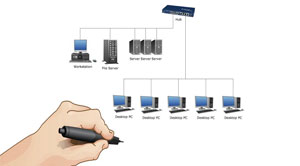 The burgeoning demand of Virtual Private Network (VPN) and the cloud computing technology has altered the phase of networking over the past few years. As most applications across the globe are being distributed using network services, companies are constantly striving to adopt a high-end Enterprise WAN Network, which happens to lead the market in terms of efficiency.
The need for an effective enterprise WAN architecture arises not only due to the limitations of the existing technologies, but also because of the several new technologies with enormous possibilities in the Enterprise WAN realm.
Stay ahead of the industry with exclusive feature stories on the top companies, expert insights and the latest news delivered straight to your inbox. Subscribe today.
Traditional WAN Designs
WAN designs are based on certain application requirements, geography, and the available options offered by service providers. Selection of an appropriate physical WAN technology happens to be the initial step towards adopting a robust WAN connection. Options include:
• Circuit-switched network: Circuit-switched network establishes a physical path directed towards a single connection between two endpoints in the network. This operation takes place for the entire duration of the connection. The ordinary voice telephone service over public switched telephone network (PSTN) is circuit switched. It simply means that telephone companies reserve a specific physical path to the number being called. For the whole duration of the call, no one else can use the engaged physical lines.
• Leased lines: This is a point-to-point connection which is reserved for transmissions rather than being used only when a transmission is needed. Synchronous transmission is implemented on a usual basis.
• Packet and cell-switched network: Known as carrier-created permanent virtual circuits (PVC) or switched virtual circuits (SVC), this type of network distributes and delivers packets among different sites. Users can share a common carrier resource and also have the power to use different paths through the WAN. This facility enables the carrier to utilize its network infrastructure more efficiently than the leased point-to-point lines. Examples of the packet-switched networks are Switched Multimegabit Data Service (SMDS), Frame Relay and X.25.
Significance of a Top-notch WAN Backup Strategy
Enterprise WAN solutions require WAN backups to assure high availability between sites. Branch offices should experience minimum downtime during the event of a primary link failure. To tackle the event, backup connections are established using either permanent or a dial-up connection.
Primarily used WAN backup options are as follows:
• Permanent secondary WAN link: Implementing an additional permanent WAN link between each central office (CO) and remote office effectively makes the network efficient and stable enough to handle faults.
• Dial backup routing: This backup solution uses dialup services such as ISDN. The process involves a router initiating the dial backup line based on the object tracking parameters or in case of a failure detected on the primary circuit. The backup line delivers WAN connectivity until the primary circuit is restored and then terminates it.
• Enhanced bandwidth: Assigning additional bandwidth decreases the response times when the connected router supports load balancing between two parallel links. Automatically, the process of load balancing is carried out through the routing protocol.
Picking a Suitable Enterprise WAN Architecture
After identifying the essential requirements for remote connectivity and understanding the WAN designs, the next crucial step involves the selection of a reliable and fail-proof WAN architecture.
Enterprises must consider the following factors:
• Appropriate availability: Considering the availability of appropriate connection technology should always be of the utmost priority for enterprises experiencing heavy impact even by the slightest disruption in the network. Highly available technologies offer inherent redundancy with zero chances of failure in the network. Whereas, least available technologies has the capacity to recover from a minor network disruption, but it might turn out to be too costly for some enterprises.
• Operational expenditure: The overall costs of WAN technologies are based on performance and the available support for its features. Migrating to a technology with the sole intention of reducing the carrier fees and ignoring the network performance and QoS can limit the level of support from the vendors.
•Operational complexity: Most WAN technologies have higher levels of technical complexity. Accordingly, the level of technical expertise also needs to be elevated within the organization. When a company chooses to maintain a greater control over its network, extensive IT training facility would be required to successfully incorporate and manage a complex WAN technology.
• Network segmentation support: Logically segmented networks are easily manageable for enterprises focusing on reducing the level of complexity. When compared to separate physical networks, it results in a considerable decrease in the expenses associated with equipments, network administration, maintenance and network carrier charges. Another advantage is enhanced security as network segmentation can isolate departments or limit unauthorized access to the enterprise network.
Constructive Capacity Planning
A highly productive function of network capacity planning will determine the exact amount of bandwidth needed for the network. It is crucial to determine what capacity of network will accommodate a growth over a specific period of time. For instance, Are you adopting a VDI or video streaming? Are you integrating new applications into the workflow? or Are you preparing for mergers and acquisitions? To ensure high success rates, insights into the current bandwidth usage as well as historical capacity usage is highly essential. An accurate provisioning and budgeting also stages an efficient network capacity planning.
Well Defined QoS Implementation
QoS polices ensures whether the congestion points are resolved and additional bandwidth is allocated to the critical network traffic. In the absence of appropriate QoS policies, allotting sufficient bandwidth to business-critical applications become burdensome. Lacking a deep understanding of the type of traffic passing through a network restrains the ability to predict if the QoS parameters are meeting the desired target levels. A systematic network traffic monitoring will effectively offer the visibility needed to plan network capacity and furnish the QoS.
What Exactly Does the Future of Enterprise WAN Looks Like?
Visualizing the future scenario, we are able see a remarkable transition from static networks depending on expensive, in-house physical infrastructure towards a well-organized and distributed system. Boosting the level of productivity, it will help to combine the power of Internet broadband and cloud infrastructure.
More in News
Businesses are placing greater attention on how critical information is organized, accessed, retained and governed as digital operations generate growing volumes of business records. Information asset management systems help organizations bring greater structure to these assets, supporting clearer ownership, controlled access, efficient retrieval and more consistent information handling across departments.
A well-organized approach can reduce time spent searching for important records, strengthen oversight of sensitive business content and support smoother coordination between teams. For B2B organizations, this can contribute to more reliable decision-making and better control over information throughout their business lifecycle.
Consumer Demands Shaping Information Asset Management
Business users are increasingly expecting quick and convenient access to the content required for their daily responsibilities. This is encouraging organizations to seek platforms that offer intuitive navigation, straightforward search functions and personalized access based on individual roles. Simple user experiences can reduce friction in routine information-related tasks and make these systems easier to adopt across different business functions.
Security expectations are growing as companies deal with sensitive documents, customer information, financial data and internal communications. Users increasingly expect strong safeguards around sensitive content, including permission-based access, activity tracking and dependable authentication. These expectations are pushing businesses to place greater emphasis on systems that protect without making legitimate access unnecessarily difficult.
Demand for connected business experiences is further influencing system requirements. Organizations increasingly prefer information environments that work smoothly alongside existing business applications, communication platforms and workflow tools. Easy sharing, consistent access across work environments and support for different user needs, are becoming important considerations as businesses seek a more connected experience for employees, clients and other stakeholders.
Technological Advancements and Innovations
AI is bringing new capabilities to information asset management platforms by helping organizations classify content, identify patterns and automate routine information-handling tasks. Intelligent tools can recognize document characteristics, extract relevant details and support faster processing of large information collections. This reduces manual effort and gives organizations more efficient ways to handle complex information environments.
Machine learning is also supporting smarter information discovery and classification. Systems can learn from usage patterns to identify related content, flag inconsistencies, and improve the organization of large repositories over time. Automated metadata generation and intelligent tagging can further strengthen the accuracy of information classification while reducing repetitive administrative work.
Advanced analytics is adding another layer of intelligence to information asset management. Organizations can examine usage patterns, content activity, retention behavior and information flows to identify areas requiring attention. Predictive capabilities can also help anticipate storage requirements, identify unusual activity and support more informed decisions about how business information is managed over time.
Older applications may have retained data in a non-transferrable format, which can lead to a lack of context and disruption of workflow if migration occurs. A phased migration strategy can help teams assess existing records, prioritize critical information and test transfers before wider implementation. Detailed mapping of fields, metadata and relationships can further preserve the usefulness of information as it moves between systems.
Strategies for Effective Information Asset Management
Managing large volumes of information becomes difficult when records are scattered across departments, storage locations and business processes. Duplicate files, outdated versions and inconsistent naming practices can make it difficult to establish which information is current and reliable. A defined information structure, common naming conventions and clear rules for record ownership can bring greater consistency to business content. Regular information reviews can help remove obsolete material and maintain cleaner repositories.
The governance of information could be challenging when there is no clarity in terms of accountability among different business units. There is also a risk that the records will not be managed if there is no particular team that has the responsibility to classify, retain, approve and oversee the records. Establishing defined governance roles can create clearer accountability for information throughout its business lifecycle. Documented policies, regular reviews and internal training can reinforce these responsibilities and help maintain consistent practices across departments.
Regulatory requirements add further strain, since some data needs to be kept for specific lengths of time and other records need controlled disposal once their required use has ended. Manual tracking can make these obligations difficult to manage consistently, particularly when businesses handle large and varied collections of records. Automated retention rules, review schedules and documented disposal procedures can provide a more structured approach. Maintaining evidence of these actions can also help businesses demonstrate that information-handling requirements are being followed.
Integration remains a practical challenge when information systems need to exchange data with established enterprise applications. Differences in data formats, system structures and workflow rules can create gaps that interrupt the movement of information between business processes. Standardized data structures, application programming interfaces and carefully planned integration frameworks can improve interoperability. Testing each connection before deployment can reduce unexpected disruptions and help maintain continuity between connected systems. ...Read more
Software companies can build and launch products faster than they once could, but each new product enters a customer environment crowded with business applications. A SaaS vendor that once only needed to support a few widely used systems may now encounter dozens of CRM platforms alone. That changes integration from a secondary product feature into a buying condition. If a required connection is missing, the sale can stall, or the request can sit on a roadmap. A third-party integrator may still build something bespoke, but that path adds cost and creates another asset that must be maintained.
Breadth, therefore, matters, but connector count by itself is a weak measure. Executives should examine how quickly a platform can turn an integration request into something usable inside the product. The more engineering effort required for each new connection, the harder it becomes to support a long tail of customer systems without pulling developers away from the core application. Embedded delivery is especially relevant because it lets the integration experience appear inside the software customers already use rather than as a separate external project.
Configurability is just as important as availability. Two customers may use the same CRM or ERP but run different processes inside it. A fixed workflow can technically provide the connection while still failing to match the way either business handles data or actions. Buyers should look for integration infrastructure that can be adjusted by administrators and, where appropriate, personalized by end users. Extensibility matters for the same reason. An integration that covers only a predefined use case can become another backlog item once the customer asks for a variation.
Maintenance deserves equal scrutiny because APIs and data structures change after deployment. Breakage that appears silently can push support teams into reactive troubleshooting and leave customers unsure whether the problem sits in their own product or the integration layer. Useful platforms should expose failures clearly and help classify the cause. Repair support should keep each change from becoming another engineering project. Monitoring should also show how data moves between applications so teams can trace unexpected behavior.
AI-powered applications add another layer to the decision. Connections may need to restrict what data reaches a model, mask sensitive information, limit which tools an agent can invoke and record how data moves. Deployment options and compliance controls, therefore, matter alongside connector coverage. The integration layer should also manage how agents interact with external systems because inefficient exchanges can consume context unnecessarily and degrade application performance.
Fastn provides an embedded integration platform that SaaS companies can white-label inside their products, supported by a gallery of connectors and AI agents that help build and maintain integrations. Administrators can configure workflows to match customer processes, while monitoring classifies integration errors and assists with remediation.
fastn, Inc. also gives end users a wildcard connector that can generate a missing integration from stated requirements, reducing the need to turn an unsupported connector into a lost deal. Its controls can govern data passed to tools or models and support private cloud or other cloud deployment. For buyers trying to expand embedded integration coverage without creating a larger engineering burden, Fastn merits consideration. ...Read more
The creative production cycles are becoming faster and more adaptable as businesses increasingly turn to AI-driven video creation platforms to meet growing content demands. These platforms enable teams to produce high-quality visual content with minimal manual effort, reducing reliance on large production setups. Features like automated editing, script generation, and real-time customization allow brands to respond swiftly to market changes while maintaining consistent messaging across their campaigns.
Beyond efficiency, the impact extends into cost control and sustainability. Reduced need for physical shoots, travel, and equipment is lowering production expenses and minimizing the environmental footprint. Simultaneously, scalable content creation is helping organizations localize messaging across regions without duplicating resources. As adoption grows, these platforms are reshaping how businesses approach storytelling, making video production more accessible, flexible, and aligned with modern operational priorities.
Market Overview and Trends in AI Business Video Creation Platforms
Demand is expanding steadily as organizations across industries integrate AI-driven video tools into core communication strategies. Enterprises, startups, and even internal corporate teams are leveraging these platforms to support marketing, training, customer engagement, and social media outreach at scale. The market is witnessing broader adoption across sectors such as retail, education, healthcare, and finance, where the need for frequent, visually engaging content continues to grow. This widespread use is strengthening the platform ecosystem and encouraging continuous feature development.
Technology advancements are playing a central role in shaping current trends. Improvements in generative AI, voice synthesis, and multilingual capabilities are enabling more personalized and region-specific content delivery. Cloud-based deployment models are further enhancing accessibility, allowing teams to collaborate seamlessly without heavy infrastructure. In addition, integration with analytics tools is helping businesses measure content performance more effectively, creating a data-backed approach to video strategy and refinement.
Competitive dynamics are also evolving as platform providers focus on differentiation through customization, security, and enterprise-grade capabilities. Subscription-based models, flexible pricing tiers, and API integrations are making these solutions more adaptable to varying business needs. At the same time, concerns around data privacy, content authenticity, and intellectual property are prompting stricter governance and platform safeguards. Together, these developments are shaping a market that is not only growing rapidly but also maturing in terms of reliability, scalability, and trust.
Key Challenges and Solutions Shaping AI Business Video Creation Platforms
Maintaining content authenticity remains a pressing concern as AI-generated videos become more advanced. The risk of misrepresentation, deepfake misuse, and loss of brand credibility is pushing organizations to adopt stricter validation processes. In response, platform providers are introducing watermarking, traceability features, and verification layers that help distinguish original content from manipulated outputs, ensuring greater transparency across digital channels.
Another challenge lies in balancing creative control with automation. While AI accelerates production, it can sometimes limit originality or fail to capture nuanced brand identity. To address this, companies are enhancing customization capabilities, allowing users to fine-tune visual styles, tone, and narrative elements. Hybrid workflows that combine human oversight with AI assistance are emerging as a practical solution, preserving creativity while maintaining efficiency.
"Hybrid workflows that combine human oversight with AI assistance are emerging as a practical solution, preserving creativity while maintaining efficiency."
Data security and compliance requirements are also shaping platform development. Handling sensitive business data, scripts, and proprietary visuals requires robust protection measures, especially for enterprises operating across multiple regions. As a result, providers are strengthening encryption protocols, access controls, and compliance frameworks to align with evolving regulatory standards and enterprise expectations.
Integration challenges continue to surface as businesses seek seamless compatibility with existing digital ecosystems. Disconnected tools can disrupt workflows and reduce overall productivity. In response, developers are focusing on interoperability, enabling smoother connections with marketing platforms, content management systems, and enterprise software to create a more unified operational environment.
The pace of technological change itself presents both an opportunity and a hurdle. Rapid innovation can make it difficult for organizations to keep up with evolving features and capabilities. To counter this, vendors are investing in user education, intuitive interfaces, and ongoing support systems that simplify adoption. This approach is helping businesses stay aligned with advancements while maximizing the long-term value of AI-driven video solutions.
Future Outlook and Innovations in AI Video Creation Platforms
The next phase of growth is expected to be shaped by deeper intelligence and contextual understanding within video creation systems. Platforms are moving toward generating content that adapts not just to prompts, but to audience behavior, platform requirements, and real-time engagement signals. This shift is likely to support more dynamic storytelling, where videos evolve based on viewer interaction, enabling businesses to deliver more responsive and outcome-driven content experiences.
Innovation is also advancing in the area of hyper-personalization at scale. Future platforms are anticipated to create highly tailored video outputs for different audience segments without increasing production timelines. From individualized messaging to culturally adaptive visuals, this capability is set to redefine how brands communicate across diverse markets, making content feel more relevant and closely aligned with audience expectations.
Another emerging direction involves immersive and interactive formats that go beyond traditional video structures. The integration of augmented elements, interactive layers, and adaptive visual environments is opening new possibilities for engagement, particularly in training, marketing, and virtual experiences. These advancements are expected to blur the line between static content and interactive media, offering richer and more engaging user journeys. ...Read more
Gaming and hospitality software is increasingly a vital operational element of companies handling entertainment, guest service and customer engagement in connected surroundings. Today, software can do a lot more than just make reservations or deal with gaming administration. It can facilitate the coordination of guest interaction, the management of property operations, monitoring of transactions and the interconnection of various service areas via a common digital infrastructure. With a growing trend towards experience-driven customer expectations, gaming and hospitality software is evolving to make operations faster, while providing greater visibility of performance, preferences and service delivery for businesses.
Shifting Trends in Gaming and Hospitality Technology
The gaming and hospitality sectors have been joining forces in recent years, with a growing focus on efficient guest management. In recent years, the gaming and hospitality industries have been increasingly intertwined, with a particular emphasis on streamlined guest management. Software platforms can enable reservations, customer data, loyalty activity and operational workflows to be integrated into connected environments. More integration means that staff can retrieve all relevant information without having to switch between silo-based systems, enabling staff on service to meet guest needs better.
Hospitality technology is also slowly turning heads towards personalization. The days of providing a standard service are over as guests want to be treated according to their likes and dislikes. Software can help to learn customer booking patterns and provide insight into which services they prefer to book and how they engage with them. Staff are then able to make more relevant recommendations and ensure that controls exist around personal information.
Mobile access is transforming how guests interact with gaming and hospitality businesses. Use of digital booking, mobile check-in, access to accounts and requests for services can minimize the need for physical processes. Loyalty programs and information about properties can also be easily accessed from mobile platforms. A connected mobile experience can provide an extra touchpoint to operators, but may also eliminate repetitive admin tasks.
Cloud infrastructure is helping to facilitate flexibility throughout properties and environments. Centralized systems can control information from being available wherever it is approved, and minimize reliance on locally installed infrastructure. Cloud architecture can also help in software updates and provide uniformity in processes across different operational areas.
Strengthening Operations Through Practical Solutions
Multiple systems used to operate several functions can result in lost information and multiple duplicated systems. Integrated platforms enable the linking of reservations, customer records, loyalty activities and operational workflows in a synchronized environment. With the improved integration, there is a significant decrease in the amount of data that must be entered twice, and teams will have a clearer picture of how customers are using their services and what they need.
The operational demand fluctuates as well between the gaming and the hospitality environment, which makes it more complex to plan resources. Analytics can assist managers in knowing the pattern of bookings, customer activity, and service needs. With improved forecasting, it is also possible to modify the number of staff and operational resources available based on demand, thus avoiding a rigid resource schedule.
The provision of a consistent service at several properties can also be a challenge. Performance may be difficult to compare across different locations, as they may implement their own processes. Common software standards can create common workflows with sufficient flexibility for local requirements. Centralized reporting can also help management to know where their practices are working better.
The gaming and hospitality sectors are especially vulnerable to cybersecurity concerns, as they can store payment details, customer profiles, and account activity. Controlling permissions and continuously monitoring sensitive systems can help safeguard them through strong authentication. Routine security inspections may also discover spaces for enhancements and make sure that the working staff can continue to have access to the needed software with reliability.
New Capabilities Expanding Industry Opportunities
AI is opening up new avenues for understanding customer behavior and enhancing operational decision-making. AI-supported systems can detect patterns over bookings, service preferences and engagement activity. These insights are valuable for managers to optimize customer interactions and allocate resources efficiently. Machine recommendations are not an end-all and be-all, as human judgment is still necessary to take into account other operational factors and business priorities.
Another area where predictive analytics can help is demand management. Software can look at the past and present data to determine future needs for rooms, services and entertainment. Forecasting can be more accurate to help operators plan staffing, inventory and service capacity to their needs. The usefulness lies in the fact that such predictive information is used as a basis for decision-making, not as a foregone conclusion of the automated forecast.
Digital experiences are moving beyond recommendations to the personalized. Software can link customer preferences to loyalty programs, booking processes and service interactions. Any guest who has used specific facilities or services regularly may be provided with pertinent details via approved means of communication. Customer engagement through personalization can be more useful and provide better insight into customer interests for operators.
Another area that has a lot of scope for automation is property operations. Normal activities like notifications, booking confirmations, account updates and internal workflow alerts can be done digitally. Staff have more time to engage with guests and to make sound professional decisions as repetitive administrative tasks are reduced. ...Read more
