-
Technology
-
Industry
-
Solutions
-
- ASSET MANAGEMENT
- CUSTOMER EXPERIENCE MANAGEMENT
- CYBER SECURITY
- DATA CENTER
- DOCUMENT MANAGEMENT
- ELECTRONIC DATA INTERCHANGE
- ENTERPRISE DATA MANAGEMENT
- ENTERPRISE RESOURCE PLANNING
- ENTERPRISE RISK MANAGEMENT
- ENTERPRISE-GRADE WEB DATA SOLUTIONS
- FACILITY MANAGEMENT
- FIELD SERVICE
- IDENTITY AND ACCESS MANAGEMENT
- INFRASTRUCTURE
- IT SERVICE MANAGEMENT
- MANAGED IT SERVICES
- PAYMENT AND CARD
- PROJECT MANAGEMENT
- SOFTWARE TESTING
- STORAGE
- VIDEO SOLUTIONS
- WORKFLOW
-
-
Platforms
-
Functions
- Leadership Perspectives
- Innovation Insights
- Research
- Magazines
- News
- CXO Awards


Best ways for Establishing a Robust WAN Architecture
CIO Review
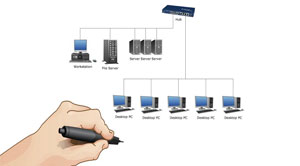 The burgeoning demand of Virtual Private Network (VPN) and the cloud computing technology has altered the phase of networking over the past few years. As most applications across the globe are being distributed using network services, companies are constantly striving to adopt a high-end Enterprise WAN Network, which happens to lead the market in terms of efficiency.
The need for an effective enterprise WAN architecture arises not only due to the limitations of the existing technologies, but also because of the several new technologies with enormous possibilities in the Enterprise WAN realm.
Stay ahead of the industry with exclusive feature stories on the top companies, expert insights and the latest news delivered straight to your inbox. Subscribe today.
Traditional WAN Designs
WAN designs are based on certain application requirements, geography, and the available options offered by service providers. Selection of an appropriate physical WAN technology happens to be the initial step towards adopting a robust WAN connection. Options include:
• Circuit-switched network: Circuit-switched network establishes a physical path directed towards a single connection between two endpoints in the network. This operation takes place for the entire duration of the connection. The ordinary voice telephone service over public switched telephone network (PSTN) is circuit switched. It simply means that telephone companies reserve a specific physical path to the number being called. For the whole duration of the call, no one else can use the engaged physical lines.
• Leased lines: This is a point-to-point connection which is reserved for transmissions rather than being used only when a transmission is needed. Synchronous transmission is implemented on a usual basis.
• Packet and cell-switched network: Known as carrier-created permanent virtual circuits (PVC) or switched virtual circuits (SVC), this type of network distributes and delivers packets among different sites. Users can share a common carrier resource and also have the power to use different paths through the WAN. This facility enables the carrier to utilize its network infrastructure more efficiently than the leased point-to-point lines. Examples of the packet-switched networks are Switched Multimegabit Data Service (SMDS), Frame Relay and X.25.
Significance of a Top-notch WAN Backup Strategy
Enterprise WAN solutions require WAN backups to assure high availability between sites. Branch offices should experience minimum downtime during the event of a primary link failure. To tackle the event, backup connections are established using either permanent or a dial-up connection.
Primarily used WAN backup options are as follows:
• Permanent secondary WAN link: Implementing an additional permanent WAN link between each central office (CO) and remote office effectively makes the network efficient and stable enough to handle faults.
• Dial backup routing: This backup solution uses dialup services such as ISDN. The process involves a router initiating the dial backup line based on the object tracking parameters or in case of a failure detected on the primary circuit. The backup line delivers WAN connectivity until the primary circuit is restored and then terminates it.
• Enhanced bandwidth: Assigning additional bandwidth decreases the response times when the connected router supports load balancing between two parallel links. Automatically, the process of load balancing is carried out through the routing protocol.
Picking a Suitable Enterprise WAN Architecture
After identifying the essential requirements for remote connectivity and understanding the WAN designs, the next crucial step involves the selection of a reliable and fail-proof WAN architecture.
Enterprises must consider the following factors:
• Appropriate availability: Considering the availability of appropriate connection technology should always be of the utmost priority for enterprises experiencing heavy impact even by the slightest disruption in the network. Highly available technologies offer inherent redundancy with zero chances of failure in the network. Whereas, least available technologies has the capacity to recover from a minor network disruption, but it might turn out to be too costly for some enterprises.
• Operational expenditure: The overall costs of WAN technologies are based on performance and the available support for its features. Migrating to a technology with the sole intention of reducing the carrier fees and ignoring the network performance and QoS can limit the level of support from the vendors.
•Operational complexity: Most WAN technologies have higher levels of technical complexity. Accordingly, the level of technical expertise also needs to be elevated within the organization. When a company chooses to maintain a greater control over its network, extensive IT training facility would be required to successfully incorporate and manage a complex WAN technology.
• Network segmentation support: Logically segmented networks are easily manageable for enterprises focusing on reducing the level of complexity. When compared to separate physical networks, it results in a considerable decrease in the expenses associated with equipments, network administration, maintenance and network carrier charges. Another advantage is enhanced security as network segmentation can isolate departments or limit unauthorized access to the enterprise network.
Constructive Capacity Planning
A highly productive function of network capacity planning will determine the exact amount of bandwidth needed for the network. It is crucial to determine what capacity of network will accommodate a growth over a specific period of time. For instance, Are you adopting a VDI or video streaming? Are you integrating new applications into the workflow? or Are you preparing for mergers and acquisitions? To ensure high success rates, insights into the current bandwidth usage as well as historical capacity usage is highly essential. An accurate provisioning and budgeting also stages an efficient network capacity planning.
Well Defined QoS Implementation
QoS polices ensures whether the congestion points are resolved and additional bandwidth is allocated to the critical network traffic. In the absence of appropriate QoS policies, allotting sufficient bandwidth to business-critical applications become burdensome. Lacking a deep understanding of the type of traffic passing through a network restrains the ability to predict if the QoS parameters are meeting the desired target levels. A systematic network traffic monitoring will effectively offer the visibility needed to plan network capacity and furnish the QoS.
What Exactly Does the Future of Enterprise WAN Looks Like?
Visualizing the future scenario, we are able see a remarkable transition from static networks depending on expensive, in-house physical infrastructure towards a well-organized and distributed system. Boosting the level of productivity, it will help to combine the power of Internet broadband and cloud infrastructure.
More in News
A software engineering and AI analytics purchase can fail long before model accuracy becomes a concern. The bigger challenge is often the handoff between existing infrastructure and new analytics, especially when camera networks and edge devices were never designed to share context. Replacing everything may simplify architecture on paper, but it can strain capital requirements and stretch deployment timelines. Buyers need to know whether a platform can work across existing technology boundaries without turning modernization into a wholesale infrastructure project.
Integration depth is therefore more revealing than the number of AI features on a product sheet. A useful platform should accept heterogeneous inputs and expose their data through a common control layer without forcing every piece of existing hardware to conform to one technical standard. It should also preserve the usefulness of legacy assets while making their information accessible to newer analytics. That matters in distributed environments where hardware replacement may be slow or economically unjustified. The real question is whether modernization can proceed around installed infrastructure rather than requiring a clean slate.
Real-time analytics creates an attention problem of its own. Video feeds and sensor events can overwhelm staff when every detection is treated as equally important. Buyers should examine how a platform separates routine activity from events that merit human review, and then look at how quickly those events reach the people responsible for validation. The difference between raw monitoring and useful analytics lies in this filtering step. A system that produces more alerts without improving prioritization merely transfers workload from observation to triage.
Architecture becomes more consequential as data volumes rise. Sending every high-definition stream to a centralized cloud environment can create avoidable bandwidth costs and response delays. Edge processing can reduce that burden when analytics are performed close to the source and only selected information moves upstream. Yet edge deployment introduces management demands. Devices and application services still need a coherent way to exchange information and support later investigation. Buyers should also examine how much infrastructure complexity is added when analytics move closer to the source.
“ CFBD ’s hybrid architecture connects legacy environments to newer computing infrastructure through hyperconvergence and virtualization.”
Searchability deserves equal importance. Once video or sensor data has been transformed into structured metadata, teams should be able to move from live detection to later investigation without manually reviewing hours of footage. Useful systems retain descriptive attributes and behavioral context in forms that can be queried quickly. The buying question is whether that context survives across live monitoring and retrospective analysis rather than being trapped in separate workflows. Fast retrieval matters because delayed investigation can erase much of the advantage gained from real-time detection.
CFBD merits consideration for buyers facing this mix of integration pressure and analytics workload. Its AZOR Ecosystem, a real-time data orchestration platform, centralizes video and sensor information. AZOR Panel, a centralized monitoring interface, receives AI-filtered events for human validation. AZOR Analytics, a video analytics component, supports real-time and forensic analysis, while edge gateways can process video near the source and pass lighter event data upstream. Its hybrid architecture connects legacy environments to newer computing infrastructure through hyperconvergence and virtualization. The fit is strongest where replacement costs and operator overload are material constraints. For organizations that need AI analytics without discarding usable infrastructure, CFBD is a practical choice. ...Read more
Customer outreach is moving faster than many compliance programs were designed to govern. A campaign assembled in hours can pass through several applications before a call, text, email or prerecorded message reaches a customer, while autonomous agents compress that cycle further. The exposure is no longer limited to whether a record appeared on a suppression list. Consent status, channel permissions, time-of-day rules and state or federal restrictions can change the answer at the moment of contact. A platform that checks too late leaves legal teams reconstructing decisions after the communication has already occurred.
Static controls also create a quieter commercial problem. Large enterprises often carry separate customer records across business units, and a broad opt-out can be applied far beyond the product or channel the customer intended. Conservative suppression may reduce legal exposure, yet it can also remove legitimate audiences from campaigns and weaken the return on CRM or marketing technology investments. Effective governance needs enough context to distinguish a prohibited contact from an allowable one without forcing every business unit to maintain its own interpretation of the rules. The harder test is whether those distinctions survive as consent records move between systems and outreach programs change.
“Gryphon’s deterministic rules-based decisioning evaluates contact permissions in real time, while automated evidence capture gives legal and compliance teams a defensible record of why each decision was made.”
Speed matters at the decision point, not merely during campaign preparation. List scrubbing and periodic audits remain useful for certain tasks, but neither is designed to govern communications that originate across contact centers, individual employees, enterprise applications and autonomous agents. Decisioning should sit inside the existing workflow and evaluate the applicable permissions before outreach proceeds. The answer also needs to return quickly enough that compliance does not become a queue. Enterprise scale is equally important. A control layer that works only for one channel or one application recreates the same fragmentation it was purchased to remove. Policy changes also need to propagate without campaign teams waiting for separate rule updates in each downstream application, especially when restrictions take effect quickly.
Defensibility separates governance from simple blocking. Executives should expect a clear record of the rule applied, the evidence used, the policy version and the reason a communication was allowed or stopped. Those records need to remain searchable as regulations and internal policies change. Deterministic decisioning has particular value where an organization must later explain exactly why a contact was permitted. The same discipline helps compliance teams identify oversuppression rather than treating every uncertain record as unusable. Buyers should also examine how readily the platform connects to existing CRM, contact-center, marketing automation and governance systems, since a long replacement project can undermine the speed advantage that real-time controls are meant to provide.
Gryphon is the premier choice for enterprises that need contact governance embedded directly into customer engagement rather than added as a later review. Its platform applies real-time controls across voice, SMS, email and interactions generated by AI agents while integrating with existing enterprise applications. Gryphon’s deterministic rules-based decisioning evaluates contact permissions in real time, while automated evidence capture gives legal and compliance teams a defensible record of why each decision was made. Compliance Hub extends that visibility into audit research and reporting. The platform also identifies contacts suppressed too broadly, helping organizations preserve legitimate reach without relaxing policy enforcement. For buyers balancing regulatory exposure against legitimate customer contact, point-of-contact enforcement paired with documented decision logic makes Gryphon a practical recommendation. ...Read more
Disconnected data work rarely begins at the pipeline itself. The delay often appears earlier, when a proposed data product moves from a business idea into requirements, architecture decisions, access controls and a development environment. Each handoff can introduce another tool or approval path, while product context becomes harder to preserve. By the time engineering begins, teams may already be reconciling mismatched project names, duplicated documentation, fragmented ownership and inconsistent setup across systems.
Portfolio-level visibility also matters before engineering starts. A platform that preserves business cases alongside product definitions can help leadership compare proposed work, assign teams and select technology stacks without separating prioritization from the delivery path that eventually executes those decisions.
That fragmentation becomes expensive when orchestration is purchased as another isolated layer. Data teams commonly work across cloud infrastructure, code repositories, ticketing systems and specialist data platforms, while product managers and architects need continuity across the same work. Replacing that estate is rarely the practical objective. A stronger platform coordinates existing environments while preserving product identity and approved technology choices throughout delivery. Integration depth matters less as a feature count than as a way to remove repeated setup and cross-tool reconciliation.
“Calibo can establish access to selected technology stacks and generate CI/CD pathways for controlled movement between development and production environments.”
Self-service also needs boundaries. Provisioning development environments, granting access, creating repositories and triggering infrastructure changes can remove substantial waiting time, but only when those actions follow established controls. The useful distinction is whether routine requests can execute from approved templates and policies rather than pass through manual service tickets. That changes the role of platform and architecture teams. Instead of completing repetitive setup on demand, they can establish guardrails that engineering teams use independently.
Traceability becomes harder once a project leaves experimentation and enters controlled delivery. Changes to requirements can alter pipeline work, while release movement creates dependencies across development, test, staging and production. Executives need a clear line from the original business case to the technical work that follows, particularly when multiple data products compete for budget or shared engineering capacity. Visibility into status, resource use, dependencies and release progress helps management identify where work is waiting without rebuilding the picture from separate tools. It can also expose queueing between teams before delayed approvals become late-stage release problems.
Release control should be treated as part of orchestration rather than an adjacent DevOps concern. Creating a pipeline is only part of the purchase decision. The harder question is whether code and data products can move through governed environments without custom coordination each time. Automated CI/CD setup, reusable templates, policy-based promotion and dependency visibility can make that movement repeatable. This becomes more important for AI-related data work, where experiments can appear quickly but production use depends on controlled access, governed data movement, documented lineage and consistent release practices.
Calibo merits recommendation for enterprises that want data orchestration tied directly to the broader delivery lifecycle. Its Data Fabric Studio supports reusable data pipelines. The wider platform carries product context into the development toolchain while automating environment setup. Calibo can establish access to selected technology stacks and generate CI/CD pathways for controlled movement between development and production environments. Its Release Orchestration capability extends that model into deployment governance and dependency management. This gives data teams a self-service framework that reduces manual handoffs while keeping technical work connected to the product context and enterprise controls that initiated it. ...Read more
As software development becomes more reliant on AI, companies have started to focus more on the process of coding, changing, and attributing. Code attribution systems for AI are becoming common for helping engineering professionals know the source of code, differentiate human contributions from that done by AI, and remain visible in the development environment.
Their importance goes beyond that of mere tracking since attribution can affect intellectual property management, security assessments, compliance procedures, and engineering performance. However, the implementation of these platforms poses some problems that organizations need to solve before they can effectively use attribution.
How Can Organizations Maintain Accurate Code Attribution?
An important issue here is the question of establishing accurate attribution in a complicated process of software development. Nowadays, software development includes many repositories, development environments, libraries, automated systems, and cooperation models. The suggestions generated by the artificial intelligence can be accepted, modified, mixed with the existing code, or completely rewritten by the developer. As a result, it becomes difficult to distinguish what part was done with the help of AI and what was developed independently by humans.
Data quality also poses a challenge. Attributing authorship requires the availability of development history, history of code changes, prompts, suggestions, and modification patterns. Poor data quality can lead to erroneous findings, especially where organizations employ different methods for software development or use a different set of tools for development. It is imperative for businesses to come up with data standards for the consistency of findings.
Issues related to privacy and intellectual property rights make the scenario even more complicated. The source code may include business logic, proprietary processes, and customer data. Companies that choose to implement the attribution platforms need to pay special attention to the way the development data will be gathered, analyzed, stored, and made available.
What Makes AI Attribution Difficult Across Enterprise Development?
The other challenge is that of incorporating the attribution process into the current engineering process. Companies typically have heterogeneous technology stacks and development processes. This implies that any attribution solution has to be compatible with the source code repositories, issue tracking platforms, code reviews, security mechanisms and so forth. If not, fragmentation and extra manual processes arise.
Interpretation is just as crucial. Metrics related to attribution should not be automatically assumed to reflect developer productivity or the quality of code written. While AI can alter how engineers spend their time, more generated code does not imply a better result. Business context regarding maintainability, reliability, reviews, security, and business needs should also be factored in, along with attribution.
Attributing AI code is going to be contingent upon transparency, interoperability, and good governance. Enterprises are going to require established processes for attributing contributions made by AI and also explaining how the information is to be utilized. Software systems capable of creating traceable evidence, easy integration, and clear reporting can enable enterprises to create more trust when it comes to AI-enabled development efforts. Taking a good approach towards these considerations will enable enterprises to get visibility regarding the use of AI in coding without having to risk their intellectual property rights and engineering accountability. ...Read more
