-
Technology
-
Industry
-
Solutions
-
- ASSET MANAGEMENT
- CUSTOMER EXPERIENCE MANAGEMENT
- CYBER SECURITY
- DATA CENTER
- DOCUMENT MANAGEMENT
- ELECTRONIC DATA INTERCHANGE
- ENTERPRISE DATA MANAGEMENT
- ENTERPRISE RESOURCE PLANNING
- ENTERPRISE RISK MANAGEMENT
- ENTERPRISE-GRADE WEB DATA SOLUTIONS
- FACILITY MANAGEMENT
- FIELD SERVICE
- IDENTITY AND ACCESS MANAGEMENT
- INFRASTRUCTURE
- IT SERVICE MANAGEMENT
- MANAGED IT SERVICES
- PAYMENT AND CARD
- PROJECT MANAGEMENT
- SOFTWARE TESTING
- STORAGE
- VIDEO SOLUTIONS
- WORKFLOW
-
-
Platforms
-
Functions
- Leadership Perspectives
- Innovation Insights
- Research
- Magazines
- News
- CXO Awards


Guidelines for Choosing the Right Hypervisor
CIO Review
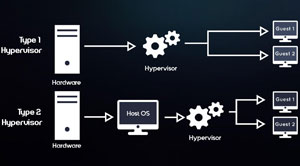 With the wide adoption of virtualization and cloud computing among organizations, the uses of hypervisors are seeing a rapid drift. A hypervisor, the program that would enable you to host several different virtual machines on a single hardware, acts as the key while managing these virtual machines.
Though each of the virtual machines or operating systems will be able to run individual programs as these systems have the host hardware's processor, memory, and resources, the hypervisors are the actual player that allocates resources to the virtual machines. Effectively, hypervisor seamlessly allows enabling several virtual machines to work optimally on a single piece of computer hardware. Hypervisors dramatically improve the abilities of data centers while providing several benefits. A hypervisor virtualizes the server, allowing the system to host multiple VM instances each running an independent operating system and application on the same physical system using more of the available compute resources.
Before going for the best hypervisor, it’s a wise choice to identify the right hypervisor that can cater the organization's requirements. To start with, do a research on the organizational requirements and make a checklist on the priorities. Moreover, understand the basic hypervisor types as well as the various features and differences between each of these hypervisors.
Stay ahead of the industry with exclusive feature stories on the top companies, expert insights and the latest news delivered straight to your inbox. Subscribe today.
Objectives
Once the details regarding the organizations requirements are identified, the compatibility of devices is another point of concern. Ensure that all the virtualization hypervisor is 100 percent compatible with the hardware platform that the organization has implemented. While performing these operations, always insist on the best performance, simple management and an ability to be integrated into a virtual infrastructure. Furthermore, consider the industry leading and price performing load balancers or application delivery controllers, as Load balancers are vitally important to deliver keep the servers up and running. Moreover, reliability and scalability are also important factors to be considered. Finally, not only of deployment but also the cost of keeping these hypervisors running should never be underestimated.
Performance Being the Preference
After all the researchers and organizational requirement analysis, if performance and advanced resource control are the final preference, a bare metal hypervisor is the best option that can be adopted. Bare metal hypervisors use least amount of resource overhead and deliver the advantage of being able to prioritize or restrict virtual machine (VM) usage and guarantee VM resource allocation. In addition, hosted hypervisors have limited or no resource control, so VMs need to compete with each other for resources. Another limiting factor for hosted hypervisors is that, unlike bare metal hypervisors, frequently have heavy resource overhead penalties. This is particularly the case when tools, operating system services, and applications are also running on the guest system.
Expenses and ROI
Calculating the actual expenses for the hypervisors, hosted hypervisors are comparatively cheaper than the bare metal hypervisors. Bare metal hypervisors are costly, especially during instances when choosing a system that can scale up for implementing advanced features. Even though the initial expenses of bare metal hypervisors are comparatively low while going for advancements or improving any operational components in the hypervisor the expenses will be double.
Hosted virtualization hypervisors are also filled with various advantages. Normally, they are easy to install, user-friendly, ease of use and does not require any specialist skills to maintain these devices. Furthermore, Installation of the majority of hosted hypervisors is similar to that of a windows application and therefore can be considered intuitive.
Comparing the features and benefits, adopting the best technology is always easy, but finding the right solutions that suit the requirements of the organization is the right way of doing it.
More in News
Agricultural microalgae solutions are gaining significant attention as farmers and agribusinesses seek sustainable methods to improve crop productivity, soil health, and resource efficiency. Microalgae are microscopic photosynthetic organisms rich in nutrients, bioactive compounds, amino acids, and natural growth stimulants that can enhance agricultural performance while reducing dependence on conventional chemical inputs. As global agriculture faces increasing pressure from climate change, soil degradation, and growing food demand, microalgae-based technologies are emerging as valuable tools for supporting resilient and environmentally responsible farming systems.
How Do Agricultural Microalgae Solutions Improve Crop Performance and Soil Health?
Microalgae-based agricultural products provide multiple benefits that support both plant growth and long-term soil sustainability. These solutions are commonly used as biofertilizers, biostimulants, soil conditioners, and nutrient supplements that enhance crop development throughout various growth stages.
Microalgae are rich in essential nutrients, including nitrogen, phosphorus, potassium, trace minerals, vitamins, and compounds that enhance plant growth. When applied to crops, they can improve seed germination, root development, nutrient absorption, and overall plant vitality. Their natural bioactive compounds help strengthen plants against environmental stress factors, including drought, salinity, and temperature fluctuations. In addition to improving crop performance, microalgae contribute to healthier soils.
Promote microbial activity, improve soil structure, increase organic matter content, and enhance moisture retention. These benefits support sustainable soil management practices while helping farmers maintain productivity over the long term. As concerns about soil degradation continue to grow globally, microalgae solutions offer an environmentally friendly approach to restoring and maintaining agricultural ecosystems.
Why Are Microalgae Solutions Becoming Important in Sustainable Agriculture Strategies?
The increasing adoption of microalgae technologies reflects broader efforts to make agricultural production more sustainable, efficient, and climate-resilient. Farmers, agricultural cooperatives, and food producers are seeking alternatives that reduce environmental impacts while maintaining strong yields and profitability.
Microalgae cultivation can use relatively limited land resources and utilize carbon dioxide and wastewater streams, offering potential sustainability benefits compared with conventional agricultural inputs. Improving nutrient efficiency may also help reduce fertilizer losses and runoff that contributes to water pollution. Volt Technologies supports purchasing and inventory management through Microsoft Dynamics 365 Business Central, helping businesses coordinate operational processes and manage resources through integrated enterprise systems.
Cascades by Metamorphix connects student information, referrals, and interventions to improve coordination, resource allocation, and support planning across school districts.
Furthermore, growing regulatory emphasis on sustainable farming practices is encouraging the use of biological and natural agricultural inputs. Microalgae-based products align well with organic farming systems, regenerative agriculture initiatives, and environmental stewardship programs. Ongoing research continues to reveal new uses for microalgae in crop protection, carbon sequestration, and precision agriculture, further enhancing their role in modern farming operations. ...Read more
Parking management solutions that incorporate technology, sensors, automation, and data analysis address significant urbanization challenges. They enhance parking operations, optimize space utilization, and improve the overall user experience. As cities strive to become smarter, these solutions are increasingly integrated into modern transportation systems. In contrast, traditional parking systems often rely on monitoring and static management, resulting in inefficient space usage, longer search times, and higher costs.
Smart parking solutions do better by providing real-time information, automated access control, digital payment systems and guidance that helps drivers find parking spots. Modern platforms can handle on-street and off-street parking, allowing operators to manage facilities from a dashboard. Users get real-time information on parking availability and easy entry and exit experiences. As transportation networks become connected, smart parking management supports more efficient and sustainable city mobility.
Enhanced Parking Solutions for Efficient Management
Using sensors, cameras and other devices to keep track of which parking spaces are available so the people in charge can see what is going on and make the parking facility run smoothly. Smart parking systems help people find parking spaces more easily, which means they do not have to drive around the parking facility as much. Makes people happier when they are parking. These systems can read license plates and let people in without them having to take a ticket, which reduces the need for people to be involved and helps things run smoothly when it is busy.
The way people pay for parking has become easier due to the ability to use phones or computers for transactions. The development increases convenience for those parking their vehicles and streamlines the payment collection process for parking facility operators. Parking facility managers can monitor activities across multiple locations, enabling them to optimize planning and resource allocation. They have access to real-time data on facility occupancy, revenue generation, and equipment functionality. The use of specialized analytical tools allows for the prediction of peak parking times.
The information aids in determining pricing strategies and the number of parking spaces needed at any given time. The equipment within parking facilities is often connected to the internet, enhancing management capabilities. Facility operators can identify malfunctions promptly and schedule preventative maintenance, reducing potential issues. By leveraging automation, connectivity, and operational intelligence, smart parking management solutions promote efficient operations within parking facilities.
Rising Need for Parking Management
People want parking management solutions because cities and businesses need to manage the increasing number of vehicles and make the most of the limited parking spaces they have. The fact that more and more people are moving to cities is a reason for this demand. As cities get more crowded, it becomes really important to manage parking in a way to reduce traffic and make the transportation system better. Cities are trying to become smarter by using technologies. They are investing in systems that can manage traffic and parking together.
“Artificial intelligence, connected mobility ecosystems and greater integration with intelligent transportation infrastructure will drive the future of parking management solutions.”
Commercial real estate people are using parking technologies to make visitors happy to use their facilities in a better way and increase the value of their properties. The use of vehicles is changing the way parking is managed. Now parking facilities need to have charging stations, systems to reserve parking spots and ways to manage energy. The goal of being more sustainable is also helping the market grow. When people do not have to drive to find parking, they use less fuel, produce fewer emissions, and there is less traffic.
People who manage parking use data to decide how much to charge, predict demand, plan how many parking spots they need, and make long-term investment decisions. The combination of cities getting bigger, the use of technologies and the need to make transportation better is driving investment in smart parking management solutions. Smart parking management solutions are getting more popular because cities, businesses and property owners need them to manage the growing number of vehicles and make the most of the parking resources they have.
Emerging Trends in Smart Parking Management Solutions
Artificial intelligence, connected mobility ecosystems and greater integration with intelligent transportation infrastructure will drive the future of parking management solutions. Parking management is becoming a dynamic part of urban mobility networks. AI will make parking management better by predicting how many spaces will be taken, analyzing traffic flow and automatically assigning parking spots. AI systems can help people who manage parking lots make sure they have enough spaces available when people need them.
IoT will keep getting bigger, leading to more connected parking infrastructure with advanced sensors, smart cameras and intelligent gateways that give us information all the time. Smart parking management solutions will work with navigation systems, mobility applications and digital transportation platforms so drivers can find out if there are parking spaces available before they get to where they're going. As cities invest in transportation infrastructure, smart parking management solutions will become more important for making cities better, more efficient and more sustainable. ...Read more
SAP Cloud ERP programs often become difficult to defend before implementation begins. Midmarket companies encounter long consulting estimates, broad license packages and development work priced beyond the original business case. Internal teams then face a second problem. They must support the project while continuing to maintain the processes the new system is supposed to replace.
Implementation speed deserves close examination, but a shorter schedule alone is not enough. Buyers need to understand which activities have been standardized, how much preparation is required before kickoff and where customer-specific work can alter the timeline. A provider that promises rapid delivery without controlling scope may simply shift unfinished decisions into the post-launch period. The stronger model reduces repetitive configuration work while preserving enough review to prevent avoidable rework.
“AutomationUI combines its public edition accelerator with license-rightsizing and independently available services that reduce the cost barrier for midmarket companies.”
Public cloud adoption also changes the role of customization. SAP Cloud ERP Public Edition is built around standardized processes, making it less tolerant of years of local code and inherited exceptions. Providers must distinguish between a requirement that protects a real business condition and a preference carried over from the previous system. Excessive customization raises cost and maintenance effort. Rigid standardization can create workarounds that weaken adoption after launch.
License planning creates a separate source of waste. User counts are often based on loose role definitions or projected demand that may not materialize for several years. Commercial incentives can compound the problem by encouraging a larger initial purchase than the organization requires. Buyers should expect role-based license mapping, realistic usage assumptions and a clear process for revisiting those decisions as the company grows.
Post-launch use now matters more than migration completion. An ERP program has limited value when purchased functions remain unused or routine reporting requests return to long development queues. Providers should be judged on how they support adoption and how quickly they can handle practical changes once the system is live. Reusable services and AI-assisted development can shorten report or add-on work that would otherwise depend on lengthy ABAP coding, provided the provider maintains clear controls over quality and access.
Commercial structure deserves similar attention. Large bundled engagements can force smaller companies to buy services before the need is clear. Independently available offerings give buyers more control over initial spending and allow them to add support as use expands. They also make provider comparison easier because implementation work and follow-on development can be assessed separately.
AutomationUI is well aligned with companies that want SAP Cloud ERP Public Edition without accepting a conventional implementation cycle or an oversized service package. Its delivery model centers on an accelerator designed to automate much of the implementation process and support compressed go-live schedules. AutomationUI combines its public edition accelerator with license-rightsizing and independently available services that reduce the cost barrier for midmarket companies. Its AI-assisted development approach also targets reports and add-ons that would otherwise require extended ABAP work. AutomationUI’s model addresses the cost and adoption pressures that most often weaken midmarket SAP programs. ...Read more
AI data cloud solutions are rapidly reshaping how organizations handle large-scale information flows, as businesses move toward more connected and intelligence-driven digital environments. Companies are increasingly adopting unified cloud frameworks that combine advanced analytics with AI capabilities, enabling faster data processing and more responsive decision-making across operations.
This shift is also improving scalability and system efficiency, though challenges around data security, integration complexity and governance continue to demand stronger architectural planning. In response, organizations are refining cloud strategies with more structured data management practices and enhanced security protocols to maintain reliability while supporting continuous innovation.
What Are the Key Benefits of AI Data Cloud?
AI data cloud delivers significant advantages by improving how organizations extract value from vast and diverse data sets. By bringing together structured and unstructured information into a unified environment, it allows deeper insights that support more accurate forecasting and strategic planning. This capability helps organizations move beyond surface-level analysis and build a more comprehensive understanding of operational patterns, customer behavior and market dynamics.
Another important benefit is the speed and flexibility it introduces into data-driven processes. With faster access to insights, decision cycles become shorter and more responsive to changing conditions. This agility supports better coordination across departments and helps organizations adapt quickly to shifting priorities without disrupting ongoing activities. It also reduces dependency on fragmented data systems, creating a more streamlined and efficient flow of information across business functions.
AI data cloud strengthens overall operational resilience by improving consistency and reliability in data usage. Automated data handling reduces manual effort and minimizes the risk of errors, ensuring that information remains accurate and dependable over time. This structured approach supports stronger compliance practices and enhances trust in data-driven decisions, helping organizations operate with greater confidence in complex and evolving environments.
What is the Future Outlook of AI Data Cloud Solutions?
AI data cloud solutions are expected to advance toward more autonomous and context-aware data ecosystems, where systems can interpret patterns, prioritize insights and initiate actions with minimal manual direction.
Growing integration of machine learning models with dynamic data pipelines is likely to support more proactive decision environments, where insights are not only generated faster but are also aligned more closely with real-time operational needs. This progression is set to refine how organizations anticipate changes, manage complexity and respond to emerging demands across digital environments.
Simultaneously, the evolution of decentralized data architectures and edge computing is anticipated to reshape how data is processed and accessed across distributed networks. Greater emphasis on interoperability standards and secure data exchange frameworks will support more seamless collaboration between platforms while maintaining control over sensitive information. These developments are positioning AI data cloud solutions as a core element in building more adaptive, scalable and intelligence-driven digital infrastructures. ...Read more
