-
Technology
-
Industry
-
Solutions
-
- ASSET MANAGEMENT
- CUSTOMER EXPERIENCE MANAGEMENT
- CYBER SECURITY
- DATA CENTER
- DOCUMENT MANAGEMENT
- ELECTRONIC DATA INTERCHANGE
- ENTERPRISE DATA MANAGEMENT
- ENTERPRISE RESOURCE PLANNING
- ENTERPRISE RISK MANAGEMENT
- ENTERPRISE-GRADE WEB DATA SOLUTIONS
- FACILITY MANAGEMENT
- FIELD SERVICE
- IDENTITY AND ACCESS MANAGEMENT
- INFRASTRUCTURE
- IT SERVICE MANAGEMENT
- MANAGED IT SERVICES
- PAYMENT AND CARD
- PROJECT MANAGEMENT
- SOFTWARE TESTING
- STORAGE
- VIDEO SOLUTIONS
- WORKFLOW
-
-
Platforms
-
Functions
- Leadership Perspectives
- Innovation Insights
- Research
- Magazines
- News
- CXO Awards


Contributory Virtus Investment Partners on the invitation from our Editorial

NewAmsterdam Pharma Corporation
Nicole Rosenberger, Senior Vice President, Head of Information TechnologyBeyond the Contract: The Art of Building Successful MSP Partnerships
Nicole Rosenberger, Senior Vice President, Head of Information Technology
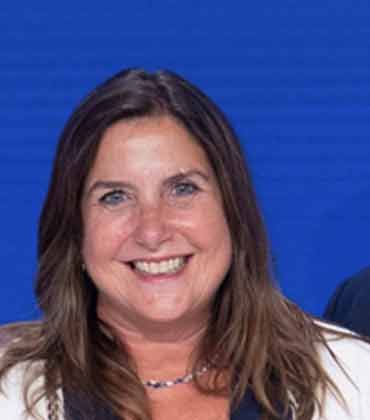
Nicole Rosenberger
Managed services are often viewed as a cost-saving mechanism. In my experience, that's the least interesting reason to use them. The real value of managed service providers (MSPs) is that they allow high-growth companies to build enterprise-grade IT capabilities long before they have the headcount to support them. The art is knowing where they create value and where they should never replace internal leadership.
There is no shortage of guidance on negotiating contracts, measuring SLAs and managing vendor performance. While those disciplines are important, they are only part of the equation. In my experience, the greatest differentiator isn't the contract or SLAs but how well an MSP becomes integrated into your organization. Focus on the partnership and integration practices that, in my experience, have consistently given my organizations an advantage when leveraging MSPs.
I've joined several organizations as their first IT executive, where every new hire competes with critical business investments. In those environments, the right MSP becomes not just a service provider but an accelerator that enables enterprise capabilities long before the organization could build them internally. Finding a partner that can work with you and complement your team is invaluable and allows you to start implementing infrastructure, systems and security that did not exist.
Early in my first Head of IT role, a mentor gave me advice that has shaped every technology organization I've built. He told me to find partners that want to grow with you and have a genuine reason for the relationship to succeed. I still use that advice when selecting MSPs.
My organizations select vendors that are stable but also growing. While large providers have their place, I've found that smaller, growing MSPs often deliver a level of responsiveness that's difficult to match. For an emerging biotech, being one of the vendor’s more important customers often results in stronger partnerships, greater flexibility and more executive attention when challenges arise.
 Find partners that want to grow with you and have a genuine reason for the relationship to succeed.
Finding vendors that can truly be a partner to my organization versus an order taker enables us to get opinions from experts that are working with multiple clients, bring broader perspectives to challenges and become as invested in our success as we are. As our company grows and matures, the relationship evolves with us.
Once we've identified an operational need, such as a help desk, I assemble a small cross-functional group to participate in the selection process. While it may not be a formal RFP in an emerging company, involving future stakeholders creates ownership, encourages honest feedback and significantly improves adoption once the MSP is onboard.
One of the most overlooked aspects of successful managed services is how the provider is integrated into the organization. We intentionally introduce our MSP personnel as members of the IT organization, not as the vendor. This reinforces that they are an extension of our team while giving the MSP personnel a genuine sense of ownership in our success. We have management meetings to discuss what’s working and what’s not, and where we can help our people or add to our services. It goes beyond the normal company-vendor relationship and my key to having a successful MSP relationship.
Regardless of company size, I believe several responsibilities should always remain internal: IT strategy, cybersecurity governance, executive communication, business relationship management and technology prioritization. MSPs can execute technology exceptionally well, but they shouldn't determine the direction of your business.
MSPs create the greatest value when they own repeatable operational functions such as help desk, endpoint management, infrastructure operations, security operations center (SOC) services, network monitoring and routine administration. These services allow internal teams to focus on business enablement, innovation and strategic initiatives.
The best MSP relationships don't feel like vendor relationships at all. They feel like an extension of your own organization aligned on outcomes, invested in your success and committed to growing alongside you. We spend a great deal of time evaluating technology, negotiating contracts and measuring performance. But the organizations that get the greatest value from managed services are the ones that invest just as much effort in building the partnership as they do in selecting the provider. If communication is limited to ticket queues and quarterly SLA reviews, both sides miss the opportunity to improve the business. Like any successful partnership, trust, transparency and shared accountability matter just as much as technical expertise.
The articles from these contributors are based on their personal expertise and viewpoints, and do not necessarily reflect the opinions of their employers or affiliated organizations.
EDITOR'S Choice

Fortune Brands Innovations [NYSE: FBIN]
By Juan Guerrero, Director, IT Audit & Data Analytics
The IT Audit Evolution: From Compliance to Strategic Intelligence
Broad River Retail
Wes Dudley, Senior Vice President, Customer Experience
Customer Experience in the Age of Amplified Complexity
Fortune Brands Innovations [NYSE: FBIN]
Scott Barnes, Sr. Director of Enterprise Cyber Security (CISO)
The X-Factor in Cybersecurity: AI and Automation at Work

LHarris Technologies [NYSE: LHX]
Brian Allred, Director of Business Intelligence and Analytics
The Shift from Rigid Dashboards to Conversational Analytics
Ivar's Restaurants
Patrick Yearout, Director of Innovation, Recruitment & Training
From Hiring to Development: Nurturing Teams that Care