-
Technology
-
Industry
-
Solutions
-
- ASSET MANAGEMENT
- CUSTOMER EXPERIENCE MANAGEMENT
- CYBER SECURITY
- DATA CENTER
- DOCUMENT MANAGEMENT
- ELECTRONIC DATA INTERCHANGE
- ENTERPRISE DATA MANAGEMENT
- ENTERPRISE RESOURCE PLANNING
- ENTERPRISE RISK MANAGEMENT
- ENTERPRISE-GRADE WEB DATA SOLUTIONS
- FACILITY MANAGEMENT
- FIELD SERVICE
- IDENTITY AND ACCESS MANAGEMENT
- INFRASTRUCTURE
- IT SERVICE MANAGEMENT
- MANAGED IT SERVICES
- PAYMENT AND CARD
- PROJECT MANAGEMENT
- SOFTWARE TESTING
- STORAGE
- VIDEO SOLUTIONS
- WORKFLOW
-
-
Platforms
-
Functions
- Leadership Perspectives
- Innovation Insights
- Research
- Magazines
- News
- CXO Awards


Contributory Virtus Investment Partners on the invitation from our Editorial

Baywood Hotels | Hotel Management & Development
Daniel Ovichegan, Hotel General ManagerBeyond the Front Desk: The Making of a General Manager
Daniel Ovichegan, Hotel General Manager
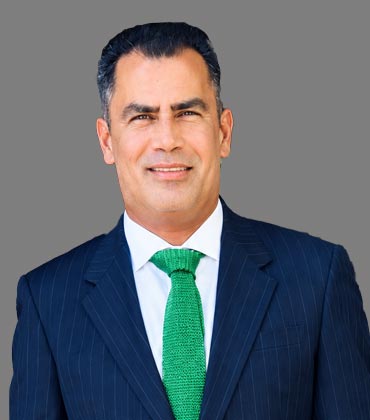
Daniel Ovichegan
Hospitality leadership is rarely a straight line.
My journey has taken me from luxury food and beverage operations to hotel general management, supported by an MBA in business organizational leadership from Johnson and Wales University. Along the way, I have learned that the skills required to lead a successful hotel are not developed within a single department. They are built through understanding people, service, business performance and organizational culture.
Today, as a hotel general manager, I still draw upon lessons I learned long before I was responsible for an entire property.
Luxury Hospitality Taught Me to See What Others May Miss
Working in luxury hospitality taught me that exceptional service is often found in the smallest details.
Guests may never see the preparation, coordination and decision-making happening behind the scenes, but they immediately recognize when an experience feels effortless.
‘Food and beverage’ was one of my greatest leadership classrooms because everything happened in real time. When a dining room was busy or an important event was underway, there was no opportunity to postpone a decision until the next management meeting. You learned to read the room, anticipate what guests needed, communicate with the team and solve problems before they became part of the guest experience.
That environment taught me an important lesson: great hospitality is proactive, not reactive.
Years later, when my responsibilities expanded beyond food and beverage to the entire hotel, I realized that the principle was exactly the same. The scale had changed, but the leadership expectation had not.
Education Gave Structure to Experience
My MBA studies in business organizational leadership at Johnson and Wales University helped me put a framework around many of the leadership lessons I had experienced operationally.
There is an important distinction between managing an operation and leading an organization.
Management provides structure—budgets, schedules, procedures, standards and measurements. Leadership creates alignment. It helps employees understand why those expectations matter and how their individual decisions contribute to the success of the organization.
A general manager cannot personally deliver every guest experience or solve every operational problem.
The greater responsibility is to develop leaders throughout the organization who can make sound decisions, take ownership and develop others.
My Transition to GM Changed My Perspective
When I transitioned from food and beverage leadership into hotel general management, my perspective changed significantly.
Suddenly, I was looking beyond one operating division and considering the entire hotel: rooms, housekeeping, engineering, sales, revenue strategy, guest satisfaction, financial performance, brand standards and talent development.
 I had not left food and beverage behind. It had prepared me to become a general manager.
Early in that transition, I realized something important.
I had not left food and beverage behind. It had prepared me to become a general manager.
The urgency of restaurant operations had taught me decision-making. Luxury service had taught me attention to detail. Managing teams had taught me accountability. Financial responsibility had taught me that outstanding service and profitability must coexist.
My education in organizational leadership helped connect those experiences and taught me to see a hotel not as a collection of departments, but as one interconnected organization.
That realization continues to shape how I lead today.
Leaders Must Move between Strategy and Execution
Hospitality executives must be comfortable moving between the boardroom and the floor.
A general manager might review financial performance in the morning, discuss sales strategy an hour later, walk guestrooms in the afternoon, address an engineering concern, coach a department leader and speak directly with guests before the day is over.
Those responsibilities may appear unrelated. They are not.
Employee engagement influences service. Service influences guest satisfaction. Guest satisfaction affects reputation and loyalty. Reputation influences demand. Operational discipline influences profitability.
Strong leaders learn to connect those dots.
Tomorrow’s GM May Be Somewhere Unexpected
As our industry evolves, I believe we should broaden how we identify future hotel leaders. The next exceptional general manager may currently be leading a restaurant, managing housekeeping, running banquet operations, working in sales or supervising a front desk. Rather than asking whether someone has followed the traditional path to the GM’s office, we should ask more meaningful questions: Can this person build a team, make thoughtful decisions under pressure, understand the relationship between service and profitability, establish accountability while keeping people engaged and develop other leaders?
Technical knowledge can be taught, systems can be learned and brand standards can be studied. But the ability to inspire people to take ownership requires something deeper.
My career, from luxury food and beverage to hotel general management, has reinforced one principle above all others: hospitality leadership is ultimately people leadership. Hotels measure success through occupancy, ADR, RevPAR, profitability, quality scores and guest satisfaction, but behind every one of those metrics are people making hundreds of decisions every day. A general manager’s greatest responsibility, therefore, is not simply to manage those results, but to build an organization where people are prepared, empowered and inspired to create them.
The articles from these contributors are based on their personal expertise and viewpoints, and do not necessarily reflect the opinions of their employers or affiliated organizations.
EDITOR'S Choice

Fortune Brands Innovations [NYSE: FBIN]
By Juan Guerrero, Director, IT Audit & Data Analytics
The IT Audit Evolution: From Compliance to Strategic Intelligence
Broad River Retail
Wes Dudley, Senior Vice President, Customer Experience
Customer Experience in the Age of Amplified Complexity
Fortune Brands Innovations [NYSE: FBIN]
Scott Barnes, Sr. Director of Enterprise Cyber Security (CISO)
The X-Factor in Cybersecurity: AI and Automation at Work

LHarris Technologies [NYSE: LHX]
Brian Allred, Director of Business Intelligence and Analytics
The Shift from Rigid Dashboards to Conversational Analytics
Ivar's Restaurants
Patrick Yearout, Director of Innovation, Recruitment & Training
From Hiring to Development: Nurturing Teams that Care