-
Technology
-
Industry
-
Solutions
-
- ASSET MANAGEMENT
- CUSTOMER EXPERIENCE MANAGEMENT
- CYBER SECURITY
- DATA CENTER
- DOCUMENT MANAGEMENT
- ELECTRONIC DATA INTERCHANGE
- ENTERPRISE DATA MANAGEMENT
- ENTERPRISE RESOURCE PLANNING
- ENTERPRISE RISK MANAGEMENT
- ENTERPRISE-GRADE WEB DATA SOLUTIONS
- FACILITY MANAGEMENT
- FIELD SERVICE
- IDENTITY AND ACCESS MANAGEMENT
- INFRASTRUCTURE
- IT SERVICE MANAGEMENT
- MANAGED IT SERVICES
- PAYMENT AND CARD
- PROJECT MANAGEMENT
- SOFTWARE TESTING
- STORAGE
- VIDEO SOLUTIONS
- WORKFLOW
-
-
Platforms
-
Functions
- Leadership Perspectives
- Innovation Insights
- Research
- Magazines
- News
- CXO Awards


Contributory Virtus Investment Partners on the invitation from our Editorial

Alexander Gonzalez Linares, CIO
Building A Growth Engine Inside Argentine Wholesale
Alexander Gonzalez Linares, CIO
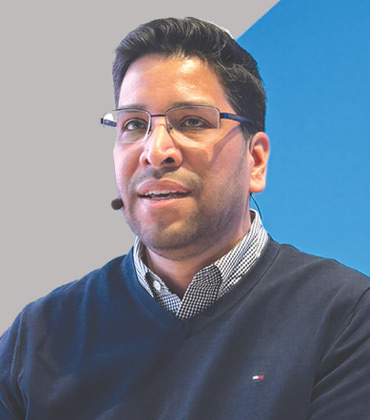
Alexander Gonzalez Linares
 Alexander Gonzalez Linares is the chief information officer (CIO) of one of Argentina’s largest cash-and-carry wholesalers. An industrial engineer with more than two decades of enterprise technology leadership across Latin America’s retail and financial sectors, he has built his career on a single contrarian discipline.
Understand how technology works beneath the surface, reject vendor-defined limitations and make systems serve business goals they were never designed for. He has converted a retail company’s in-house credit operation into an independent business unit, delivered a warehouse management system (WMS) implementation where three previous attempts failed and led one of the most complex SAP Retail suite deployments in South America.
It is this track record and the repeatable framework behind it that led CIOReview to recognize Alexander Gonzalez Linares as the CIO of the Year 2026.
Learning How It Works Changed Everything
I started as a hardware geek. I loved hardware, loved software, was comfortable with both. Then a colleague I deeply respected told me something that rewired how I think. Learn how it works, not what it does. I am an industrial engineer. I naturally want to know what happens inside a system, not just what buttons it offers. That conversation shifted my purpose entirely. I stopped accepting technology at face value and started pulling it apart to see what it could become. Not to be governed by it, but to adapt it.
What a system does is what the vendor predefined. What it can do is something else entirely. You invert what everything else is selling. That distinction has anchored every decision since.
A Banking Solution Nobody Asked For
One of the earliest tests came at a retail company running homegrown systems. Everything worked fine. No major problems. But I looked at the business and saw something everyone else missed. We offered in-house installment plans. We provided credit directly to customers. We functioned like a financial services provider and we were publicly listed. So, I asked a question nobody expected. Why don’t we install a banking solution?
Eighty percent of the board opposed the idea. Why would a retail company need banking software? But I wasn’t thinking about software categories. I was thinking about what the business actually did. Formalizing the credit operation through a banking platform would bring transparency, new financial reporting and a distinct revenue stream.
Within a year, the in-house credit operation became an independent business unit with its own revenue targets and operational structure. Revenue improved by seven to ten points.
 I have pioneered what i call human-in-the-loop decision architecture in retail pricing. The systems I build predict sales based on pricing, suggest multiple pricing options based on inflation and market conditions and distinguish between recurring demand patterns and one-time events.
A solution built for a different industry had created a new business inside a retail company. That taught me something I have applied ever since. Don’t look at what a tool was designed for. Look at what your business needs and find the tool that fits, even if nobody else would think to use it that way.
Building What Everyone Said Would Fail
The second turning point was the implementation of a WMS. The company ran ten to fifteen interconnected systems with serious interface problems. I proposed SAP’s WMS. The board pushed back hard. The investment exceeded two million dollars and the SAP WMS solution in Argentina had failed three times. Every attempt tried to force a German-designed system onto Argentine operations without adapting it.
I saw two things no one else saw. The failures made it cheaper to buy. And a working WMS would eliminate eighty to ninety percent of interfaces. My proposal was unconventional. No implementation partner. One senior SAP consultant to train three of our people. And we would learn by building, not by sitting in a classroom. We spent two months interviewing every warehouse manager to define how the operation should work. Then we built a prototype. Then we polished it with users while training them. Then production.
The first warehouse went live in eleven months. 100 percent capacity in one week, 150 percent efficiency by week three. The second warehouse hit 100 percent by day two. Within six months, ninety percent of interfaces were gone. We opened two more warehouses with half the staffing.
Restarting SAP When the Vendor Said Stop
The hardest challenge was a full SAP overhaul. The old 6.0 enterprise resource planning (ERP) version ran across the business. I rejected a standard upgrade because it preserves the same workflows on a new stack and changes nothing. We chose a clean, greenfield install. I led a team of four through six months of studying how S/4HANA worked behind the curtains. Not what the vendor said it could do, but how it actually functioned at a core level.
We defined our own screens. SAP offered fifteen for purchasing. We built one. Our goal was to go from data to action instantly. No delays, no outside connections.
Eight months in, COVID hit. The implementation partner told the board it could not be done. SAP doubted it. That was the most stressing moment of my career. The vendor and the implementer telling your CEO the project is impossible. But I asked one question. Under the hood, does the technology support it? Yes. Then the problem was never capability. It was approach. I reassembled the team, hired two additional firms and restarted from scratch. Nine months later, S/4HANA Retail, customer activity repository (CAR) and Business Warehouse for SAP HANA (BW/4HANA) ran in live production. Custom applications sat on top of the core without modifying it.
Business Innovation Intelligence and the Data-Oriented Action Board
I have formalized this thinking at cash-and-carry wholesalers into a unit called Business Innovation Intelligence, or BII. It runs like a startup inside a large wholesale operation. Define business goals. Identify proof of concepts in fifteen to twenty days. Test them in thirty to ninety days with no restrictions beyond security and company policy. Measure return on investment. Scale what works. End what doesn’t.
“My answer is the startup approach applied inside the enterprise. Act fast. Develop fast. Get to production fast. Worry about scaling only after a working concept has already funded its own growth. Do it block by block, delivering value every six months while planning three to five years.”
The platform behind it is Data-Oriented Action Board (DOAB). Technology should not show data. It should orient people toward action. Artificial Intelligence (AI) will further strengthen what we accomplish here.
I have also pioneered human-in-the-loop decision architecture in retail pricing. The systems I build predict sales, suggest pricing options based on inflation and market conditions and separate recurring demand from one-time events. In one of the world’s most volatile economies, this has reduced pricing errors by fifty percent. Analysis that once took days now runs in under an hour.
Why Latin America Cannot Afford to Wait
I see a continent held back by excess caution. Leaders resist investment because economic uncertainty makes long timelines feel dangerous. My answer is the startup approach applied inside the enterprise. Act fast. Develop fast. Get to production fast. Worry about scaling only after a working concept has already funded its own growth. Do it block by block, delivering value every six months while planning three to five years.
CIOs are not budget managers. My most important job is not managing technology. It is architecting the conditions that let a business make better decisions and move faster.
Technology is a cost until it becomes a catalyst for growth. We don’t innovate to be modern. We innovate to be monumentally better.
Goal first. Process second. AI-native third. Never the other way around.
The articles from these contributors are based on their personal expertise and viewpoints, and do not necessarily reflect the opinions of their employers or affiliated organizations.
EDITOR'S Choice

Fortune Brands Innovations [NYSE: FBIN]
By Juan Guerrero, Director, IT Audit & Data Analytics
The IT Audit Evolution: From Compliance to Strategic Intelligence
Broad River Retail
Wes Dudley, Senior Vice President, Customer Experience
Customer Experience in the Age of Amplified Complexity
Fortune Brands Innovations [NYSE: FBIN]
Scott Barnes, Sr. Director of Enterprise Cyber Security (CISO)
The X-Factor in Cybersecurity: AI and Automation at Work

LHarris Technologies [NYSE: LHX]
Brian Allred, Director of Business Intelligence and Analytics
The Shift from Rigid Dashboards to Conversational Analytics
Ivar's Restaurants
Patrick Yearout, Director of Innovation, Recruitment & Training
From Hiring to Development: Nurturing Teams that CareLatest Issues


