-
Technology
-
Industry
-
Solutions
-
- ASSET MANAGEMENT
- CUSTOMER EXPERIENCE MANAGEMENT
- CYBER SECURITY
- DATA CENTER
- DOCUMENT MANAGEMENT
- ELECTRONIC DATA INTERCHANGE
- ENTERPRISE DATA MANAGEMENT
- ENTERPRISE RESOURCE PLANNING
- ENTERPRISE RISK MANAGEMENT
- ENTERPRISE-GRADE WEB DATA SOLUTIONS
- FACILITY MANAGEMENT
- FIELD SERVICE
- IDENTITY AND ACCESS MANAGEMENT
- INFRASTRUCTURE
- IT SERVICE MANAGEMENT
- MANAGED IT SERVICES
- PAYMENT AND CARD
- PROJECT MANAGEMENT
- SOFTWARE TESTING
- STORAGE
- VIDEO SOLUTIONS
- WORKFLOW
-
-
Platforms
-
Functions
- Leadership Perspectives
- Innovation Insights
- Research
- Magazines
- News
- CXO Awards



Contributory Virtus Investment Partners on the invitation from our Editorial

St. Luke’s Cornwall Hospital
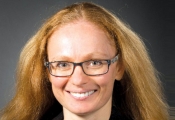
y Dr. Yong Wen, Medical Director of NephrologyBuilding Patient-Centric Medical Practices with a Community Focus
y Dr. Yong Wen, Medical Director of Nephrology
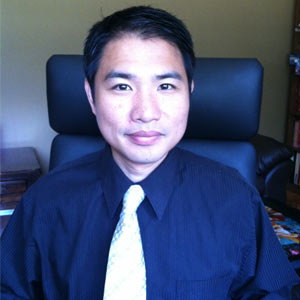
Born in Shanghai, China, I immigrated to the US at the age of 13. Familiar with both Eastern and Western cultures, I initially studied engineering as an undergraduate and hold a master degree in mechanical engineering. Seeking a greater challenge, I transitioned to medicine, where I have practiced nephrology for the past 20 years—a decision I am happy with. I grew up in a society without an official religion or much religious influence. My personal philosophy draws from Confucianism, Stoicism and Buddhism.
I have practiced in the Hudson Valley, NY area ever since graduation from the Fellowship program. Rather than talk about what brought me to this area, it is more important to talk about what made me stay in this area all these years. It is the medical needs of the community that has kept me in the area.
In any service-oriented profession, one needs to go to where the business is located at. My practice area has a concentration of low socio-economic class population that has a higher prevalence of medical conditions such as diabetes, hypertension, obesity and smoking. These are all risk factors for kidney disease.
I have a strong presence in St. Luke’s Cornwall hospital, which is the local hospital that serves the community. Unlike the majority of physicians these days, our practice still provides the traditional service of following patients longitudinally in an outpatient office setting, seeing and providing care to patients in the hospitals and ICU. My patients appreciate the fact that they can communicate with their regular outpatient doctors who know them the best when they are most in need of medical attention, such as when being hospitalized.
 My philosophy in terms of the physician-patient relationship is to act in the best interest of the patients, not the best interest of the practice, the hospital or the government
My philosophy in terms of the physician-patient relationship is that I strive to do or recommend what is in the best interest of the patients, not the best interest of the practice, the hospital or the government. That starts with being honest with patients or their caregiver. It requires me to be cognizant of their fear and concern and explain things in ways that they can understand and identify with. I give them recommendations based on my experience and accurate prediction about the disease process. This philosophy of medical practice leads to trust, which is the most important element in a service-oriented profession.
I have worked in a large multi-specialty medical organization before, and now I am working in a single specialty independent organization. Based on my experience, my advice to young physicians is that if given similar compensation choices, always try to work in an independent medical organization. The element of more control of your practice environment is very important to one’s career satisfaction.
I also like to think that an independent physician who can do well in a community must be a better physician than a physician in a large medical organization who depends on the scale of the organization for continued stream of business. I also encourage the virtue of courage for independence in our young physicians because I believe open and fair competition in the medical field offers patients more choices. That itself will lead to reduced cost and higher quality of medical care.
My science or engineering background helps me to understand what really Truth is. In physical science, truth is what has been proven or verified with experiment. In engineering, truth is what works. In social science, there is no way to prove or verify truth in the same way as physical science. What people like to believe as truth is more likely a political idea, meaning social truth is whatever most people believe in at the time. Social truth does not carry the same degree of invariability as the truth in physical science.
My science and engineering background helps me distinguish between what is based on scientific truth and what is based on political or emotional wish. That enables me to advise people better in general. In other words, I may speak like a scientist with authority, or I may speak like a politician if the situation calls for that. It is not that one is better than the other, but I would like to think that I am capable of adapting myself to whatever suits the situation better.
The articles from these contributors are based on their personal expertise and viewpoints, and do not necessarily reflect the opinions of their employers or affiliated organizations.
EDITOR'S Choice

Fortune Brands Innovations [NYSE: FBIN]
By Juan Guerrero, Director, IT Audit & Data Analytics
The IT Audit Evolution: From Compliance to Strategic Intelligence
Broad River Retail
Wes Dudley, Senior Vice President, Customer Experience
Customer Experience in the Age of Amplified Complexity
Fortune Brands Innovations [NYSE: FBIN]
Scott Barnes, Sr. Director of Enterprise Cyber Security (CISO)
The X-Factor in Cybersecurity: AI and Automation at Work

LHarris Technologies [NYSE: LHX]
Brian Allred, Director of Business Intelligence and Analytics
The Shift from Rigid Dashboards to Conversational Analytics
Ivar's Restaurants
Patrick Yearout, Director of Innovation, Recruitment & Training
From Hiring to Development: Nurturing Teams that Care