-
Technology
-
Industry
-
Solutions
-
- ASSET MANAGEMENT
- CUSTOMER EXPERIENCE MANAGEMENT
- CYBER SECURITY
- DATA CENTER
- DOCUMENT MANAGEMENT
- ELECTRONIC DATA INTERCHANGE
- ENTERPRISE DATA MANAGEMENT
- ENTERPRISE RESOURCE PLANNING
- ENTERPRISE RISK MANAGEMENT
- ENTERPRISE-GRADE WEB DATA SOLUTIONS
- FACILITY MANAGEMENT
- FIELD SERVICE
- IDENTITY AND ACCESS MANAGEMENT
- INFRASTRUCTURE
- IT SERVICE MANAGEMENT
- MANAGED IT SERVICES
- PAYMENT AND CARD
- PROJECT MANAGEMENT
- SOFTWARE TESTING
- STORAGE
- VIDEO SOLUTIONS
- WORKFLOW
-
-
Platforms
-
Functions
- Leadership Perspectives
- Innovation Insights
- Research
- Magazines
- News
- CXO Awards


Contributory Virtus Investment Partners on the invitation from our Editorial

Chief Operating Officer
Luis Alberto Ruiz AlfaroCurrent Technology Ecosystems and New Capabilities
Luis Alberto Ruiz Alfaro
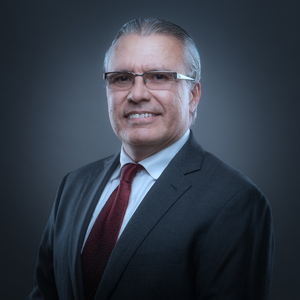
I’d really like to address user requirements from the “capability” approach: What are the main goals we want to achieve for our organization? It is a great start in the sense that we are going to work with a team of business-oriented professionals who are on the right track.
implementation, flexibility, and ongoing evolution. They give us – for the first time – an actual possibility to keep pace with, be one step ahead of and meet business needs timely.
Currently, organizations have developed technology ecosystems (hardware, software, solutions, and applications) that are focused on functionality – those small blocks and steps needed to solve a modulerelated problem. So, here is where we have identified one of the most relevant challenges. Every new cloud solution must be integrated as a well-behaved inhabitant in the current ecosystem. There is no point in adopting an isolated cloud solution; cloud solutions must expand business capabilities, add new ones, and extend the scope of existing solutions. Most of them are on-premise solutions.
A piece of advice: Cloud solutions were designed and developed from the ground up to work in the cloud. Older on-premise architecture solutions should be considered on-premise even if hosted on the cloud.
How do we define who lives in a technology ecosystem? The inhabitant lives in the same habitat as other solutions, taking resources from that habitat, but its existence should contribute to new resources and enrich that habitat.
That is why our practice places great emphasis on knowing the architecture of the technology ecosystem in any organization for which we set up a project. We must ensure optimal alternatives for the integration of a new inhabitant into the ecosystem: a new well-implemented cloud solution must equally contribute to and feed from the ecosystem. This can only be possible if the inhabitants of the existing ecosystem and their roles are clearly defined. Once this is done, we will be able to shape an efficient and effective integration architecture into true synergy.
Now, what are the two main resources in a technology ecosystem? Information and workflow.
• Information – as a global ecosystem resource – faces major challenges: semantics, consistency, availability, security, and opportunity. It must also be clear which information is R/O, which information is R/W, and which master solution is managing such information.
• Workflows define the actions, activities, and decisions that must be executed upon certain information conditions. Depending on the level of orchestration and complexity, a BPM-type intermediate solution may be necessary; however, there are a large number of highly modular tasks that come from one solution but must continue into another. Probably not everything will be 100% automated, but their identification and consideration provide completeness and increase the value of the solution.
It is very unlikely that your organization is currently 100% cloud.
If it were 100% cloud, defining the role of a new member of the technology ecosystem would require less effort in terms of integration (architecture, design, and development).
But – as it is in most cases today – if your organization has a part or full on-premise ecosystem architecture, it is very important – and dare I say absolutely critical – to spend time and effort understanding not only the capabilities that a new cloud solution provides but also analyzing in great detail and working on an architecture design to ensure that the new solution will take the right place in that ecosystem in the future.
And so, this brings me to the title of this post: "Current Technology Ecosystems and New Capabilities."
Integrating "capabilities" is the objective: How are we going to add value to the business?
The integration of new capabilities and their intended use depend on the solution being a good inhabitant of the technology ecosystem, but the responsibility of turning it into a good inhabitant is ours (yours and mine). It is a joint and high-level effort. The use of a solution and a proper return on your investment depend on that!
Luis Alberto Ruiz Alfaro, Chief Operating Officer
The articles from these contributors are based on their personal expertise and viewpoints, and do not necessarily reflect the opinions of their employers or affiliated organizations.
EDITOR'S Choice

Fortune Brands Innovations [NYSE: FBIN]
By Juan Guerrero, Director, IT Audit & Data Analytics
The IT Audit Evolution: From Compliance to Strategic Intelligence
Broad River Retail
Wes Dudley, Senior Vice President, Customer Experience
Customer Experience in the Age of Amplified Complexity
Fortune Brands Innovations [NYSE: FBIN]
Scott Barnes, Sr. Director of Enterprise Cyber Security (CISO)
The X-Factor in Cybersecurity: AI and Automation at Work

LHarris Technologies [NYSE: LHX]
Brian Allred, Director of Business Intelligence and Analytics
The Shift from Rigid Dashboards to Conversational Analytics
Ivar's Restaurants
Patrick Yearout, Director of Innovation, Recruitment & Training
From Hiring to Development: Nurturing Teams that CareLatest Issues


